

Infertility can happen for many reasons, such as ovulation problems, PCOS, endometriosis, blocked fallopian tubes, age-related fertility changes, low sperm count, poor sperm movement, hormonal problems, and certain medical or lifestyle factors.
Infertility may affect the male partner, female partner, both, or remain unexplained even after testing. Finding the right cause is important because your treatment options depend on what is affecting your fertility. That is why doctors usually evaluate both partners instead of assuming the problem comes from one person.
Table of Content
Table of Contents
What are the Main Causes of Infertility?
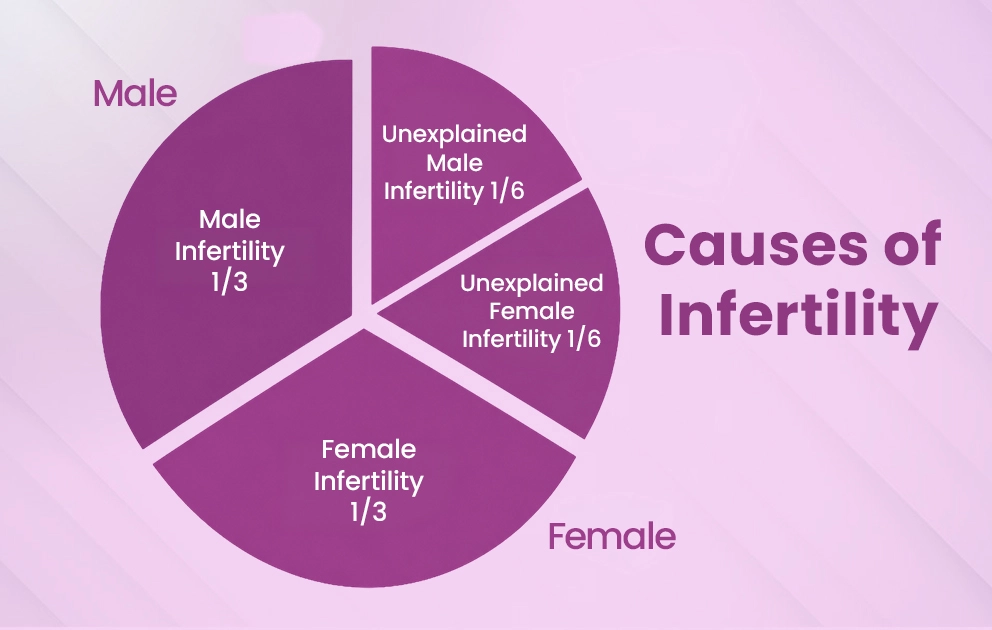
Infertility can have different causes, and sometimes more than one factor can affect your ability to conceive. The cause may come from the female partner, male partner, both partners, or may not be clear even after testing.
The main causes of infertility include:
- Female-Factor Infertility: Infertility caused by problems such as ovulation disorders, PCOS, endometriosis, blocked fallopian tubes, age-related fertility changes, or uterine problems.
- Male-Factor Infertility: Infertility linked to low sperm count, poor sperm movement or shape, hormonal problems, varicocele, or problems with sperm production or delivery.
- Combined Male and Female Factors: Infertility occurs when both partners have fertility-related factors that may make conception difficult.
- Unexplained Infertility: Pregnancy does not occur even though standard fertility tests do not identify a clear cause.
What are the Causes of Infertility in Women?
Female infertility can happen when a problem affects ovulation, eggs, fallopian tubes, uterus, or reproductive hormones. In some cases, more than one factor may be involved. Common causes include:
Ovulation Problems
Ovulation problems occur when your ovaries do not release an egg regularly or at all. PCOS, hormonal problems, major weight changes, and some medical conditions can affect ovulation and make conception harder.
Age-Related Fertility Decline
Female fertility naturally decreases with age, mainly because the number and quality of eggs decline over time. The chances of pregnancy also decrease as the risk of problems with egg quality increases.
ALSO READ – Best Age to get Pregnant
Damaged or Blocked Fallopian Tubes
Your fallopian tubes provide the path for the egg and sperm to meet. Pelvic infections, previous pelvic surgery, or endometriosis can block or damage the fallopian tubes and make fertilisation difficult.
Endometriosis
Endometriosis causes tissue similar to the uterine lining to grow outside the uterus. It can affect the ovaries and fallopian tubes and may cause inflammation or scar tissue that makes conception more difficult.
Uterine Problems
Conditions such as fibroids, polyps, adhesions, or certain uterine abnormalities can sometimes interfere with conception or implantation. The effect depends on the type, size, and location of the problem.
Hormonal Problems
Hormones help control your menstrual cycle and ovulation. Problems involving the thyroid, prolactin, or other reproductive hormones can disturb ovulation and make it harder to become pregnant.
Pelvic Infections
Some untreated pelvic or sexually transmitted infections can cause inflammation and damage to the reproductive organs. Over time, this may lead to blocked fallopian tubes or other problems that affect fertility.
Certain Medical Treatments
Treatments such as chemotherapy and radiation can affect the ovaries and reduce fertility. Some medicines may also affect reproductive function, so your doctor may discuss fertility preservation before certain treatments.
Note: Finding one possible cause does not always mean it is the only factor affecting fertility.
For example, a woman may have an ovulation problem while her partner may also have reduced sperm quality. This is why doctors generally assess both partners when diagnosing infertility.
What are the Causes of Infertility in Men?
Male infertility can happen when there is a problem with sperm production, sperm quality, hormones, sperm movement, or the delivery of sperm during sex. In some cases, more than one factor may be involved. Common causes include:
Low Sperm Count
Low sperm count means the semen contains fewer sperm than expected. With fewer sperm available, the chance of a sperm reaching and fertilising the egg may decrease.
Poor Sperm Motility
Sperm need to move properly to travel through the female reproductive tract and reach the egg. Poor sperm motility can make this journey difficult and reduce the chances of fertilisation.
Abnormal Sperm Shape
Sperm with an unusual shape may have difficulty moving or fertilising an egg. However, sperm shape is only one part of a semen analysis and should be considered along with sperm count and movement.
Problems With Sperm Production
The testicles may sometimes produce too few or no sperm. Hormonal problems, genetic conditions, infections, testicular injury, or certain medicines and treatments can affect sperm production.
Varicocele
A varicocele is an enlargement of the veins around the testicle. It may affect the temperature around the testicles and, in some men, can reduce sperm production or quality.
Hormonal Problems
Hormones help control sperm production. Problems involving testosterone, the pituitary gland, thyroid, or other reproductive hormones can interfere with the normal production of sperm.
Erectile or Ejaculation Problems
Problems such as erectile dysfunction, premature ejaculation, or difficulty ejaculating can make it difficult for sperm to enter the vagina during sex. Some medical conditions and medicines can contribute to these problems.
Infections
Certain infections can affect sperm production or cause inflammation and scarring in the reproductive tract. Some sexually transmitted infections may also damage the structures that carry sperm.
Medications, Steroids and Cancer Treatment
Some medicines can affect sperm production or sexual function. Anabolic steroids, chemotherapy, and radiation therapy can also reduce sperm production, sometimes temporarily and sometimes permanently.
What Lifestyle and Environmental Factors Can Affect Fertility?
Your lifestyle does not always cause infertility, but some habits and environmental exposures can affect ovulation, sperm quality, hormone levels, or overall reproductive health. These factors may also add to other fertility problems. Common ones include:
- Smoking and Tobacco: Smoking can affect fertility. In women, it may affect egg quality and ovarian function, while in men, it can reduce sperm quality and movement.
- Excessive Alcohol Use: Regular heavy alcohol use may affect reproductive hormones and fertility. It can also affect sperm production in men and may interfere with normal reproductive function in women.
- Recreational Drugs: Some recreational drugs can affect hormone levels, sperm production, sexual function, or ovulation.
- Being Overweight or Underweight: Being significantly overweight or underweight can affect hormone balance and ovulation in women. In men, excess body weight may also be linked with changes in testosterone levels and sperm quality.
- Extreme Exercise or Very Low Calorie Intake: Regular physical activity is generally good for fertility and overall health. However, very intense exercise combined with inadequate nutrition may disturb menstrual cycles and ovulation in some women.
- Chronic Stress: Stress does not mean that you will become infertile. However, severe or ongoing stress may affect sleep, sexual health, hormone function, or menstrual cycles in some people.
- Poor Sleep: Poor sleep or an irregular sleep schedule may affect overall health and hormone regulation.
Crysta IVF Expert Tip for Infertility Causes:
Lifestyle factors are only one part of fertility. Infertility can also result from conditions such as PCOS, endometriosis, blocked fallopian tubes, low sperm count, hormonal disorders, or age-related fertility changes.
Lifestyle factors can increase the risk of infertility. So, if you are having difficulty conceiving, do not assume that your lifestyle is the only reason. A proper fertility evaluation can help identify the actual cause.
Senior IVF Specialist
Crysta IVF – Trusted IVF Centre in Patna, Bihar

What is Unexplained Infertility?
Unexplained infertility means you are having difficulty getting pregnant, but standard fertility tests do not find a clear reason for it. It does not mean that nothing is wrong or that pregnancy is impossible. It simply means that current tests have not identified a specific cause.Crysta IVF, Patna
Doctors may consider unexplained infertility when:
- You are ovulating regularly.
- Your fallopian tubes appear open and healthy.
- Your uterus does not show a clear problem.
- Your partner’s semen analysis does not show a major abnormality.
- You have been trying to conceive for the recommended period without pregnancy.
Can You Get Pregnant With Unexplained Infertility?
Yes. Unexplained infertility does not mean you cannot become pregnant. Your chances depend on factors such as your age, how long you have been trying, and your overall reproductive health.
Depending on your situation, your doctor may recommend continuing to try naturally for some time or consider options such as ovulation treatment, Intrauterine Insemination (IUI), or In-Vitro Fertilisation (IVF).
If you have been trying to conceive without success, it is better to understand your individual fertility factors rather than assume there is no solution simply because routine tests are normal.
Can Infertility Have More Than One Cause?
Yes, infertility can have more than one cause, and these factors may affect either partner or both partners at the same time.
For example, you may have irregular ovulation due to PCOS while your partner may also have a low sperm count. In such cases, both factors can make it harder to conceive.
Use our free Ovulation Tracker tool to check the fertile window and conception date
Some common combinations include:
- Female + male factors: One partner may have an ovulation problem while the other has reduced sperm quality.
- More than one female factor: A woman may have both endometriosis and blocked fallopian tubes.
- More than one male factor: A man may have low sperm count along with poor sperm movement.
- Medical + lifestyle factors: A health condition may affect fertility while smoking, alcohol use, or significant weight changes add to the problem.
However, having multiple fertility factors does not automatically mean pregnancy is impossible. The right approach depends on your age, fertility test results, medical history, and the specific causes identified.
How Do Doctors Find the Cause of Infertility?
Doctors usually start by evaluating both partners. The tests depend on your age, medical history, infertility symptoms, and how long you have been trying to conceive.
- Infertility Tests For Women
Your doctor may check ovulation and hormone levels, along with ovarian reserve when appropriate. A pelvic ultrasound can check the uterus and ovaries, while HSG test may be used to see whether the fallopian tubes are open.
These tests can help identify problems such as ovulation disorders, fibroids, endometriosis, or blocked tubes.
- Infertility Tests For Men
A semen analysis is usually one of the first tests. It checks the sperm count, movement, and shape. Depending on the results and your medical history, your doctor may also recommend a physical examination, hormone tests, or other tests to check sperm production and the reproductive system.
- Additional Tests
Not everyone needs the same tests. If the initial evaluation does not explain the difficulty in conceiving, your doctor may recommend additional blood tests, genetic tests, or other specialised fertility tests based on your individual situation.
The aim is to identify the factors affecting your fertility and choose the most suitable next step.
When Should You See a Fertility Specialist for Any Infertility Cause?
You do not always need to wait a full year before seeking help. The right time depends mainly on your age, how long you have been trying to conceive, and whether you already have a condition that may affect fertility.
- If You Are Under 35: If you have regular, unprotected sex and pregnancy has not occurred after 12 months, consider a fertility evaluation.
- If You Are 35 or Older: If you are 35 or older, consider seeing a fertility specialist after 6 months of trying without success. Fertility can decline with age, so getting an evaluation earlier can help you understand your options.
- If You Are Over 40: If you are over 40, consider seeking fertility advice earlier or soon after you start trying rather than waiting for 6 or 12 months.
To connect with expert fertility doctors in India, contact Crysta IVF to book a consultation. The doctors will first understand your infertility cause, evaluate you with some specific tests in men and women and then provide you with the best infertility treatment.
Summing It Up
Infertility can have many causes, and the reason may not always be easy to identify. Ovulation problems, PCOS, endometriosis, blocked fallopian tubes, age-related changes, low sperm count, poor sperm quality, hormonal problems, medical conditions, and certain lifestyle factors can all affect your chances of conceiving.
If you have been trying to conceive without success, do not assume that the problem is with you or your partner. If you are concerned about your fertility, Crysta IVF can help you understand your fertility health through expert evaluation and personalised treatment guidance.
FAQs About Causes of Infertility
Why do some couples struggle to conceive even when both partners seem healthy?
Both partners can appear healthy and still have fertility problems that are not obvious from symptoms alone. Issues with egg or sperm quality, fertilisation, embryo development, or other reproductive factors may not show up during a routine health check.
What infections can affect fertility?
Certain sexually transmitted infections and pelvic infections can affect fertility if they are untreated. In women, they may damage or block the fallopian tubes, and in men, they can harm sperm production.
How do previous surgeries affect fertility?
Some surgeries involving the pelvis, reproductive organs, or testicles can sometimes cause scar tissue or damage that affects fertility. The impact depends on the type of surgery, the organs involved, and your overall reproductive health.
Which medicines may affect fertility?
Some medicines can affect fertility by changing hormone levels, sperm production, ovulation, or sexual function. Certain cancer treatments and anabolic steroids are well-known examples. Always tell your doctors about such medicines.
Why does infertility sometimes happen after having a child?
This is known as secondary infertility. It can happen because fertility changes with age or because a new health condition, reproductive problem, or male-factor issue develops after a previous pregnancy.
Is infertility always caused by a medical condition?
No. Infertility may be linked to a medical or reproductive condition, but age, sperm or egg factors, previous infections, certain treatments, and other factors can also play a role.
Does having regular periods mean you are fertile?
No, not necessarily. Regular periods suggest that ovulation may be occurring, but they do not confirm that your fallopian tubes, egg quality, uterus, or other fertility factors are normal.
When should both partners get tested for infertility?
In most cases, both partners should be evaluated when infertility is suspected, because fertility problems can affect either partner or both at the same time. Testing both partners can help identify the possible cause sooner and avoid focusing only on the woman.