What is Ovulation? Meaning, Process, Timing & Fertility Explained

Dr. Mugdha Rustagi is a compassionate fertility consultant known for her calm, supportive, and patient-first approach. With over five years of experience across Obstetrics, Gynaecology, and Assisted Reproductive Medicine, she has managed a wide range of infertility cases with precision. She completed her MBBS from Lady Hardinge Medical College, Delhi, followed by an MS in Obstetrics & Gynaecology from Bharati Vidyapeeth Medical College, Pune. To further refine her expertise, she earned a DNB in OBGYN, completed MRCOG Part 1 & 2, and pursued two advanced fellowships, one in Reproductive Medicine (IVF) from CIMAR Kochi and another in Minimally Invasive Gynaecology & Robotics. Dr. Mugdha is skilled in performing IVF procedures independently, including ovum pick-ups, embryo transfers, advanced fertility scans, and male infertility procedures like TESA/PESA. She also has surgical experience in hysteroscopy, laparoscopy, and managing complex obstetric emergencies on . Throughout her career, she has presented scientific papers at national conferences and published research on hysteroscopic evaluation methods. Her dedication, strong clinical skills, and genuine empathy make patients feel supported throughout their fertility journey.
Read more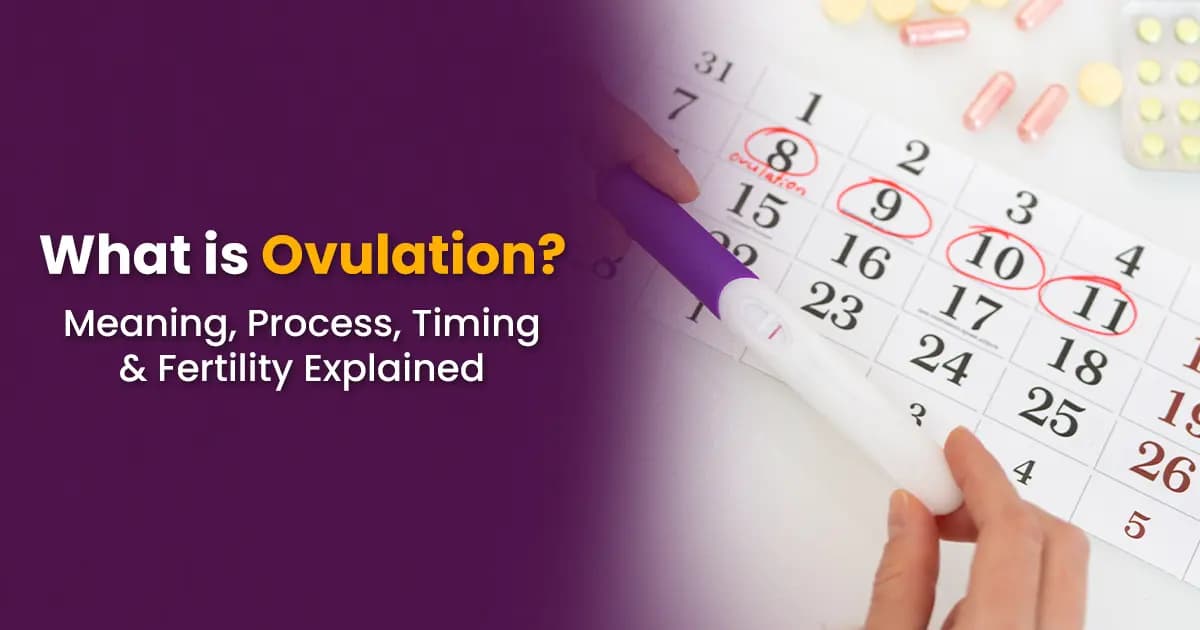
Ovulation is the phase in the menstrual cycle in which your ovary releases a mature egg. This usually happens once in every menstrual cycle, meaning once a month, around the middle of your cycle. The egg then travels through the fallopian tube, where it can be fertilised by sperm. To support this phase, the body experiences significant hormonal changes, specifically a surge in luteinizing hormone (LH). If fertilisation happens, pregnancy can begin. If not, the egg breaks down and your period starts. Therefore, ovulation is the time when your body is most likely to get pregnant.
In this article
- 1What Is Ovulation?
- 2What is Ovulation Day?
- 2.1When Does Ovulation Occur in a 28-Day Cycle?
- 2.2Does Ovulation Happen on the Same Day Every Month?
- 2.3What Causes Ovulation?
- 3What is the Fertile Window and Why Does It Matter for Pregnancy?
- 3.1How Many Days is the Fertile Window?
- 4What Exactly Happens During Ovulation?
- 5How Does Ovulation Happen: Detailed Timeline
- 5.1Cycle Day 1: Period Begins
- 5.2Cycle Days 1 - 13: Egg Matures in the Ovary
- 5.3Cycle Day 14: Ovulation is Triggered
- 5.4Cycle Day 15: Fertilisation or Egg Breakdown
- 5.5Cycle Day 15 - 28: Luteal Phase
- 6What are the Signs and Symptoms of Ovulation?
- 6.1Common Physical Signs of Ovulation
- 6.2Emotional & Hormonal Changes During Ovulation
- 6.3Crysta IVF Doctor Explains How to Confirm Ovulation
- 7People Also Ask
- 7.1Can I get pregnant right after ovulation?
- 7.2How do I know I am ovulating?
- 7.3Can I get pregnant if I don’t ovulate?
- 7.4Can I get pregnant before ovulation?
- 7.5What is the fertile window in ovulation?
- 7.6Why does it sometimes hurt during ovulation?
- 7.7Why does my ovulation vary every month?
- 8How to Know If You Are Ovulating?
- 8.1Track Ovulation Accurately at Home
- 8.2Ovulation Predictor Kits (OPKs)
- 8.3Ultrasound & Blood Tests
- 9What is the Relation Between Ovulation and Menstrual Cycle?
- 10Why is Ovulation Important for Getting Pregnant?
- 11What Happens If You Don’t Ovulate?
- 12What is Anovulation?
- 135 Natural Ways to Improve Ovulation in Women
- 13.11. Maintain a Healthy Weight
- 13.22. Eat a Nutrient-Rich Diet
- 13.33. Manage Stress Levels
- 13.44. Exercise Wisely
- 13.5Tracking Your Cycle and Ovulation
- 14What are the Medical Treatments for Ovulation Problems?
- 14.1Ovulation-Inducing Medications:
- 14.2Hormonal Treatments
- 14.3Assisted Reproductive Techniques (ART)
- 15Key Takeaways
- 16FAQs About Ovulation
- 16.11. How many days are there between ovulation and the period?
- 16.22. Why does ovulation sometimes hurt?
- 16.33. Do women ovulate during their periods?
- 16.44. Is it possible to ovulate 2 times in a month?
- 16.55. Is it possible to fall pregnant before ovulation?
- 16.66. When do I ovulate if I have a 26-day cycle?
- 16.77. Which day is ovulation day in a 21-day cycle?
- 16.88. How many days after ovulation do you get your period?
- 16.99. How do I know my ovulation?
- 16.1010. Can an ultrasound detect your ovulation period?
- 16.1111. Do you get pregnant on your fertile days or during ovulation?
- 16.1212. How long does ovulation last?
- 16.1313. What is the day of ovulation in a 24-day cycle?
- 16.14When do I ovulate if I have a 26-day cycle?
- 16.15Which day is ovulation day in a 21-day cycle?
- 16.16How many days after ovulation do you get your period?
- 16.17Can an ultrasound detect my ovulation period?
Key Takeaways
- Ovulation happens once in each menstrual cycle.
- The egg survives only 12-24 hours after release.
- Sperm can live inside the body for 3-5 days.
- The fertile window lasts about 5-6 days.
- Pregnancy chances are the highest just before ovulation.
What Is Ovulation?
Ovulation is a natural and powerful process that happens inside a woman’s body every month. It is the process when your ovary releases a mature egg once in every menstrual cycle, usually around day 14 in a 28-day cycle.
This small window of time has a big impact on fertility, menstrual cycles, and overall reproductive health. Whether you are trying to conceive, planning your future, or simply want to better understand your body, knowing what ovulation really means can bring clarity and confidence.
To understand ovulation in detail, read our complete guide on ovulation and fertility
In this blog, we will explain ovulation meaning, how the ovulation process works step by step, the best time for ovulation, and how ovulation affects fertility and chances of pregnancy.
What is Ovulation Day?
Ovulation day is the day when a woman’s ovary releases a mature egg during her menstrual cycle. This is the most important day for fertility because the egg is available for fertilisation only on this day.
When Does Ovulation Occur in a 28-Day Cycle?
For women with a regular 28-day menstrual cycle, ovulation often happens around day 14, counting from the first day of the period. However, not everyone has a 28-day cycle, so ovulation does not always fall on the same day for all women.
In general, ovulation happens 12 to 14 days before the next period starts, not after the last period ends. This is an important point that many people don’t realise. For example, if your cycle is 30 days long, ovulation may occur around day 16 or 17. If your cycle is shorter, ovulation may happen earlier.
Once released, the egg survives for about 12 to 24 hours. This means the fertile window is short, but since sperm can live inside the body for up to 5 days, pregnancy is possible if intercourse happens a few days before ovulation as well.
Does Ovulation Happen on the Same Day Every Month?
No, ovulation does not occur on the same day every month. In fact, research has shown that most women think they have a 28-day cycle, but in reality, only about 12% actually do. Studies also show that 87% of women have cycles between 23 and 35 days, and more than half notice their cycle length changing by a few days each month.
This is because ovulation depends on your hormones, and they can change due to various factors. Also, if your cycles are irregular, the ovulation window can be harder to predict.
Here are some small changes in your routine that can affect your ovulation, such as:
- Stress
- Poor sleep
- Travel or lifestyle changes
- Hormonal imbalance (like PCOS)
- Sudden weight gain or loss
So, what does this mean for you?
Don’t rely only on calendar dates to track ovulation. Instead, it’s better to pay attention to your body signs or use ovulation tracking methods for better accuracy. This will help you better understand your fertile window and plan more accurately if you’re trying to conceive.
What Causes Ovulation?
The process of ovulation happens because of changes in your body’s hormones. Here’s what causes it:
- FSH (Follicle-Stimulating Hormone): It helps your ovary prepare and mature the egg.
- Estrogen: This hormone rises as the egg develops, and signals that your body is getting ready.
- LH (Luteinizing Hormone): It triggers the release of the egg from the ovary (this is called the LH surge).
Simply put, these hormones work like a signal system that tells your ovary when it’s time to release the egg.
These hormone changes happen naturally every month, but factors like stress, health issues, or lifestyle can sometimes affect the timing.
What is the Fertile Window and Why Does It Matter for Pregnancy?
The fertile window is the time in your menstrual cycle when your chances of getting pregnant are the highest. It includes the days when sperm can survive and wait for the egg to be released.
This matters because:
- The egg lives for a short time (about 12–24 hours)
- Sperm can survive inside your body for a few days
So, correctly timing your fertile window plays a big role when you’re trying to conceive.
How Many Days is the Fertile Window?
The fertile window usually lasts about 5-6 days; however, the highest chance of pregnancy is 1–2 days before ovulation and on the same day.
- 4 to 5 days before ovulation
- The day of ovulation
What Exactly Happens During Ovulation?
The table below explains when ovulation occurs, how long it lasts, and how the egg and sperm lifespan affect fertility, making the process simple and clear to follow.
| Topic | Explanation | |
|---|---|---|
| When Does Ovulation Occur? | Ovulation usually happens 12 - 14 days before your next period in a 28-day cycle. | |
| Ovulation in Irregular Periods | With irregular periods, ovulation does not follow a fixed day. It may happen earlier, later, or sometimes not at all in some cycles. | |
| Missed Ovulation (Anovulation) | Anovulation occurs when the ovary does not release an egg in a cycle. Periods may still occur, but pregnancy is not possible in that cycle. | |
| How Long Does Ovulation Last? | Once the egg is released, it survives for only 12 to 24 hours. | |
| Sperm Lifespan (3 - 5 days) | Sperm can live inside the female body for 3 to 5 days, waiting for the egg to be released. | |
| What is the Fertile Window? | The fertile window includes 5 days before ovulation and the day of ovulation. These are the days when the chances of pregnancy are highest. |
Disclaimer: The ovulation timelines mentioned below are based on average menstrual cycles. Ovulation timing can vary from person to person and from cycle to cycle due to factors like stress, hormonal changes, medical conditions, or lifestyle habits.
ALSO READ: Reasons for Irregular Periods
How Does Ovulation Happen: Detailed Timeline
Ovulation is not a sudden event. It happens through a well-planned hormonal process that unfolds across your menstrual cycle. Understanding this step by step makes it easier to track fertility and know what your body is preparing for each month.
Cycle Day 1: Period Begins
Your menstrual cycle starts on the first day of your period. During this time, hormone levels (oestrogen and progesterone) are low, and the body sheds the lining of the uterus from the previous cycle.
At the same time, your brain signals the ovaries to begin preparing for the next ovulation.

Cycle Days 1 - 13: Egg Matures in the Ovary
After your period ends, the pituitary gland releases follicle-stimulating hormone (FSH). This hormone helps several eggs mature inside tiny sacs called follicles in the ovary.
Usually, only one healthy egg continues to mature fully. Oestrogen levels start rising, preparing the uterus for a possible pregnancy.
Cycle Day 14: Ovulation is Triggered
As oestrogen levels peak, the body releases luteinising hormone (LH). This sudden rise is called the LH surge, which triggers ovulation. About 24 to 36 hours after the LH surge, the ovary releases a mature egg. This day is known as ovulation day.
Once released, the egg moves into the fallopian tube, where it waits to meet sperm. The egg survives for only 12 to 24 hours, which is why ovulation is such a short but important window for pregnancy.
Cycle Day 15: Fertilisation or Egg Breakdown
Research shows that sperm can survive for 3–5 days in the reproductive tract. So, during this time, pregnancy can begin. If fertilisation does not happen, the egg naturally breaks down and is absorbed by the body.
Cycle Day 15 - 28: Luteal Phase
After ovulation, the ovary forms a structure called the corpus luteum, which releases progesterone. This hormone supports a possible pregnancy. If pregnancy does not occur, progesterone levels fall, the uterine lining sheds, and the next period begins.
ALSO READ - Are delayed or irregular periods a sign of infertility?
What are the Signs and Symptoms of Ovulation?
Ovulation brings some changes in the body that signal your most fertile days. While not every woman notices these signs, many experience physical and emotional shifts due to hormonal changes during this phase.
Here are some symptoms that you may experience:
Common Physical Signs of Ovulation
- Clear, stretchy cervical mucus: Around ovulation, vaginal discharge becomes clear, slippery, and stretchy just like raw egg white.
- Mild lower abdominal pain (Mittelschmerz): Some women feel a mild ache, cramp, or sharp pain on one side of the lower abdomen during ovulation. This is called mittelschmerz and usually lasts a few minutes to a few hours.
- Increased libido: Many women notice a natural rise in sexual desire during ovulation.
- Breast tenderness: Hormonal changes around ovulation can make the breasts feel tender, sore, or slightly swollen.
Emotional & Hormonal Changes During Ovulation
- Mood changes: Shifting hormone levels can cause mood changes during ovulation. Some women feel happier and more confident, while others may feel emotionally sensitive.
- Energy levels: Ovulation often comes with a boost in energy and focus. Many women feel more active, social, and motivated during this phase compared to other times in the cycle.
Crysta IVF Doctor Explains How to Confirm Ovulation
Ovulation is when a mature egg is released from the ovary, marking the most fertile period in a woman’s cycle. Common signs include
- clear, stretchy cervical mucus,
- mild lower abdominal pain (mittelschmerz),
- increased libido,
- breast tenderness.
Remember to always connect with your gynaecologist if cycles are irregular or ovulation is absent.
Senior IVF Specialist
People Also Ask
Can I get pregnant right after ovulation?
The chances are very low, but not completely zero. This is because the egg survives for only 12–24 hours after being released, and if it is not fertilised within this time, it breaks down. So, if you have intercourse just before ovulation, sperm can stay alive and fertilise the egg later. But after ovulation, the egg survives only for a short time, so the chances drop significantly.
How do I know I am ovulating?
The most common symptoms of ovulation include a clear, stretchy discharge, increased libido, a slight rise in body temperature, and mild abdominal discomfort. Some women also notice heightened sensitivity to smells or light spotting, similar to the implantation bleeding seen in early pregnancy. For medical precision, an early USG or ovulation predictor kits (OPKs) can detect the LH surge or monitor maturing follicles to confirm when the egg is about to be released.
Can I get pregnant if I don’t ovulate?
No, ovulation is essential for natural conception because there must be an egg present to be fertilised by sperm. If you have irregular cycles and suspect you aren't ovulating, consulting a specialist for a personalised care plan is recommended.
Can I get pregnant before ovulation?
Although high chances of pregnancy occur most during ovulation, you can still conceive just before ovulation, as the sperm can live up to 5 days.
What is the fertile window in ovulation?
Your fertile window is about 5 - 6 days, including the day of ovulation. This is because sperm can live in your body for up to 5 days, increasing the chances of pregnancy during this time.
Why does it sometimes hurt during ovulation?
Some women experience a mild, one-sided pelvic ache or sharp twinge. This occurs as the follicle stretches the surface of the ovary to release the egg. While this discomfort is a normal, severe or persistent pain should always be discussed with a doctor to rule out other complications.
Why does my ovulation vary every month?
Ovulation can be delayed or stopped entirely due to various reasons:
- Stress or lifestyle factors
- Conditions like PCOS
- Hormonal imbalance
- Weight changes
- Thyroid issues
How to Know If You Are Ovulating?
For many women, figuring out when ovulation happens can feel confusing, especially if they are trying to conceive or tracking their cycles for health reasons.
The good news is that there are several ways to know when your body is ovulating, from natural methods to medical tests. Here are some of them:
Track Ovulation Accurately at Home
Calendar Method
This method involves tracking your menstrual cycle on a calendar for several months to estimate your ovulation day.
Cervical Mucus Tracking
Pay attention to changes in your cervical mucus. Around ovulation, it becomes clear, stretchy, and egg-white-like, which helps sperm travel to the egg.
Basal Body Temperature (BBT)
Your body temperature slightly rises after ovulation due to hormonal changes. By measuring your BBT every morning before getting out of bed, you can identify ovulation retrospectively and predict future cycles.
Ovulation Predictor Kits (OPKs)
OPKs are the kind of at-home pregnancy tests. It detects a surge in luteinising hormone (LH), which occurs 24 - 36 hours before ovulation. This helps pinpoint the most fertile days. According to Mayo Clinic, OPKs are generally 90 - 99% accurate, but factors like hormonal imbalance or medications can affect results.
- When to Test
Testing is recommended around mid-cycle, based on your average cycle length. Most kits provide instructions on when to start testing for the best results.
Ultrasound & Blood Tests
Follicular Study
A doctor may perform an ultrasound scan to monitor the growth of ovarian follicles. This helps track ovulation in real time and is especially useful for women with irregular cycles.
Progesterone Test
A blood test measuring progesterone levels can confirm if ovulation has occurred. Progesterone rises after ovulation, indicating that the egg has been released.
ALSO READ: How Many Days Egg Live in Uterus after Ovulation?
What is the Relation Between Ovulation and Menstrual Cycle?
Ovulation and the menstrual cycle are closely connected. They are not separate events, but parts of the same monthly process.
The menstrual cycle is the body’s natural rhythm that prepares for a possible pregnancy, and ovulation is the key event within this cycle that makes pregnancy possible.
A menstrual cycle begins on the first day of your period. After the period ends, hormones signal the ovaries to prepare an egg for release. As this egg matures, the uterus also thickens its lining to support a pregnancy. The ovulation generally occurs on 12 - 14 days before the next menstrual cycle.
#Things to remember: In simple terms, regular ovulation leads to regular periods, while delayed or missed ovulation can cause late, irregular, or missed periods.
Why is Ovulation Important for Getting Pregnant?

Ovulation and pregnancy are directly connected. Simply put, pregnancy cannot happen without ovulation. Ovulation is the process by which the ovary releases a mature egg, and this egg must be fertilised by sperm for pregnancy to begin.
Once ovulation occurs, the released egg travels into the fallopian tube and stays alive for about 12 to 24 hours. If sperm is already present or reaches the egg during this time, fertilisation can take place. This fertilised egg then moves to the uterus and implants in the uterine lining, leading to pregnancy.
What Happens If You Don’t Ovulate?
If you don’t ovulate for any reason, pregnancy will not happen. Ovulation is the process by which a mature egg is released from the ovary, and this egg is essential for fertilisation. Without an egg, sperm have nothing to fertilise, so conception cannot occur.
Women who do not ovulate in a cycle are said to experience anovulation. Even if periods appear normal, anovulatory cycles do not result in pregnancy.
If your ovulation is irregular or doesn't occur at all, you can directly connect with highly experienced fertility doctors at Crysta IVF for fertility treatments like ovulation-inducing medications, timed intercourse, or assisted reproductive techniques that can help you conceive.
What is Anovulation?
Anovulation is a medical term that means a woman’s ovary does not release an egg during a menstrual cycle. Without ovulation, pregnancy cannot occur, even if periods appear normal.
Some Common Causes of Anovulation are:
- Problems with hormones like LH, FSH, or thyroid hormones
- Polycystic Ovary Syndrome (PCOS)
- Physical or emotional stress can delay or stop ovulation
- Excessive exercise or low body weight
- High body weight can affect the menstrual cycle
- Certain medications, like chemotherapy drugs, may affect ovulation
5 Natural Ways to Improve Ovulation in Women
Regular ovulation is key to fertility, but many women face challenges due to lifestyle, stress, or hormonal imbalances. The good news is that simple, natural steps can help support ovulation and improve reproductive health.
Here are five effective ways:
1. Maintain a Healthy Weight
Being underweight or overweight can affect hormone levels and disrupt ovulation. Achieving a balanced weight through diet and exercise helps regulate menstrual cycles and increases the chances of regular ovulation.
2. Eat a Nutrient-Rich Diet
Foods rich in vitamins like B12, D, and folate, and minerals like zinc and magnesium, can improve ovulation and overall fertility.
3. Manage Stress Levels
Practices like yoga, meditation, deep breathing, or mindfulness exercises can help reduce stress and support regular ovulation.
4. Exercise Wisely
Moderate exercise improves blood flow, hormone balance, and overall health, which can help with ovulation.
Tracking Your Cycle and Ovulation
Monitoring your menstrual cycle, cervical mucus, basal body temperature, or using ovulation predictor kits can help you identify fertile days.
What are the Medical Treatments for Ovulation Problems?
When natural methods and lifestyle changes are not enough to regulate ovulation, medical treatments can help women restore regular ovulation and improve fertility.
Ovulation-Inducing Medications:
Certain medicines like Clomiphene Citrate (Clomid), Letrozole (Femara), etc, stimulate the ovaries to produce and release eggs. Often, the first-line treatment for women with irregular ovulation or PCOS is.
Hormonal Treatments
Progesterone Therapy is used in cases of luteal phase deficiency to support the uterine lining and help maintain pregnancy.
Assisted Reproductive Techniques (ART)
Certain ART techniques like Intrauterine Insemination (IUI), In Vitro Fertilisation (IVF) and surgery are often combined with ovulation-inducing medications to increase the chances of fertilisation.
Key Takeaways
Ovulation is the cornerstone of female fertility and understanding it is essential for anyone trying to conceive or simply wanting to know how their body works.
From recognising the physical signs and symptoms to tracking your cycle naturally or with medical assistance, knowing when and how ovulation occurs can empower you to make informed decisions about your reproductive health.
At Crysta IVF, we provide personalised fertility care, combining the latest technologies with compassionate guidance to help women and couples achieve their dream of parenthood.
Connect with us today to take control of your fertility journey with confidence and hope.
FAQs About Ovulation
1. How many days are there between ovulation and the period?
The time between ovulation and your next period is called the luteal phase, which typically lasts 12 - 14 days for most women, regardless of cycle length.
2. Why does ovulation sometimes hurt?
Some women feel mild abdominal pain, cramps, or twinges during ovulation, called mittelschmerz. It happens due to the ovary releasing an egg and the stretching of the ovarian tissue.
3. Do women ovulate during their periods?
No, ovulation does not occur during menstruation. It usually happens in the middle of the cycle, after the period ends.
4. Is it possible to ovulate 2 times in a month?
No, it is rare to ovulate two times a month. However, it is possible for some women to have two ovulations in a cycle, especially if they have very short cycles or irregular cycles.
5. Is it possible to fall pregnant before ovulation?
Yes. Since sperm can survive 3 - 5 days inside the female reproductive tract, intercourse a few days before ovulation can result in pregnancy.
6. When do I ovulate if I have a 26-day cycle?
Ovulation usually occurs 12 - 14 days before your next period. For a 26-day cycle, it would typically be around day 12 - 14 of your cycle.
7. Which day is ovulation day in a 21-day cycle?
For a 21-day cycle, ovulation generally occurs around day 7 - 9, counting from the first day of your period.
8. How many days after ovulation do you get your period?
Periods usually start 12 - 14 days after ovulation, which is the luteal phase of your cycle.
9. How do I know my ovulation?
You can track ovulation by:
- Monitoring cervical mucus (clear, stretchy, egg-white consistency)
- Checking basal body temperature
- Using ovulation predictor kits (OPKs)
- Observing physical signs like mild abdominal pain or increased libido
10. Can an ultrasound detect your ovulation period?
Yes, ultrasound can track ovarian follicles to see when an egg is maturing and about to be released, helping predict ovulation.
11. Do you get pregnant on your fertile days or during ovulation?
Pregnancy is most likely during the fertile window, which includes 5 days before ovulation and the day of ovulation.
12. How long does ovulation last?
The egg released during ovulation survives for 12 - 24 hours, but the fertile window lasts longer because sperm can survive 3 - 5 days.
13. What is the day of ovulation in a 24-day cycle?
For a 24-day cycle, ovulation usually occurs around day 10 - 12, counting from the first day of your period.
When do I ovulate if I have a 26-day cycle?
For a 26-day cycle, you will likely ovulate around day 12 or 13. This is calculated by taking your total cycle length and subtracting the standard 14-day luteal phase.
Which day is ovulation day in a 21-day cycle?
In a short 21-day cycle, ovulation occurs quite early, usually around day 7 of your cycle (counting from the first day of your period). Because this happens so close to the end of menstruation, it highlights the importance of being aware of your fertile window if you are trying to conceive with a shorter cycle.
How many days after ovulation do you get your period?
Unless you are pregnant, your period will typically begin 12 to 14 days after ovulation. This consistent timeframe is due to the life span of the corpus luteum, which supports the uterine lining for about two weeks. If the egg isn't fertilised, hormone levels drop, signalling the body to begin the menstrual flow.
Can an ultrasound detect my ovulation period?
Yes, a follicular ultrasound can track the growth of follicles within the ovaries. A doctor can see when a follicle reaches a mature size, indicating that ovulation is imminent.
More References:
https://www.nhs.uk/conditions/periods/fertility-in-the-menstrual-cycle/
https://my.clevelandclinic.org/health/articles/23439-ovulation/
https://www.healthline.com/health/womens-health/what-is-ovulation/
Disclaimer
As per the "PCPNDT" (Regulation and Prevention of Misuse) Act, 1994, Gender Selection and Determination is strictly prohibited and is a criminal offense. Our centers strictly do not determine the sex of the fetus. The content is for informational and educational purposes only. Treatment of patients varies based on his/her medical condition. Always consult with your doctor for any treatment.
Have questions about your fertility?
Talk to our fertility specialists. Your first consultation is free.
Explore Crysta IVF
Treatments, centres and costs, all in one place.
