
Overview of Laser Hatching in IVF
You are likely aware that a fertilised egg does not ensure a pregnancy if you have had IVF treatment. For a pregnancy to be successful, the embryo must implant on the uterine wall after being transferred to the woman's uterus. If the implant doesn't happen, you will have an IVF failure.
To know the reason for implantation or IVF failure, you will be sent to laser-assisted hatching. This latest technology aims to overcome any obstacle that stands in the way of any successful pregnancy.
What is Laser Assisted Hatching?
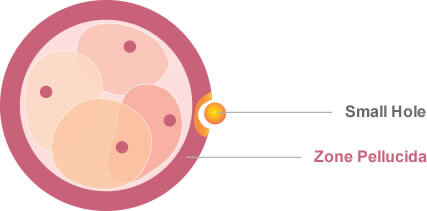
A precision laser is used to create a tiny hole in the embryo's outer layer (zona pellucida) during the in vitro fertilisation (IVF) process known as "Laser-Assisted Hatching." The procedure increases the likelihood of a successful pregnancy by enabling the embryo to emerge from its protective shell.
Women aged over 37, having a thick embryo wall or those going through multiple IVF failures are suggested to undergo laser-assisted hatching.

Who Should Consider Undergoing Laser-Assisted Hatching?
Several women face problems in conceiving due to their age, thick zona pellucida or with high levels of FSH hormone (Follicle-stimulating hormone). In such situations, the egg will not hatch or adhere to the womb's uterus wall.
Hence, laser-assisted hatching is suggested to overcome implantation failure in such situations. Here are some more reasons which include:
- Women with older age (over 37 years)
- Past IVF or ICSI cycle failures
- A thicker zona pellucida than normal
- Poor fertilisation or poor embryo quality
- Elevated levels of FSH hormone
- Inadequate healthy embryos
- Frozen Embryo Transfer (FET)
Step-by-step Laser-Assisted Hatching Procedure
After various unsuccessful cycles of IVF, the embryos are taken for diagnosis with LAH on the 3rd day of fertilization. This method involves making a break in the zona pellucida using a specialised laser. Laser technology is considered the safest and most efficient method which also enables a more controlled approach. Let’s understand the laser-assisted hatching procedure step-by-step:
Step 1 :
Culture of Embryos

The fertilised egg is matured for 3 to 5 days in the lab to form an embryo. The embryologists shortlist the healthiest embryos among all that will be transferred to the woman’s womb to initiate pregnancy.
Step 2 :
Making a Hole in the Pellucida Zone
With the help of a laser hatching machine, the upper lining of the embryo wall known as zona pellucida is broken by making a tiny hole with a precision laser. As a result, the embryo emerges from its protective shell.
Step 3 :
Transfer of Embryos

The healthy embryos are then moved to the woman's uterus following a successful laser-assisted hatching procedure, where they are raised and given time to grow. After a few weeks, the pregnancy test can be done to confirm the pregnancy.
What are the Benefits of Laser-assisted Hatching?
The laser-assisted hatching has emerged as the most popular technology which has helped thousands of women with pregnancy issues and failed IVFs. It helps the embryos to attach to the uterus lining which increases the chances of pregnancy. Here are some benefits of laser-assisted hatching in IVF:
- Increased Chances of Embryo Implantation : By facilitating the embryo's easier attachment to the uterine lining and hatching from its protective outer layer, laser-assisted hatching has raised the rates of embryo implantation.
- Appropriate for Specific Women : The procedure helps women over 37 years of age or going through their third IVF round. Additionally, patients with thick zona pellucida and a history of unsuccessful IVF attempts may benefit from this procedure.
- Increases Chances of Frozen Embryo Transfer : Studies indicate that laser-assisted hatching can increase the chances of a successful pregnancy in the frozen embryo transfer cycle.
- Better Pregnancy Outcomes : Patients who have laser-assisted hatching have been shown to have better blastocyst development and greater pregnancy rates.
When is Laser-assisted Hatching Done in IVF?
After careful diagnosis and multiple IVF failures, the doctors suggest undergoing laser-assisted hatching. It can help anyone undergoing IVF treatment and improve her chances of becoming pregnant while undergoing treatment.
The doctor’s suggest to undergo laser-assisted hatching when:
- Zona pellucid is expected to be thick and robust.
- Transfer of frozen embryos from donors.
- Preimplantation Genetic Testing (PGT) requires laser-assisted hatching before embryonic blastomere samples may be taken.
Why Choose Laser-Assisted Hatching?
Many patients might worry about the harmful effects of laser on the embryo but studies have proven that laser-assisted hatching is completely safe and effective. Here are some reasons why you must choose laser-assisted hatching:
✅ Possibility of Implantation
Compared to blastocysts produced and thawed by the traditional method, the laser hatching technique results in more successful implantation. Hence, it is widely chosen by doctors and IVF clinics to boost the success rate of in vitro fertilisation (IVF) cycles.
✅ Increased Chances of Embryo Cryopreservation
Using the technique of cryopreservation, your embryos can remain viable for up to ten years. If not handled properly, the wall of frozen embryos can be harmed Hence, laser-assisted technology helps to micromanipulate an embryo making cryopreservation a useful tool.
Why Choose Crysta IVF for Laser-Assisted Hatching?
As previously mentioned, hatching is a necessary procedure for pregnancy. However, for whatever reason, LAH becomes the preferred course of treatment if the embryo does not implant. This LAH treatment is a chance for a successful pregnancy for couples who had a failed IVF cycle.
By addressing the issue of thick-shell embryos, the doctors and embryologists at Crysta IVF help you become pregnant through laser-assisted hatching. It may raise the likelihood of implantation, pregnancy, and the number of babies born.
If you are facing multiple failed IVF attempts or want to understand the procedure of IVF, you can directly consult with IVF experts and book a FREE appointment at Crysta IVF.
Pay in Easy EMI @ 0% Interest Rate
