What is the Normal Motility of Sperm? Here’s What You Should Know

Dr. Kirti Gupta is a fertility specialist with over 13+ years of experience in infertility care and treatment. She works as a Senior IVF Specialist at Crysta IVF Fertility Centre in Kanpur where she combines her skill and compassion to help her patients on their journey to parenthood. So far, she has independently performed over 500 Ovum Pick-Ups (OPUs), over 100 hysteroscopies, and around 400 embryo transfers. Dr. Kirti has a solid educational background, beginning with her MBBS from King George’s Medical College, Lucknow, in 2013, which is affiliated with KGMU. She completed her MS from VMMC & Safdarjung Hospital, New Delhi, in 2018. She also specialized in reproductive medicine and endoscopy through a fellowship enhancing her skills in infertility treatment and advanced reproductive techniques. She brings a wealth of experience from some of India's most esteemed medical institutions. She began her journey as a Junior Resident and continued to deepen her expertise as a Senior Infertility Specialist. She not only expanded her skills in embryology but also stayed on the cutting edge of infertility treatments. Dr. Kirti is passionate about staying current with the latest advances in infertility treatment, ensuring her patients receive the most effective and up-to-date care. Her dedication and empathetic approach make her a supportive partner for those seeking fertility solutions.
Read more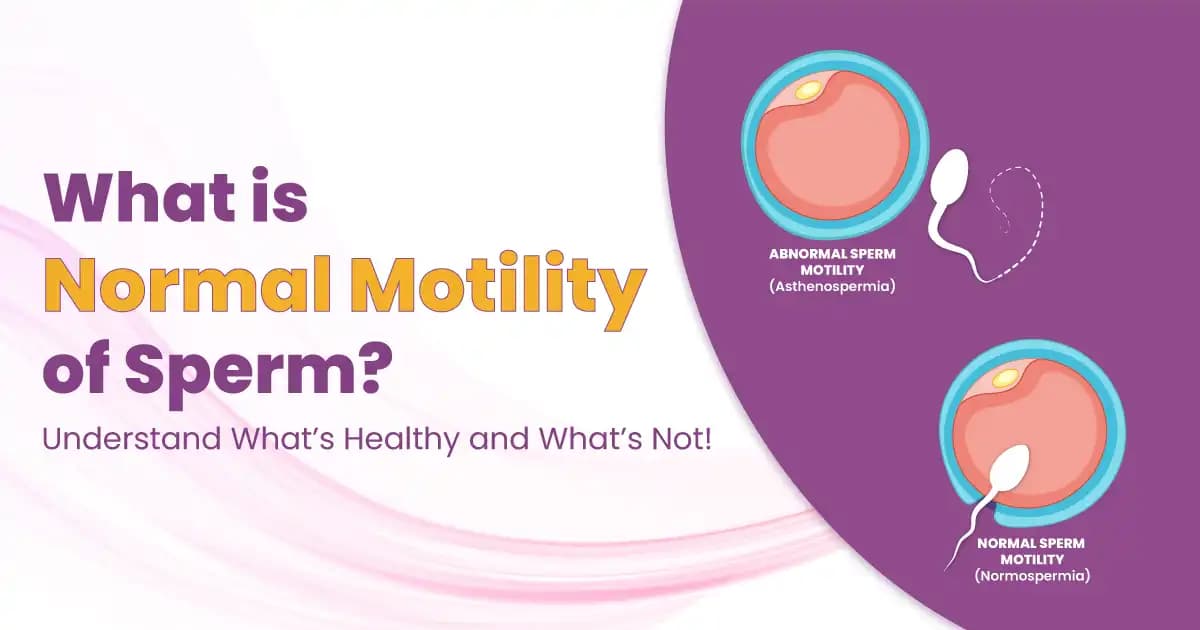
Sperm motility means how well sperm can swim forward to reach and fertilise an egg. According to the World Health Organisation (WHO), at least 40% of sperm should be motile, and at least 32% should move progressively (in a straight line or big circles) for a man to be considered fertile.
In this article
- 1What is Sperm Motility?
- 2What is the Normal Range for Sperm Motility?
- 3Understanding Normal Sperm Motility Range in Detail
- 4Why is Sperm Motility Important for Fertility?
- 5What Happens if Sperm Motility is Low?
- 6What Causes Low Sperm Motility?
- 7What are the Symptoms of Low Sperm Motility?
- 8How is Sperm Motility Tested?
- 9What are the Treatment Methods for Low Sperm Motility?
- 10Can Low Sperm Motility Be Improved?
- 118 Tips to Boost Sperm Motility Naturally
- 12When Should You See a Fertility Specialist?
- 13Bottom Line
- 14Frequently Asked Questions
- 14.1Q1. What is the normal motility of sperm for pregnancy?
- 14.2Q2. Is 70% motility good?
- 14.3Q3. What causes poor sperm motility?
- 14.4Q4. Can I get pregnant if my partner has low motility?
- 14.5Q5. How long does it take to improve motility naturally?
- 14.6Q6. Does age reduce sperm motility?
Without proper motility, even if the sperm count is normal, pregnancy can become difficult. Hence, understanding sperm motility is just as important as knowing sperm count because it directly affects the chances of conception. In this blog, we’ll explain sperm motility in detail, what it means, why it matters, how it is tested, and what can be done to improve it.
What is Sperm Motility?
Sperm motility is the ability of sperm to move efficiently. It’s really important for male fertility because when sperm swim efficiently, especially in a straight line, they have a better chance of reaching and fertilising an egg. Doctors usually check sperm motility during a test called a semen analysis, where they look at both how many sperm there are and how well they move.
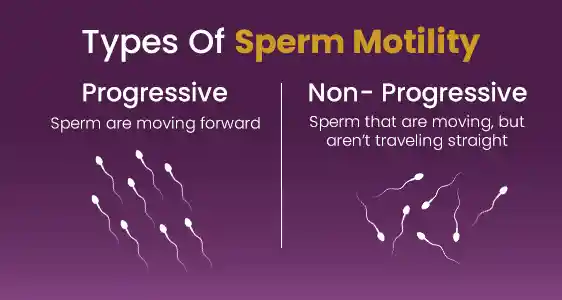
There are two types of motility usually checked in a semen analysis:
Progressive motility – This is the ideal type for fertilisation, where sperm swim forward in a straight line or large circles.
Non-progressive motility – In this type, sperm move but not effectively; they wiggle in place or move in tiny circles.
Also Read - What is Hypospermia?
What is the Normal Range for Sperm Motility?
The World Health Organisation (WHO) has set some guidelines for what normal sperm motility should look like. The normal sperm count to get pregnant is at least 32% and it should move forward in a straight path or in wide circles. For total motility (which includes both progressive and non-progressive movement), at least 40% of sperm should show some kind of movement.
If these numbers fall below these standards, it could mean a condition called asthenozoospermia, or poor sperm motility.
Understanding Normal Sperm Motility Range in Detail
According to the WHO, here is a detailed chart to help you understand what percentage of sperm motility is necessary for pregnancy.
| Motility level | What it means | Total motile sperm (% moving at all) | Progressive motility (% swimming forward) |
|---|---|---|---|
| Reduced / Low | Too few sperm make purposeful forward movement, lowering the odds that one will reach and fertilise the egg. | < 40 % | < 32 % |
| Normal / Optimal | An adequate share of sperm move briskly in a straight line, giving a normal chance of fertilisation. | ≥ 40 % | ≥ 32 % |
Why is Sperm Motility Important for Fertility?
Sperm motility is important for fertility because of the following reasons:
- Helps in Reaching the Egg: The female reproductive tract is like a challenging obstacle course for sperm. That’s why only the healthiest and most energetic sperm can travel all the way from the cervix, through the uterus, and into the fallopian tubes to meet the egg.
- To Penetrate the Egg: Even after sperm reach the egg, they must have strong forward movement to push through the egg’s protective outer shell.
- For Natural Conception: Couples trying to conceive naturally rely on motile sperm. Low motility significantly lowers the odds of pregnancy without medical assistance.
Also Read - Top 5 Fruits to Avoid While Trying to Conceive
What Happens if Sperm Motility is Low?
Low sperm motility causes a rare condition called asthenozoospermia, which refers to a medical condition in men which can make it harder to get pregnant naturally.
However, this doesn’t always mean pregnancy is impossible. Many couples in this situation need help through assisted reproductive techniques.
What Causes Low Sperm Motility?
There are many reasons why sperm may not move well. Some are health-related, while others are linked to lifestyle. Let’s look at the common causes in simple terms:
- Infections
- Lifestyle Habits
- Varicocele
- Heat Exposure
- Being Overweight
- Stress and Poor Sleep
- Lack of Key Nutrients
- Age
- Difficulty in conceiving after trying for a year or more without protection.
- Changes in sexual health, like low sex drive or trouble maintaining erections (often linked with hormonal issues).
- Other health concerns, such as swelling in the testicles, pain, or signs of hormone imbalance (like less body hair or reduced muscle mass).
- Progressive Motility: This shows how many sperm are moving forward in a straight line or in wide, purposeful circles. These are the sperm that have the best chance of reaching an egg.
- Non-progressive Motility: This refers to sperm that are moving but not going forward in a useful way. They might wiggle in place or move in very small circles.
- Immotile sperm: These are sperm that are not moving at all.
- Medications
- Surgery
- Assisted Reproductive Techniques (ART)
- IUI (Intrauterine Insemination): Washed and concentrated sperm are placed directly into the uterus.
- IVF (In Vitro Fertilisation): Eggs are fertilised with sperm in a lab and then placed back into the uterus.
- ICSI (Intracytoplasmic Sperm Injection): A single healthy sperm is directly injected into the egg—very useful when motility is very low.
- Eat foods rich in antioxidants: Add walnuts, sunflower seeds, berries, and leafy green vegetables to your diet.
- Quit smoking and limit alcohol: Smoking and heavy drinking can weaken sperm and reduce their ability to swim. Reducing them significantly or quitting altogether can lead to a clear improvement in sperm health.
- Exercise regularly but avoid overtraining: Doing regular physical activity can improve blood flow and balance hormones, both of which support healthy sperm.
- Manage stress effectively: As high stress levels raise cortisol, which lowers testosterone and negatively affects sperm function, you should do activities like yoga, meditation, or even deep breathing exercises that can help reduce stress.
- Get enough quality sleep: Sleeping 7–8 hours each night helps regulate hormones, which in turn support healthy sperm production and movement.
- Maintain a healthy weight: Being overweight can throw hormones out of balance and increase heat around the groin. Both of these factors reduce sperm motility.
- Avoid unnecessary heat exposure: Sperm are sensitive to heat. Spending too much time in hot tubs, wearing tight underwear, or keeping a laptop on your lap can all increase scrotal temperature and harm sperm motility.
- Don’t ejaculate too often: When trying to conceive, it’s best to ejaculate every 2–3 days. This allows sperm to fully mature and increases the chances of having enough strong, motile sperm.
Also Read - Tracking Male Sperm Count by Age: Detailed Chart
When Should You See a Fertility Specialist?
You should consult a fertility expert if you and your partner have been trying to conceive for over 6-12 months and have been unable to conceive. A test like a semen analysis can reveal if poor motility is the issue.
Consulting a fertility expert at a trusted fertility clinic in Kanpur, such as Crysta IVF, can give you the guidance and reassurance you need to move forward.
Bottom Line
Sperm motility is essential for male fertility. At least 32–40% of your sperm should be moving, ideally in a straight line, to have a healthy chance of reaching and fertilising the egg. Low motility doesn’t always mean infertility, but it can make conception harder.
With timely lifestyle changes, proper testing, and expert guidance, many men can improve their motility and boost their chances of becoming a parent.
Frequently Asked Questions
Q1. What is the normal motility of sperm for pregnancy?
As per WHO standards, at least 40% of sperm should be motile, and at least 32% should move progressively (swimming forward).
Q2. Is 70% motility good?
Yes, 70% motility is considered very good and much higher than the normal requirement.
Q3. What causes poor sperm motility?
Poor motility can be caused by infections, varicocele (swollen veins in the testicles), hormonal imbalance, smoking, alcohol, obesity, stress, heat exposure, or age.
Q4. Can I get pregnant if my partner has low motility?
Yes, pregnancy is still possible, but it may take longer. In some cases, medical help like IUI, IVF, or ICSI may be needed.
Q5. How long does it take to improve motility naturally?
Sperm take about 2–3 months to fully develop, so lifestyle changes usually show improvement in motility within this time.
Q6. Does age reduce sperm motility?
Yes, after 40 - 45 years, sperm motility often declines along with sperm count and quality.
Sexually transmitted infections like chlamydia or gonorrhea, as well as other reproductive tract infections, can damage the tubes that carry sperm. As a result, sperm may become weaker or blocked, which makes them less able to swim.
Smoking, heavy drinking, drug use, and unhealthy eating all take a toll on sperm health. These habits can disturb hormones and damage sperm structure, and therefore, reduce both their numbers and movement.
Varicocele means enlarged veins in the scrotum, similar to varicose veins in the legs. The condition increases heat around the testicles, which gradually damages sperm production and their ability to move.
Spending too much time in hot tubs, saunas, or even resting a laptop on your lap can warm the scrotum. Too much heat interferes with sperm development and, consequently, their ability to swim properly.
Carrying excess weight affects hormone balance by increasing estrogen and lowering testosterone. Moreover, it adds inflammation and extra heat in the groin area, which together reduce sperm quality and motility.
Long-term stress and poor sleep disrupt hormones and reproductive health. This makes sperm less healthy and even harms sperm production.
If there’s a lack of nutrients like zinc, selenium, vitamin E, and antioxidants, then sperm become weaker and have less energy to move effectively.
As men age, especially after 40, sperm quality often drops, which leads to slower movement of sperm.
What are the Symptoms of Low Sperm Motility?
Low sperm motility means sperm don’t move properly or strongly enough to reach the egg. The tricky part is that most men don’t notice clear physical symptoms of low motility. In fact, many only find out after trying to conceive without success.
Some signs that may point toward low sperm motility include:
Since these signs are not always obvious, the only way to know for sure is through a semen analysis test, which checks how many sperm are moving and how well they swim.
Also Read: What is Azoospermia?
How is Sperm Motility Tested?
The most effective way to check sperm motility is through a semen analysis. This test is simple but very informative. During the test, doctors look at a semen sample under a microscope to see how well the sperm are moving. They measure three main things:
For accurate results, doctors usually ask men to avoid ejaculation for 2–5 days before giving the semen sample. This ensures the sperm count and quality are measured correctly. To undergo a semen analysis, connect to Crysta IVF and get a FREE semen analysis on your first booking.
What are the Treatment Methods for Low Sperm Motility?
Low sperm motility doesn’t always mean the end of your fertility journey. With the right medical treatments, many men can still achieve fatherhood. The treatment depends on the cause, and doctors usually suggest one or more of the following options:
If low motility is due to infections, hormonal imbalance, or other medical conditions, doctors may prescribe antibiotics to treat infections and hormone therapy to correct imbalances and improve sperm health.
Sometimes, blocked tubes or swollen veins in the testicles (varicocele) reduce sperm motility. In such cases, a simple surgery can fix the problem and improve sperm movement.
When natural methods are not enough, doctors may suggest advanced fertility treatments like:
Also Read: How Long Does It Take For Sperm To Regenerate?
Can Low Sperm Motility Be Improved?
Yes, in many cases, low sperm motility can be improved. Sometimes small changes in daily habits make a big difference, while in other cases, medical treatment is needed. The good news is that there are many practical steps men can take to boost motility and overall sperm health.
8 Tips to Boost Sperm Motility Naturally
Here are some simple but effective lifestyle changes that may help improve sperm movement:
Disclaimer
As per the "PCPNDT" (Regulation and Prevention of Misuse) Act, 1994, Gender Selection and Determination is strictly prohibited and is a criminal offense. Our centers strictly do not determine the sex of the fetus. The content is for informational and educational purposes only. Treatment of patients varies based on his/her medical condition. Always consult with your doctor for any treatment.
Have questions about your fertility?
Talk to our fertility specialists. Your first consultation is free.
Explore Crysta IVF
Treatments, centres and costs, all in one place.
