


Surrogacy is a fertility treatment where a woman carries and delivers a baby for intended parents. It may help people who are unable to carry a pregnancy due to infertility, medical conditions, repeated IVF failures, or pregnancy-related risks. In India, altruistic gestational surrogacy is the most common type, where the surrogate mother has no genetic connection with the baby. The process usually involves IVF, embryo transfer, legal procedures, pregnancy care, and delivery.
Table of Contents
What is Surrogacy?
Surrogacy is a fertility treatment in which a woman carries and gives birth to a baby for another person or couple, known as the intended parents. People usually consider surrogacy when pregnancy becomes medically difficult, unsafe, or impossible due to infertility, health conditions, repeated pregnancy loss, or problems related to the uterus.
In most modern surrogacy treatments, doctors use altruistic gestational surrogacy. In this process, the surrogate mother does not share a genetic connection with the baby. Doctors create an embryo through IVF using the egg and sperm of the intended parents or donors and then transfer the embryo into the surrogate’s uterus as permitted under applicable law.
In simple words, surrogacy allows you to grow your family even when carrying a pregnancy yourself is not possible.
What are the Different Types of Surrogacy?
Surrogacy can be divided into different types based on how the pregnancy is achieved and the legal or financial arrangement involved. Understanding surrogacy types can help you better understand which form of surrogacy may apply to your situation.
| Type of Surrogacy | What it Means? |
| Gestational Surrogacy | Gestational surrogacy is the most common type of surrogacy today. In this process, doctors create an embryo using IVF and transfer it into the surrogate’s uterus. Since the surrogate’s egg is not used, she does not share a biological connection with the child. |
| Traditional Surrogacy | In traditional surrogacy, the surrogate mother’s egg is used for pregnancy. This means the surrogate is biologically related to the baby. Because of the complexities involved, this type of surrogacy is less common today. |
| Altruistic Surrogacy | Under altruistic surrogacy, the surrogate mother does not receive commercial compensation for carrying the pregnancy. The parents usually cover medical costs, insurance, and pregnancy-related expenses. |
| Commercial Surrogacy | Commercial surrogacy involves financial compensation paid to the surrogate mother apart from medical expenses. Due to ethical reasons, commercial surrogacy is banned in India under current surrogacy laws. |
Note: India currently allows only altruistic surrogacy under regulated conditions.
What is the Difference Between Surrogacy and IVF?
Surrogacy and in vitro fertilisation are both fertility treatment options, but they are not the same. While IVF helps a woman conceive and carry her own pregnancy, surrogacy involves another woman carrying the baby for the intended parents.
Here is the major difference between surrogacy and IVF:
| Basis | Surrogacy | IVF (In Vitro Fertilisation) |
| Meaning | In surrogacy, another woman carries and delivers the baby for the intended parents. | In IVF, eggs and sperm are fertilised in a lab, and the embryo is transferred to the intended mother’s uterus. |
| Who Carries the Pregnancy? | A surrogate mother carries the pregnancy. | The intended mother carries the pregnancy herself. |
| Purpose | Surrogacy is used when a woman cannot safely carry a pregnancy. | IVF is used to help couples conceive naturally when facing fertility issues. |
| Medical Process | Surrogacy involves IVF along with legal and surrogate-related procedures. | IVF involves fertility medications, egg retrieval, fertilisation, and embryo transfer. |
| Legal Involvement | Surrogacy requires legal agreements and eligibility approvals. | IVF procedures are usually minimal compared to surrogacy. |
| Cost | Generally more expensive due to medical and surrogate care costs. | Usually less expensive than surrogacy. |
| Suitable For | Surrogacy is suitable for women with an absent uterus, repeated pregnancy loss, or medical conditions preventing pregnancy. | Couples facing infertility issues such as blocked tubes, low sperm count, or ovulation problems are suggested IVF |
| Success Depends On | Embryo quality, surrogate health, and IVF success. | Egg quality, sperm quality, age, and embryo implantation. |
Who May Need Surrogacy to Become Parents?
Surrogacy may become an option for people who are unable to carry a pregnancy safely or successfully. You may consider surrogacy in the following situations:
- Women Who Cannot Carry a Pregnancy
Some women are born without a uterus, while others may lose it because of cancer, fibroids, heavy bleeding, or other medical conditions. Even when eggs are healthy, pregnancy may not be possible without a healthy uterus. For such parents, surrogacy may provide an opportunity to have a biological child through IVF.
- Couples Facing Repeated IVF Failure
One failed IVF cycle can feel emotionally difficult. Multiple failed cycles can become physically, mentally, and financially exhausting. In these cases, doctors may evaluate whether the uterine environment could be affecting pregnancy and discuss surrogacy as a possible option.
- People Experiencing Recurrent Miscarriages
Repeated miscarriages can leave parents emotionally drained and fearful about trying again. While treatment may help in many cases, some people continue facing pregnancy loss despite medical care.
- Women With Uterine Conditions
Certain conditions such as severe scarring, fibroid conditions, uterine malformations, or a very thin uterine lining may reduce the chances of carrying a pregnancy successfully. In some situations, surrogacy may offer better pregnancy outcomes when other treatments have not worked.
- Women With Serious Health Conditions
Certain medical conditions can make pregnancy dangerous for both the mother and baby. Severe heart disease, kidney disorders, uncontrolled hypertension, or autoimmune conditions may increase pregnancy-related risks.
In such situations, surrogacy may allow parents to avoid serious health complications while still building their family. Women with serious health conditions may be eligible for surrogacy, subject to applicable legal and medical requirements.
- Cancer Survivors
Some cancer treatments can affect fertility, damage the uterus, or make pregnancy unsafe later in life. Many cancer survivors who preserved their eggs or embryos before treatment may choose surrogacy in the future.
Crysta IVF Expert Explains “What People Don’t Fully Understand About the Surrogacy Journey”
“Many people think surrogacy is only about finding a surrogate and completing IVF treatment. But emotionally, medically, and mentally, the journey is often much deeper than they expect.
According to fertility experts, here are some realities about surrogacy that people often do not fully understand:
- Surrogacy may involve long waiting periods before treatment starts.
- A successful embryo transfer cannot always be guaranteed in the first attempt.
- Pregnancy-related anxiety can continue even after implantation succeeds.
- Legal procedures and documentation may take more time than expected.
- Emotional stress can affect both individuals and relationships during the process.
- Financial planning becomes very important because additional cycles may sometimes be needed.
- Family pressure or social opinions can sometimes add emotional burden for intended parents.
At Crysta IVF, we encourage intended parents to ask questions freely and understand every stage carefully before making decisions. Surrogacy is not simply a treatment plan. It is often a deeply personal journey that requires patience, emotional strength, and proper guidance throughout the process.”
Senior IVF Specialist
Crysta IVF, Kolkata
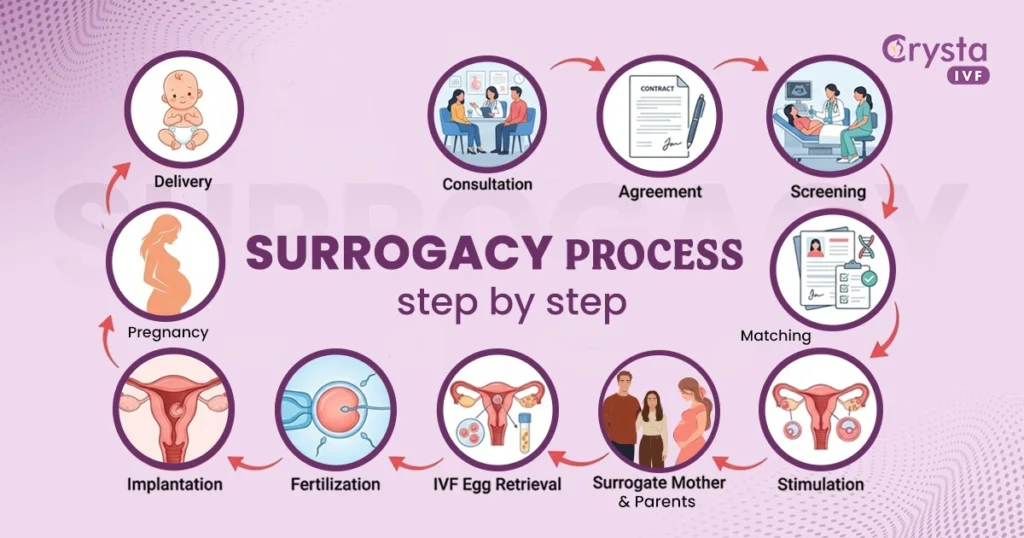
How Does the Surrogacy Process Work Step-by-Step?
Surrogacy happens in several planned stages. Each step is designed to ensure the safety of the intended parents, the surrogate mother, and the baby.
Step 1: Initial Fertility Consultation
The surrogacy process usually begins with a detailed consultation with a fertility specialist. During this stage, doctors review your medical history, previous fertility treatments, pregnancy history, and overall health.
Step 2: Fertility Evaluation and Testing
Doctors may recommend several fertility tests before starting treatment. These tests help assess egg reserve, sperm quality, hormone levels, and reproductive health.
Step 3: Legal Screening and Documentation
Surrogacy in India is regulated under legal guidelines, which means documentation and eligibility verification are important parts of the process. This stage may include medical certificates, consent forms, identity documents, insurance-related paperwork, and legal agreements between all parties involved.
Step 4: Surrogate Mother Screening and Matching
Before moving ahead, the surrogate mother undergoes medical, psychological, and health screening. Doctors usually check pregnancy history, overall health condition, infectious diseases, and emotional readiness for pregnancy.
Step 5: IVF and Embryo Creation
Doctors create embryos through IVF using eggs and sperm from the intended parents or donors. The embryos are then monitored carefully in the IVF laboratory.
Step 6: Embryo Transfer
Once the surrogate’s uterus is medically prepared, doctors transfer a healthy embryo into the uterus through a simple medical procedure.
Step 7: Pregnancy Confirmation, Monitoring & Care
Around 10 – 14 days after embryo transfer, doctors perform blood tests to confirm pregnancy. If implantation is successful, ultrasound scans are later done to monitor fetal development and heartbeat.
Throughout pregnancy, doctors regularly monitor the surrogate mother and baby through scans, blood tests, medications, and routine checkups.
Step 8: Delivery and Completing the Parenthood Journey
After delivery, legal and medical formalities are completed, and the baby is handed over to the parents.
How Long Does the Surrogacy Process Take?
The surrogacy process usually takes around 12 to 18 months because it involves medical evaluations, legal approvals, IVF procedures, embryo transfer, pregnancy monitoring, and delivery.
Here is the timeline for surrogacy:
| Stage | Estimated Timeline |
| Initial consultation and fertility evaluation | 1 – 2 weeks |
| Medical tests and eligibility screening | 2 – 4 weeks |
| Legal documentation and approvals | 2 – 6 weeks |
| Surrogate matching and screening | 1 – 3 months |
| IVF cycle and embryo creation | 2 – 4 weeks |
| Embryo transfer procedure | 1 day |
| Pregnancy confirmation test | Around 10 – 14 days after embryo transfer |
| Pregnancy monitoring and prenatal care | Approximately 9 months |
| Delivery and post-birth formalities | A few days to a few weeks |
Disclaimer: The exact timeline may vary depending on medical conditions, embryo success, legal clearances, and the overall treatment plan.
Why Choose Crysta IVF for Surrogacy in Kolkata?
Crysta IVF Kolkata now provides licensed and ethical surrogacy care closer to intended parents looking for trusted medical guidance and emotional support. With a patient-first approach and compliance with the Surrogacy (Regulation) Act, 2021, Crysta IVF supports you through every stage of the surrogacy journey with transparency and compassion.
Our Key Strengths
- Licensed and ethical surrogacy care under the Surrogacy (Regulation) Act, 2021
- Expert fertility specialists with years of experience in reproductive care
- Personalised treatment plans based on your medical and emotional needs
- Complete guidance for medical, legal, and documentation processes
- Confidential and private consultations in a safe, supportive environment
- Compassionate counselling and emotional support at every step
- No Cost EMI options available to help make fertility treatment more financially manageable
What Are the Surrogacy Laws in India?
Surrogacy in India is regulated under specific legal guidelines of the Surrogacy (Regulation) Act, 2021, as amended from time to time, to protect the rights of the intended parents, the surrogate mother, and the child.
At present, India permits only altruistic surrogacy under regulated conditions. This means the surrogate mother cannot receive commercial compensation for carrying the pregnancy apart from medical expenses and insurance coverage related to the pregnancy.
Key Points About Surrogacy Laws in India
| Legal Aspect | Current Situation in India |
| Type of surrogacy allowed | Altruistic surrogacy |
| Commercial surrogacy | Not allowed |
| IVF involvement | Allowed as part of gestational surrogacy |
| Surrogate compensation | Only medical expenses and insurance coverage are permitted |
| Legal documentation | Mandatory before treatment |
| Medical eligibility | Required for parents |
What Legal Documents are Required for Surrogacy in India?
Legal documentation is one of the most important parts of the surrogacy process in India. Since surrogacy involves medical treatment, parental rights, insurance, and legal responsibility, proper paperwork helps protect the intended parents, the surrogate mother, and the child.
Below is a general checklist of documents that may be required during the surrogacy process:
- Identity proof
- Address proof
- Marriage certificate
- Medical certificates
- Fertility treatment records
- Consent forms
- Surrogacy agreement
- Insurance documents
- Medical screening reports
- IVF treatment documents
What is the Success Rate of Surrogacy in India?
While surrogacy is associated with higher pregnancy success compared to some other fertility treatments, there is no fixed success rate that applies to everyone. However, according to Fertility World, the success rate of surrogacy in India lies between 40% to 85% depending upon the embryo and other factors as well.
The chances of success usually depend on several factors, such as:
- Egg quality
- Embryo quality
- IVF laboratory quality
- Age and Health of the surrogate mother
- Previous fertility history
- Embryo transfer technique
- Proper medical screening
- Surrogate health
- Embryo selection
- Pregnancy monitoring
- Timely medical care throughout pregnancy.
What Are the Risks and Challenges of Surrogacy?
While many couples successfully complete their surrogacy journey, it is important to understand the possible risks beforehand so you can make informed decisions and prepare yourself better throughout the process.
- Multiple pregnancy risks may increase complications for both the surrogate and babies.
- IVF cycles may fail, even after transferring healthy embryos.
- Emotional stress can affect parents during the long treatment journey.
- Legal documentation errors can delay or complicate the surrogacy process.
- Pregnancy-related complications such as high blood pressure or gestational diabetes may occur.
- Premature birth may require special neonatal care for the baby.
- Travel, accommodation, and long-distance coordination can become difficult for outstation couples.
How to Choose the Right Surrogacy Clinic?
Choosing a surrogacy clinic is not only a medical decision. The right clinic should make you feel informed, supported, respected and confident throughout the process.
Here are some important factors you should carefully evaluate before selecting a surrogacy clinic in India:
- Check Whether the Clinic Follows Legal and Ethical Practices
Surrogacy in India is governed by strict laws. A trustworthy clinic will always explain the process clearly and follow government-approved guidelines. Avoid clinics that make unrealistic promises, hide important information, or rush you into decisions.
- Look Beyond Success Rates
Many clinics advertise high success rates, but these numbers may not always reflect your personal chances of success. Age, egg quality, sperm health, embryo quality, and medical history all affect outcomes.
- Evaluate the Experience of the Medical Team
Surrogacy involves fertility specialists, embryologists, counsellors, coordinators, and legal experts working together. The experience of the entire team matters. Look for clinics with experienced IVF specialists in Kolkata, an advanced embryology laboratory, dedicated patient coordinators and access to emotional support.
- Understand the Communication and Support System
Surrogacy can be emotionally overwhelming, especially for couples travelling from another city or country. Clear communication becomes extremely important during this period. Choose a clinic that responds to your questions on time and keeps you updated on every stage.
- Check the Quality of Infrastructure and Laboratory
In surrogacy, embryo quality and laboratory standards play a major role in treatment outcomes. A modern fertility lab with proper technology can improve embryo development and storage conditions.
- Read Real Patient Experiences Carefully
Patient reviews can help you understand how a clinic treats people beyond advertisements. Look for detailed experiences instead of only star ratings. Pay attention to comments on staff behaviour, transparency in pricing, waiting times, etc.
- Understand the Financial Transparency
Surrogacy involves multiple medical, legal, and procedural expenses. A reliable clinic will clearly explain all costs in advance.
- Trust Your Comfort Level
Sometimes, the right clinic is the one where you feel heard, respected, and emotionally safe. During consultations, notice whether doctors take time to understand your concerns or simply focus on selling packages.
Surrogacy is much more than a medical treatment. For many people, it becomes part of a deeply personal journey shaped by years of hope, disappointment, difficult decisions, and emotional recovery. Some intended parents reach this stage after repeated IVF failures, recurrent miscarriages, serious medical conditions, or pregnancy complications that changed the way they imagined parenthood.
It is important to remember that needing surrogacy does not make your journey to parenthood any less real, meaningful, or valid. For many intended parents, surrogacy becomes another way of reaching the same dream.
FAQs About Surrogacy in India
Is Surrogacy Legal in India?
Yes, surrogacy is legal in India and governed by the Surrogacy Regulation Act 2021, as amended from time to time. India currently permits only altruistic surrogacy, which means the surrogate mother cannot receive commercial compensation apart from permitted medical expenses and insurance coverage related to the pregnancy.
How Much Does Surrogacy Cost in India?
The cost of surrogacy in India can vary depending on IVF treatment, medications, legal compliance procedures, medical care, pregnancy monitoring, and hospital expenses. The total cost may also increase if multiple IVF cycles or embryo transfers are required.
What Happens If the First Surrogacy Attempt Fails?
Not every embryo transfer leads to a successful pregnancy. If the first surrogacy attempt fails, doctors usually review embryo quality, implantation factors, medications, and medical history before planning the next step.
How Are Surrogate Mothers Screened and Selected?
Before starting treatment, surrogate mothers usually undergo detailed medical and psychological screening. Doctors may evaluate pregnancy history, overall physical health, infectious disease testing, reproductive health, and emotional readiness for pregnancy.
Why is Surrogacy Expensive?
Surrogacy involves multiple medical, legal, and pregnancy-related procedures over several months. The overall cost may include IVF treatment, fertility medications, embryo creation, medical screening, legal documentation, pregnancy care, hospital delivery charges, and insurance coverage.
Does Insurance Cover Surrogacy?
Yes, Crysta IVF provides insurance coverage for surrogacy. However, it can vary depending on the insurance provider and policy terms. The insurance coverage for the surrogate mother is arranged in accordance with the Surrogacy (Regulation) Act, 2021, including the mandatory insurance coverage period prescribed under applicable law.
Is Surrogacy Safe?
Yes, surrogacy is generally considered safe when the process is medically supervised and proper screening is done for both the surrogate mother and the intended parents.
Disclaimer: The information provided in this article is for educational and informational purposes only and does not constitute medical or legal advice. Eligibility for surrogacy is subject to applicable laws, medical evaluation, and regulatory approvals. Patients should consult a qualified medical professional before making any treatment decisions.