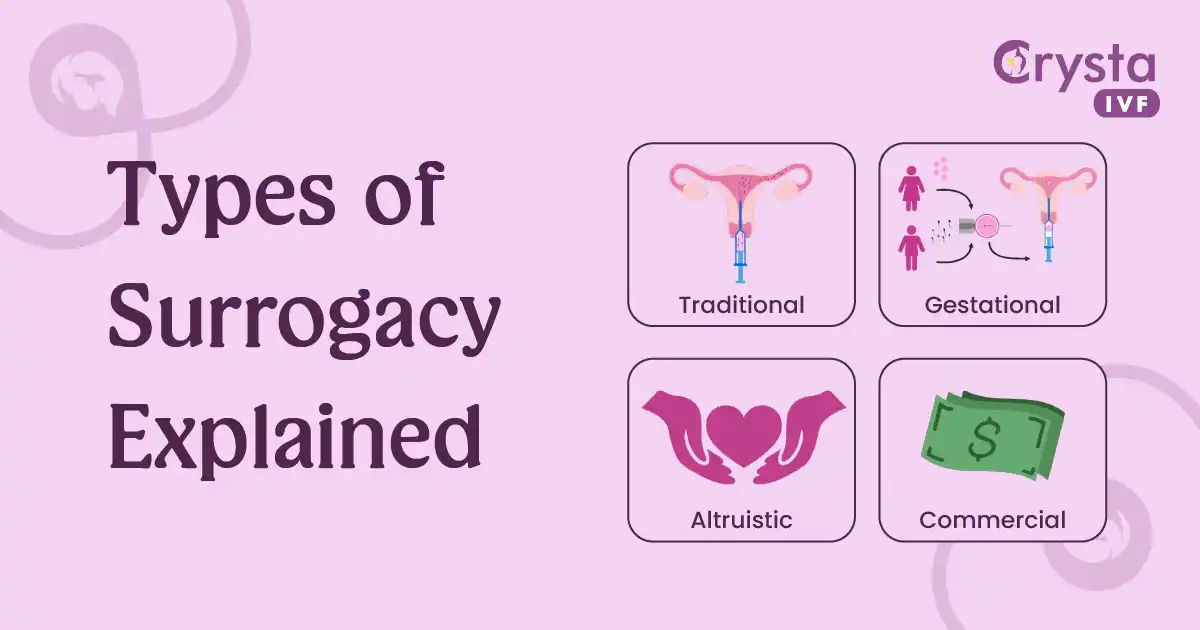


There are four commonly discussed types of surrogacy. It includes gestational surrogacy, traditional surrogacy, altruistic surrogacy, and commercial surrogacy. These options differ in terms of genetic connection, medical procedures, legal considerations, and compensation arrangements. While some types are widely practised, others are restricted or prohibited in certain countries, including India. Understanding these differences can help intended parents choose the most suitable path and avoid confusion later in the journey.
Table of Contents
What is Surrogacy?
Surrogacy is a fertility treatment arrangement in which a woman carries and delivers a baby on behalf of another person or couple, known as the intended parents. After the baby’s birth, the child is raised by the intended parents rather than the surrogate.
Surrogacy is usually considered when carrying a pregnancy is medically difficult, unsafe, or not possible. This may include women born without a uterus, those who have undergone a hysterectomy, individuals with serious health conditions that make pregnancy risky, or couples who have experienced repeated pregnancy losses or unsuccessful fertility treatments.
In India, under the Surrogacy (Regulation) Act, 2021, only altruistic-gestational surrogacy is legal to practice.
Disclaimer: Crysta IVF Kolkata provides altruistic surrogacy guidance and treatment support in compliance with the Surrogacy (Regulation) Act, 2021. Surrogacy eligibility and treatment plans may vary based on individual medical conditions, legal requirements, and regulatory approvals.
What are the Different Types of Surrogacy?
There are four commonly discussed types of surrogacy. It includes gestational surrogacy, traditional surrogacy, altruistic surrogacy, and commercial surrogacy. However, these categories are grouped in two different ways.
- The first classification is based on the surrogate’s genetic relationship to the baby. Under this category, surrogacy is divided into gestational surrogacy and traditional surrogacy.
- The second classification is based on compensation and financial arrangements. This includes altruistic surrogacy, where the surrogate does not receive payment beyond approved expenses, and commercial surrogacy, where compensation is provided for carrying the pregnancy.
What are the Types of Surrogacy Based on Genetic Relationship?
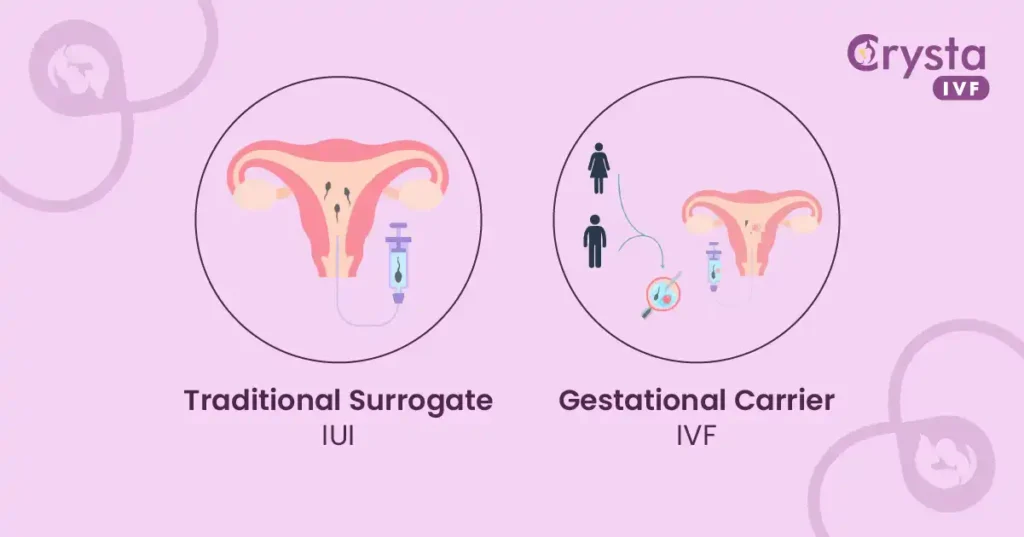
One of the main ways surrogacy is classified is by looking at whether the surrogate is biologically related to the baby she carries. Based on this, surrogacy is divided into two categories, which are gestational surrogacy and traditional surrogacy.
- Gestational Surrogacy
Gestational surrogacy is the most common type of surrogacy practised today. In this arrangement, the surrogate carries a pregnancy but does not use her own egg. Instead, an embryo is created through IVF using the eggs and sperm of the intended parents or donors and then transferred to the surrogate’s uterus. Because the surrogate does not contribute her egg, she has no genetic relationship with the baby.
When to Consider Gestational Surrogacy? It may be considered when a woman is unable to carry a pregnancy due to the absence of a uterus, repeated pregnancy loss, severe medical conditions, or previous unsuccessful fertility treatments.
- Traditional Surrogacy
Traditional surrogacy differs from gestational surrogacy because the surrogate uses her own egg to achieve pregnancy. This means she is genetically related to the baby she carries. Fertilisation may occur through artificial insemination using sperm from the intended father or a sperm donor.
Traditional surrogacy does not always require IVF treatment. Since the surrogate’s own egg is used, conception may occur through artificial insemination rather than embryo transfer. However, the exact process depends on the specific circumstances and applicable regulations.
What are the Types of Surrogacy Based on Compensation?
Surrogacy can also be classified according to how the arrangement is structured financially. This classification includes altruistic surrogacy and commercial surrogacy.
- Altruistic Surrogacy
Altruistic surrogacy is a surrogacy arrangement in which the surrogate does not receive financial compensation for carrying the pregnancy beyond approved medical and pregnancy-related expenses. The primary motivation is to help intended parents have a child rather than to earn income from the arrangement.
In altruistic surrogacy, expenses such as medical care, maternity-related costs, insurance, and other pregnancy-related needs may be covered, depending on local regulations. However, the surrogate is not paid an additional fee for acting as a surrogate.
Currently, only altruistic surrogacy is legal in India through the gestational surrogacy method.
- Commercial Surrogacy
Commercial surrogacy is a surrogacy arrangement in which the surrogate receives financial compensation in addition to reimbursement for medical and pregnancy-related expenses. The compensation is intended to recognise the time, commitment, and physical demands involved in carrying a pregnancy for another person or couple.
Historically, commercial surrogacy was practised in several parts of the world and provided intended parents with a larger pool of potential surrogates. However, it has also raised ethical, legal, and social concerns regarding the commercialisation of pregnancy and the protection of surrogate mothers.
As a result, many countries, including India, have introduced strict regulations or restrictions on commercial surrogacy.
“Crysta IVF Expert Explains Common Question Most Couples Forget to Ask When Exploring Surrogacy”
At Crysta IVF, we often meet intended parents who spend weeks researching the different surrogacy types. They compare gestational and traditional surrogacy, read about altruistic and commercial arrangements, and try to understand the medical process in detail.
However, one important question is often overlooked: “Which surrogacy option is legally and medically suitable for my specific situation?”
This question matters because the most appropriate surrogacy path is not determined by preference alone. Factors such as your medical history, fertility diagnosis, embryo availability, eligibility requirements, and current surrogacy regulations all play an important role in determining which option may be suitable for you.
Dr. Sutapan Samanta
Senior IVF Specialist
Crysta IVF, Kolkata
What’s the Difference Between Gestational Surrogacy vs Traditional Surrogacy?
The biggest difference between gestational surrogacy and traditional surrogacy is the surrogate’s genetic relationship to the baby. Let’s understand the differences in detail.
| Factor | Gestational Surrogacy | Traditional Surrogacy |
| Definition | The surrogate carries an embryo created through IVF but does not provide her own egg in gestational surrogacy. | The surrogate’s own egg is used to achieve pregnancy in traditional surrogacy. |
| Genetic relationship with the baby | No genetic relationship of baby with surrogate mother. | The surrogate is genetically related to the baby. |
| Who provides the egg? | Intended mother, egg donor, or previously created embryos are used in gestational surrogacy. | The surrogate herself provides the egg in this procedure. |
| Is IVF required? | Yes. IVF is necessary to create and transfer the embryo. | Not always. Pregnancy may occur through artificial insemination. |
| Embryo transfer involved? | Yes. An embryo is transferred into the surrogate’s uterus. | Usually no embryo transfer is involved because the surrogate’s egg is fertilised directly. |
| Biological mother of the baby | The surrogate is not the biological mother in gestational surrogacy. | The surrogate is the biological mother because her egg is used. |
| Intended parents’ genetic connection | The baby may be genetically related to one or both intended parents, depending on whose eggs and sperm are used. | The baby may be genetically related to the intended father, but not to the intended mother unless donor arrangements are involved. |
| Medical process | This involves ovarian stimulation, egg retrieval, embryo creation, and embryo transfer. | This usually involves insemination using the surrogate’s egg. |
| Overall preference today | Preferred by most fertility specialists and intended parents. | Less commonly preferred due to genetic and legal complexities. |
“Key Differentiation Between Gestational and Traditional Surrogacy: While both arrangements involve a surrogate carrying a pregnancy, the presence or absence of a genetic connection is what fundamentally separates gestational surrogacy from traditional surrogacy.”
What’s the Difference Between Altruistic Surrogacy vs Commercial Surrogacy?
The primary difference between altruistic surrogacy and commercial surrogacy is how the surrogate is compensated for carrying the pregnancy. Let’s understand the differences in detail.
| Factor | Altruistic Surrogacy | Commercial Surrogacy |
| Definition | In altruistic surrogacy, the surrogate does not receive financial compensation beyond approved medical and pregnancy-related expenses. | In commercial surrogacy, the surrogate receives financial compensation in addition to medical and pregnancy-related expenses. |
| Primary purpose | Helping intended parents build a family. | Helping intended parents while receiving compensation for carrying the pregnancy. |
| Additional payment to surrogate | No additional payment is made to the surrogate mothers. | Yes, the surrogate mothers receive payments for themselves. |
| Relationship with intended parents | Often involves a close relative, friend, or someone willing to help without financial gain. | May involve a surrogate chosen through regulated matching processes where permitted. |
| Surrogate’s role during pregnancy | Carries the pregnancy on behalf of intended parents without additional compensation. | Carries the pregnancy on behalf of intended parents with compensation. |
| Legal regulation | Altruistic surrogacy is permitted under stricter legal frameworks. | Commercial surrogacy is restricted or prohibited in India. |
| Cost to intended parents | Generally lower because no additional surrogate compensation is involved. | Generally higher because compensation is paid in addition to medical and legal expenses. |
Which Type of Surrogacy is Legal in India?
If you’re exploring surrogacy in India, understanding the legal framework is just as important as understanding the medical process. Many intended parents are surprised to learn that not all surrogacy types discussed globally are permitted under Indian law.
Under the Surrogacy (Regulation) Act, 2021, only altruistic surrogacy is legally permitted in India. Commercial surrogacy, where a surrogate receives financial compensation beyond approved medical and pregnancy-related expenses, is banned.
The law was introduced to regulate surrogacy practices and help prevent the exploitation and commercialisation of surrogate mothers.
| Type of Surrogacy | Legal Status in India |
| Altruistic Surrogacy | Permitted under specific legal and medical conditions |
| Commercial Surrogacy | Prohibited |
| Gestational Surrogacy | Generally used within the legal surrogacy framework |
| Traditional Surrogacy | Not the standard form of regulated surrogacy in India |
What are the Common Myths About Different Types of Surrogacy?
Surrogacy is mostly misunderstood. These misconceptions can create confusion for intended parents who are trying to understand their options. Let’s look at some of the most common myths and the facts behind them.
Myth 1: Every Surrogate is Genetically Related to the Baby
Fact: In gestational surrogacy, the surrogate carries the pregnancy but does not provide her own egg. As a result, she has no genetic relationship with the baby. The embryo is created using the eggs and sperm of the intended parents or donors through IVF.
Myth 2: Gestational and Traditional Surrogacy are the Same
Fact: While gestational and traditional involve a surrogate carrying a pregnancy, they differ in one important way: the surrogate’s biological connection to the child.
In gestational surrogacy, the surrogate is not genetically related to the baby. In traditional surrogacy, she is the biological mother because her egg is used. This distinction can affect medical planning, legal considerations, and parental rights.
Myth 3: Altruistic Surrogacy Means the Surrogate Receives No Support
Fact: Altruistic surrogacy does not mean the surrogate is expected to bear pregnancy-related expenses on her own.
Although the surrogate does not receive additional compensation for carrying the pregnancy, approved medical expenses, insurance coverage, and other pregnancy-related costs may be covered according to applicable regulations and agreements.
Myth 4: The Surrogate Automatically Becomes the Child’s Mother
Fact: Legal parenthood is determined by the applicable laws and surrogacy regulations, not simply by carrying the pregnancy.
In gestational surrogacy, the surrogate is not genetically related to the child. Legal processes are designed to establish the parental rights of the intended parents according to the regulations governing the surrogacy arrangement.
Myth 5: Choosing a Surrogacy Type Is Only a Medical Decision
Fact: Surrogacy involves much more than medical treatment.
The choice between different types of surrogacy can be influenced by legal requirements, eligibility criteria, genetic preferences, ethical considerations, financial arrangements, and personal circumstances.
Which Type of Surrogacy Has the Highest Success Rate?
According to research done by the National Institute of Health, gestational surrogacy generally has higher success rates than traditional surrogacy, largely because it relies on IVF technology and allows fertility specialists greater control over embryo selection and treatment planning.
However, it’s important to understand that surrogacy success is not determined by the type of surrogacy alone. Several medical factors play a much bigger role in the outcome of a surrogacy journey.
What are the Factors That Affect Surrogacy Success?
Many people assume that choosing a particular type of surrogacy automatically guarantees better results. In reality, success depends on a combination of factors, including:
- The quality of the embryo being transferred
- The age and reproductive health of the egg provider
- The health and uterine condition of the surrogate
- The quality of the sperm used
- The IVF laboratory and treatment protocols
- The surrogate’s overall health and pregnancy history
Conclusion
Understanding the different types of surrogacy is an important first step for anyone exploring surrogacy as a path to parenthood. While gestational and traditional surrogacy differ based on the surrogate’s genetic relationship with the baby, altruistic and commercial surrogacy are distinguished by how the arrangement is structured financially and legally.
For most intended parents today, altruistic-gestational surrogacy has become the most commonly practised option due to advances in IVF and the absence of a genetic connection between the surrogate and the child.
If you’re considering surrogacy, speaking with experienced fertility specialists can help you understand which options may be appropriate for your unique situation and what steps may be involved in the journey ahead.
FAQs About Types of Surrogacy
Which type of surrogacy is most commonly used?
Gestational surrogacy is the most commonly used form of surrogacy today. In this arrangement, the surrogate carries an embryo created through IVF but does not provide her own egg, meaning she has no genetic relationship with the baby.
Can a surrogate use her own egg?
Yes, a surrogate can use her own egg in traditional surrogacy. However, traditional surrogacy is much less common than gestational surrogacy today and is banned in India.
Is gestational surrogacy safer legally?
Gestational surrogacy is often considered legally simpler because the surrogate does not have a genetic connection to the child. This separation between pregnancy and genetic parenthood can help reduce certain legal complexities.
Which surrogacy option is allowed in India?
Under the Surrogacy (Regulation) Act, 2021, altruistic surrogacy is permitted in India subject to specific legal and medical requirements.
Is traditional surrogacy legal in India?
No, The traditional surrogacy is illegal in India, Under the Surrogacy (Regulation) Act, 2021, only gestational surrogacy is permitted in India.
Can a surrogate be genetically related to the baby?
Yes, a surrogate can be genetically related to the baby in traditional surrogacy because her own egg is used to achieve pregnancy.
How do I know which type of surrogacy is right for me?
The most suitable type of surrogacy depends on several factors, including your medical history, fertility diagnosis, family-building goals, embryo availability, and legal eligib