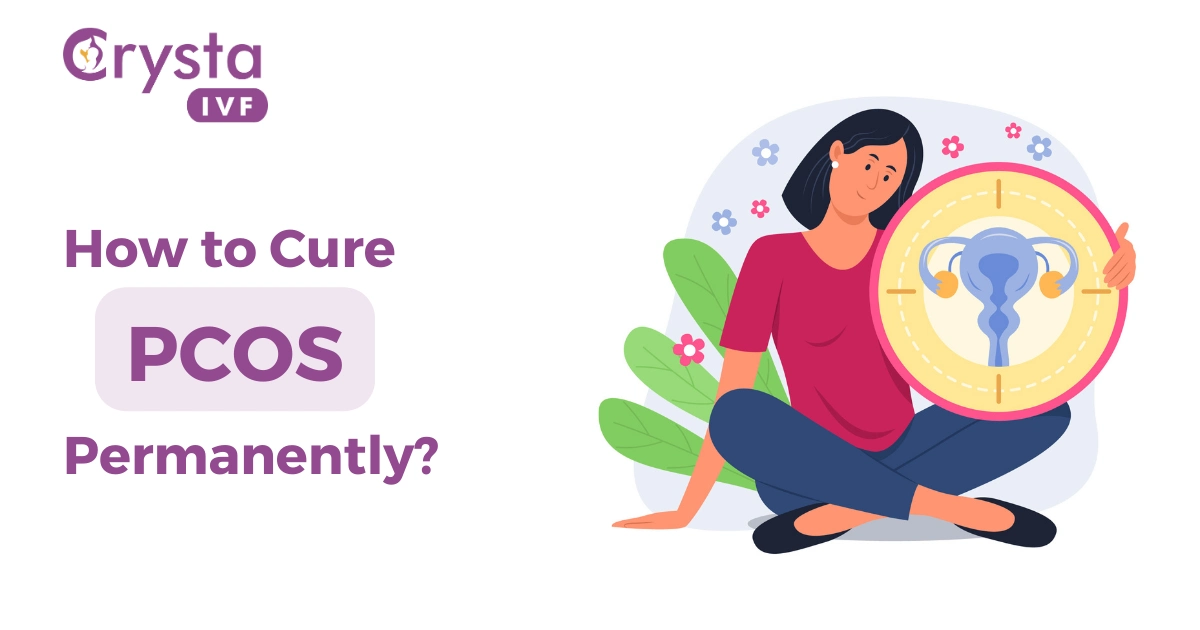


PCOS cannot usually be cured permanently because it is a long-term hormonal condition. However, its symptoms can be controlled successfully through healthy lifestyle changes, weight management, regular exercise, a balanced diet, stress reduction, and medical treatment when needed.
Many women with PCOS are able to regulate their periods, improve ovulation, conceive naturally or with fertility support, and live symptom-free for long periods by following a personalised treatment plan.
What Exactly is PCOS?
Polycystic Ovary Syndrome (PCOS) is a common hormonal condition that affects women of reproductive age. It occurs when the ovaries produce higher-than-normal levels of male hormones called androgens, which can interfere with the normal growth and release of eggs during the menstrual cycle.
According to the NHS, and World Health Organisation (WHO) three main features define PCOS:
- Irregular or absent periods – due to disrupted ovulation
- Excess male hormones (androgens) – causing acne, excess facial hair, or hair thinning
- Polycystic ovaries – where the ovaries contain multiple small fluid-filled follicles
Not everyone has all three features, and symptoms can vary — which is why treatment is often personalized.
What is the New Name of PCOS?
As of May 2026, Polycystic Ovary Syndrome (PCOS) has officially been renamed Polyendocrine Metabolic Ovarian Syndrome (PMOS) following a global consensus involving researchers, healthcare professionals, patient advocacy groups, and international medical organisations. The name change was announced in The Lancet and has been adopted by major endocrine and women’s health organisations worldwide.
Can PCOS Be Cured Permanently?
No, PCOS cannot usually be cured permanently. It is a long-term hormonal and metabolic condition that affects how the ovaries function and how the body regulates hormones and insulin. While there is currently no permanent cure, the symptoms of PCOS can often be managed very effectively.
Many women are able to restore regular menstrual cycles, improve ovulation, achieve a healthy weight, reduce acne and excess hair growth, and improve their chances of pregnancy through a combination of lifestyle changes, medical treatment, and regular follow-up care. In some cases, symptoms may become so well-controlled that they are barely noticeable for years.
Why PCOS Cannot Be Cured Permanently?
PCOS cannot be cured permanently because it is a chronic hormonal and metabolic condition. It develops due to a combination of genetic, hormonal, and lifestyle-related factors that affect how the body functions over time. Unlike an infection that can be treated with medicine and eliminated, PCOS is a lifelong condition that requires ongoing management.
The main reasons PCOS cannot be permanently cured include:
- It has a genetic component: If PCOS runs in your family, you may have an inherited tendency to develop the condition. Genetics cannot be changed with current treatments.
- Hormonal imbalances can persist: Women with PCOS often have higher levels of androgens (male hormones), which interfere with normal ovulation. Treatment can help balance these hormones, but it does not permanently correct the underlying hormonal tendency.
- Insulin resistance is a long-term condition: Many women with PCOS have insulin resistance, where the body’s cells do not respond properly to insulin. This contributes to weight gain, irregular periods, and fertility issues. Managing insulin resistance is an ongoing process.
- PCOS affects multiple body systems: It is not just an ovarian condition. It also affects metabolism, hormone regulation, reproductive health, and long-term health, making it a lifelong condition rather than a disease with a one-time cure.
- Symptoms can return: Even after successful treatment, symptoms such as irregular periods, acne, or weight gain may return if healthy lifestyle habits or prescribed treatments are stopped.
Note: Although PCOS cannot be cured permanently, it can be managed very effectively. Many women are able to regulate their menstrual cycles, improve ovulation, achieve pregnancy, maintain a healthy weight, and reduce symptoms for years by following a personalised treatment plan.
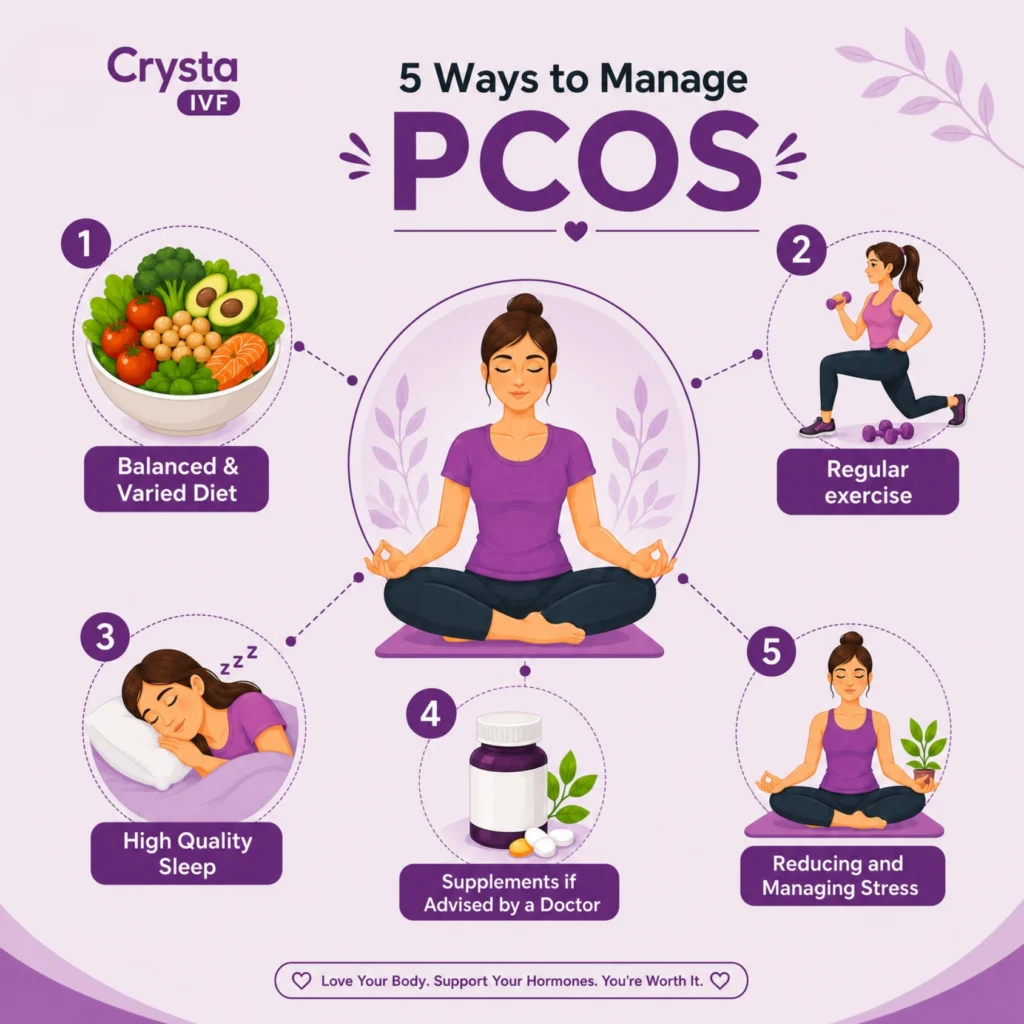
5 Effective Ways to Manage PCOS Effectively
PCOS symptoms can be controlled effectively by combining healthy lifestyle changes with medical treatment when needed. Since PCOS is a long-term hormonal and metabolic condition, there is no single treatment that works for everyone.
Here are the best 5 ways of how you can manage PCOS effectively:
1. Fix the Foundation — Lifestyle Changes
According to the NHS, lifestyle change is the most effective treatment for PCOS, especially if you’re overweight or have insulin resistance.
Eat Smart: The PCOS-Friendly Diet
A balanced diet can work better than medicine for many women.
Here’s what experts recommend:
| Food to Eat More for PCOS: | Food to Restrict for PCOS: |
| Whole grains (brown rice, oats, quinoa) | Sugary foods and drinks |
| Lean protein (chicken, fish, tofu, eggs) | White bread, pasta, processed snacks |
| Fresh fruit and vegetables (5+ portions a day) | Fried and fast foods |
| Healthy fats (avocado, olive oil, nuts, seeds) | Processed meats like hot dogs, sausage, red meat, etc. |
Learn more: Nutrition and PCOS
Why it works:
Reducing sugar and refined carbs helps improve insulin sensitivity — and better insulin control means fewer hormonal imbalances.
Bonus Tip:
Try a low-GI (glycemic index) diet — it keeps blood sugar levels steady and has been shown in studies to reduce PCOS symptoms.
Move More: Exercise for Hormonal Balance
You don’t need to hit the gym for hours. What matters is consistency.
Aim for:
- 150 minutes of moderate exercise per week (like brisk walking, cycling, dancing)
- Add strength training twice a week (to boost metabolism and regulate insulin)
Even a 5% weight loss can significantly improve PCOS symptoms, according to the NHS.
Stress Less, Sleep More
High stress and poor sleep worsen PCOS symptoms by raising cortisol (stress hormone).
Try:
- Yoga, meditation, or deep breathing
- Setting a regular sleep schedule
- Reducing caffeine after 4 p.m.
Your hormones love routine — give your body consistency.
Also Read: Can i have baby if i have PCOS?
2. Natural & Home Remedies (Evidence-Supported)
While natural remedies can’t replace medical care, they can support your healing journey.
Here are some that have shown promise in research:
- Spearmint Tea
Studies suggest spearmint tea can reduce testosterone levels and help with unwanted facial hair when consumed regularly (2 cups daily).
- Cinnamon
Cinnamon may improve insulin sensitivity and menstrual regularity. Add it to your morning tea, coffee, or oats.
- Holistic Habits
- Practice yoga or mindfulness for stress balance.
- Keep a symptom journal to track what affects your cycle or skin.
- Avoid crash diets — sustainable habits create long-term results.
- Practice yoga or mindfulness for stress balance.
3. Manage Insulin Resistance
Insulin resistance is one of the main reasons many women develop PCOS symptoms. Improving insulin sensitivity can help:
- Restore ovulation
- Reduce androgen levels
- Improve menstrual regularity
- Lower the risk of diabetes
Your doctor may recommend lifestyle changes alone or prescribe medications such as insulin-sensitising medicines if required.
4. Take Medicines as Prescribed
Lifestyle changes form the foundation of PCOS management, but medications may be necessary depending on your symptoms.
Your doctor may prescribe medicines to:
- Regulate menstrual cycles
- Induce ovulation if you are trying to conceive
- Reduce acne and excessive hair growth
- Improve insulin resistance
- Support fertility treatment when needed
Avoid self-medicating or taking supplements without medical advice, as treatment should be tailored to your individual needs.
5. Living Long-Term with PCOS
Think of PCOS as a long-term hormonal imbalance — not a life sentence.
Here’s how to stay on track:
- Get regular check-ups (blood sugar, cholesterol, blood pressure).
- Stay consistent — lifestyle habits matter more than short bursts of effort.
- Be kind to yourself — hormonal changes take time to rebalance.
- Join support groups or communities (you’re not alone in this journey).
Crysta IVF Expert Advice: The Biggest Mistake Women Make While Trying to Cure PCOS
“One of the biggest misconceptions I see is that women are searching for a ‘permanent cure’ for PCOS instead of focusing on long-term management. This often leads them to try fad diets, unproven supplements, or social media remedies that promise quick results.
Unfortunately, these approaches rarely address the root causes of the condition and may even delay effective treatment.
Some common mistakes women make when curing PCOS, which you should definitely avoid, include:
- Looking for a quick fix instead of long-term management.
- Following advice from social media without medical guidance.
- Many women focus only on irregular periods or weight gain, while untreated insulin resistance continues to drive the condition.
- Stopping treatment as soon as symptoms improve.
- Delaying medical consultation when trying to conceive.
Remember, PCOS is not a condition that should be feared, it is a condition that should be understood. The key is to stop chasing miracle cures and start following a treatment plan that is backed by medical evidence.”
Dr. Nidhi Sehrawet
Senior IVF Specialist
Crysta IVF, Delhi
What are the Medical Treatments Available for PCOS?
The medical treatment for PCOS depends on your symptoms, age, and whether you are planning a pregnancy. There is no single medicine that treats every aspect of the condition. Instead, doctors create a personalised treatment plan to manage hormonal imbalance, regulate menstrual cycles, improve insulin resistance, relieve symptoms, and support fertility when needed.
Here are the most commonly recommended medical treatments for PCOS:
1. Medicines to Regulate Menstrual Cycles
If you are not trying to conceive, your doctor may prescribe hormonal medications to help regulate your menstrual cycle. Regular periods are important because they reduce the risk of abnormal thickening of the uterine lining (endometrium).
These medicines may also help:
- Make periods more regular
- Reduce menstrual pain
- Protect the uterus from long-term complications
2. Medicines to Improve Insulin Resistance
Many women with PCOS have insulin resistance, which can lead to high insulin levels, weight gain, and irregular ovulation.
Doctors may prescribe insulin-related medicines to:
- Improve the body’s response to insulin
- Lower blood sugar levels
- Support weight management
- Promote more regular ovulation in some women
These medicines work best when combined with a healthy diet and regular physical activity.
3. Medicines to Induce Ovulation
If you are trying to become pregnant but are not ovulating regularly, fertility medicines may be recommended to stimulate egg release.
Ovulation-inducing medications can:
- Encourage the ovaries to release a mature egg
- Increase the chances of natural conception
- Improve pregnancy rates in women with ovulatory infertility
Treatment is usually monitored with ultrasound scans and hormone tests to ensure the ovaries respond safely.
4. Surgery (Rarely Needed)
If medications do not help restore ovulation, a minor surgical procedure called laparoscopic ovarian drilling (LOD) may be considered in selected cases.
During this procedure, small openings are made in the surface of the ovaries using heat or laser energy to reduce androgen production and encourage ovulation.
Because effective medicines are now widely available, ovarian drilling is performed much less often than in the past.
When is IVF Recommended for Women With PCOS?
In vitro fertilisation is not the first treatment for women with PCOS (formerly known as PCOS). Most women with PCOS can conceive naturally or with simpler fertility treatments such as lifestyle changes, ovulation induction medicines, or intrauterine insemination (IUI). IVF is usually recommended only when these treatments have not been successful or when other fertility problems are also present.
A fertility specialist will evaluate your age, ovarian reserve, how long you have been trying to conceive, and your partner’s fertility before recommending IVF.
IVF may be recommended in the following situations:
- Ovulation Medicines Have Not Worked
Many women with PCOS do not ovulate regularly. Doctors usually begin treatment with ovulation-inducing medicines. If these medicines fail to stimulate ovulation or pregnancy does not occur after several treatment cycles, IVF may be the next step.
- Multiple Fertility Treatments Have Failed
If pregnancy has not been achieved after several well-timed cycles of ovulation induction or IUI, IVF offers a higher chance of fertilisation by bringing the egg and sperm together in a controlled laboratory environment.
- There Are Additional Fertility Problems
IVF may be recommended sooner if PCOS is combined with other fertility issues, such as:
- Damaged or blocked fallopian tubes
- Moderate to severe endometriosis
- Low ovarian reserve due to age or other factors
- Severe male factor infertility, such as very low sperm count or poor sperm movement
Treating these conditions often requires assisted reproductive techniques beyond ovulation medicines.
- Advanced Maternal Age
Female fertility naturally declines with age, especially after 35 years. If a woman with PCOS is in her late thirties or older, doctors may recommend IVF earlier to improve the chances of pregnancy and reduce the time spent on less effective treatments. Hence, if you have PCOS, connect with doctors to know the best age to get pregnant with PCOS.
- Long-Standing Infertility
Couples who have been trying to conceive for a long time without success may benefit from IVF, particularly if previous diagnoses and treatments have not identified a solution.
- Genetic Testing is Needed
Some couples have an increased risk of passing on certain inherited genetic conditions. In these situations, IVF can be combined with Preimplantation Genetic Testing (PGT) to screen embryos for specific genetic disorders before embryo transfer, when medically indicated.
If you are finding it difficult to conceive despite managing PMOS symptoms or have been trying to get pregnant without success, it is important to seek timely medical advice. At Crysta IVF, our experienced fertility specialists provide personalised care for women with PMOS, offering everything from ovulation induction and IUI to advanced IVF treatment when required.
Also Read: Can I have a baby if I have PCOS?
Final Takeaway
While PCOS cannot usually be cured permanently, it is a condition that can be managed successfully with the right approach. Healthy lifestyle changes, a balanced diet, regular exercise, stress management, and personalised medical treatment can help regulate menstrual cycles, improve ovulation, support fertility, and reduce the risk of long-term health complications.
The most important step is to seek the right medical advice from a fertility expert or gynaecologist rather than relying on quick fixes or unverified remedies. Early diagnosis and consistent treatment can make a significant difference in controlling symptoms and improving your overall quality of life.
Real healing = sustainable habits + proper guidance + patience.
FAQs About Curing PCOS Permanently
Can a woman live a normal life with PCOS?
Yes. Most women with PCOS can live a healthy and normal life. Early diagnosis, regular follow-up, and a personalised treatment plan can help manage symptoms, regulate menstrual cycles, and improve fertility.
What is the fastest way to control PCOS symptoms?
The most effective and fastest approach is to combine doctor-prescribed hormone and insulin medicines with a healthy diet, regular exercise, weight management, and stress reduction.
Is PCOS a lifelong condition?
Yes, PCOS is generally considered a lifelong condition because it is influenced by hormonal, metabolic, and genetic factors. Although it cannot usually be cured permanently, its symptoms can be effectively managed with the right treatment.
Can PCOS affect fertility?
Yes. PCOS is one of the most common causes of female infertility because it can prevent regular ovulation.
Can PCOS be cured naturally without medicine?
No, there is no natural cure for PCOS. However, many women can significantly improve their symptoms through healthy eating, regular physical activity, maintaining a healthy weight, managing stress, and getting enough sleep.
Does losing weight cure PCOS?
No, losing weight does not cure PCOS. However, if you are overweight, losing even 5% to 10% of your body weight can improve insulin resistance, regulate menstrual cycles, promote ovulation, and reduce many PCOS symptoms.
What foods should be avoided in PCOS?
Women with PCOS should try to limit foods that include sugary drinks, sweets, refined carbohydrates such as white bread and pastries, deep-fried foods, processed snacks, and highly processed foods.
Is IVF necessary for every woman with PCOS?
No. IVF is not the first-line treatment for PCOS. Many women conceive naturally or with simpler fertility treatments such as ovulation induction medicines or IUI.
At what age does PCOS usually improve?
For some women, PCOS symptoms may become less noticeable as they approach their late 30s or 40s due to natural hormonal changes.