
Medically Reviewed By
Dr. Nidhi Sehrawet

Pregnancy is often a time filled with excitement and hope, but sometimes, things don’t go as expected. One such rare yet serious condition is an ectopic pregnancy, where the fertilised egg implants outside the uterus. This type of pregnancy cannot continue normally and can become life-threatening if not treated in time.
Knowing the ectopic pregnancy symptoms early is crucial because the sooner you seek medical help, the safer you’ll be. So, let’s connect and understand the common ectopic pregnancy symptoms and the importance of seeking medical assistance on time.
What is Ectopic pregnancy?
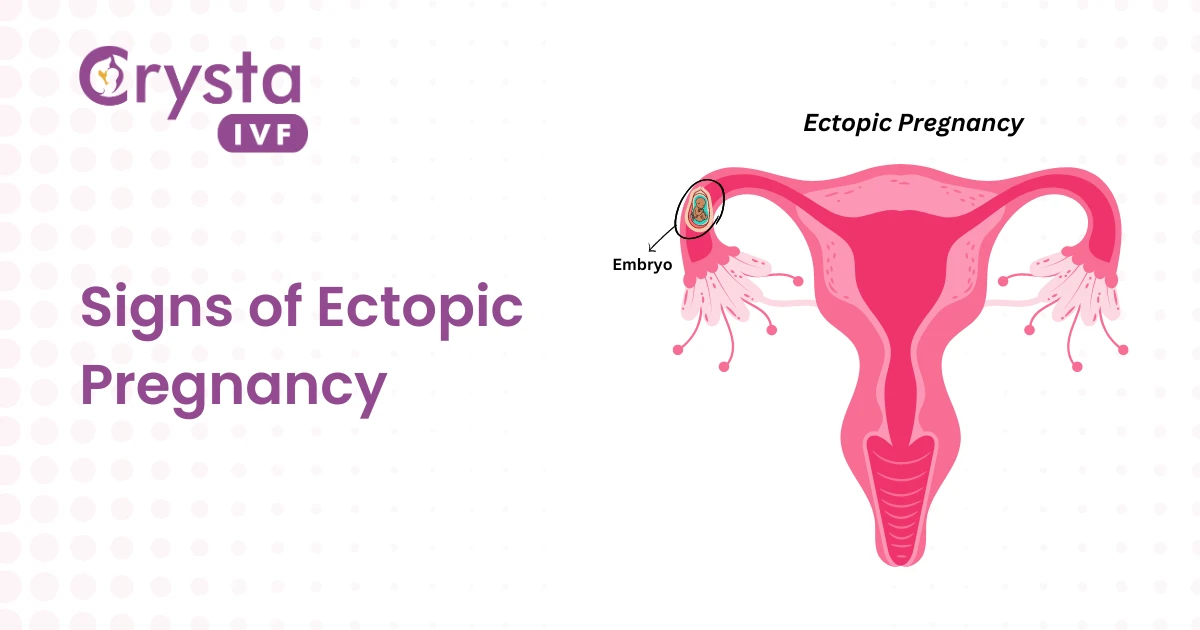
Ectopic pregnancy is a condition in which a fertilised egg gets implanted and grows outside the uterus, usually within the fallopian tubes. While in a normal pregnancy, the fertilised egg travels through the fallopian tube and implants itself in the uterine lining, where it can develop into a healthy fetus.
Usually, the most common site for ectopic pregnancies is the fallopian tube, but it can also result in other reproductive areas such as the ovary, cervix, or abdominal cavity. According to research on Ectopic pregnancy, 97% of ectopic pregnancies occur in the fallopian tubes, but can also be found in other locations such as the ovary, cervix, or even a previous cesarean scar.
You should know that ectopic pregnancies cannot proceed normally and can pose severe risks to the mother’s health if not detected early.
RELATED – Can You Get Pregnant with Just One Fallopian Tube? Here’s What Experts Say
What are the Causes of an Ectopic Pregnancy?
After fertilization, the egg takes 4-5 days to travel through the fallopian tube before attaching itself to the uterus wall. However, any damage to your fallopian tube can make it narrow and can cause the egg to attach to the tube leading to ectopic pregnancy. It can also occur due to other reasons such as:
- A previous ectopic pregnancy
- Swelling of inflammation in the reproductive organs
- Sexually transmitted diseases (STDs)
- Eggs get implanted in previous C-section scars.
- Cigarette smoking before or during pregnancy
- Use of contraceptive devices like intrauterine devices (IUDs)
- Fertility drugs or other fertility treatments
RELATED– When Should You Take A Pregnancy Test?
What are the Ectopic Pregnancy Symptoms?
If an ectopic pregnancy occurs, the result is shown within the first few weeks of pregnancy. In some cases, you might not be aware of its presence. Here are some of the early signs of ectopic pregnancy you may notice:
- Light Vaginal Bleeding: You may notice spotting or light bleeding that’s different from your regular period.
- Mild Abdominal or Pelvic Pain: A mild ectopic pregnancy pain may start on one side and feel dull or sharp.
- Shoulder Pain: Pain in your shoulder, especially when lying down, can be a sign of internal bleeding irritating the diaphragm.
- Weakness or Dizziness: Low blood pressure due to internal bleeding can cause fainting, weakness, or lightheadedness.
- Upset Stomach or Vomiting: Hormonal changes or internal pressure from the ectopic pregnancy may lead to nausea or vomiting.
Ectopic pregnancy may have serious complications, including but not limited to rupture of the fallopian tubes. However, if you experience any serious symptoms such as heavy vaginal bleeding, severe pain, or lightheadedness, consult a doctor immediately.
RELATED– What is the Beta hCG Test and How it Relates to Pregnancy
Crysta IVF Experts’ Recommendation for Females with Ectopic Pregnancy Symptoms
“Many women tend to ignore mild pain or spotting in early pregnancy, assuming it’s normal, but sometimes, these are the first warning signs of an ectopic pregnancy. If something doesn’t feel right, don’t wait or try to manage it at home. Reach out to your doctor immediately.
Remember, early medical attention can make a life-saving difference, prevent internal complications, and preserve your fertility for future pregnancies.
~ Dr. Nidhi Sehrawet
Senior IVF Specialist at Crysta IVF, Delhi
What are the Signs of a Ruptured Ectopic Pregnancy?
A ruptured ectopic pregnancy is a medical emergency that occurs when the growing embryo causes the fallopian tube to burst. This leads to internal bleeding and can be life-threatening if not treated immediately.
Here’s an overview of the warning signs of a ruptured ectopic pregnancy:
| Sign or Symptom of Ectopic Pregnancy | Description |
| Severe abdominal pain | Intense, sharp, or stabbing pain that may come suddenly and feel worse on one side. |
| Shoulder pain | Pain in the shoulder tip caused by internal bleeding irritating the diaphragm. |
| Heavy vaginal bleeding | Sudden, heavy bleeding that’s different from a period. |
| Dizziness or fainting | A result of internal bleeding leading to low blood pressure. |
| Weakness or confusion | Feeling extremely weak, lightheaded, or disoriented. |
| Pale or clammy skin | Signs of shock due to significant internal blood loss. |
Can Ectopic Pregnancy Be Treated?
Yes, ectopic pregnancy can be treated, but it must be detected early to prevent serious health risks. Since the fertilised egg cannot survive outside the uterus, the main goal of treatment is to remove the embryo before it causes damage to the fallopian tube.
Doctors usually decide the treatment approach based on the size and location of the ectopic pregnancy and the patient’s health condition. In many early cases, medication is used to stop the growth of the embryo without surgery. However, if the pregnancy has progressed or caused internal bleeding, laparoscopic surgery may be required to remove the embryo and repair or remove the affected fallopian tube.
RELATED– Best Sleeping Positions During Pregnancy
What are the Treatments for Ectopic Pregnancy?
You should know that a fertilised egg cannot survive outside the uterus, and your doctor will have to remove it to avoid terrible complications for your health. The removal will usually be put into action with the help of medication or surgery.
Medication
If your pregnancy has not crossed the three-month mark and your fallopian tube isn’t in danger of rupture, your doctor will most certainly give you a shot of medication to prevent the cells from growing, as your body can absorb the cells over time.
Laparoscopic Surgery
If you have crossed three months and your fallopian tubes are damaged, your doctor will need to remove them with the help of surgery. The simplest way is through laparoscopic surgery.
Laparoscopic surgery uses minor instruments and a small camera to insert through a small incision. Along with removing the ectopic pregnancy, your doctor will also repair or remove the damaged fallopian tubes.
If there is an emergency and you are experiencing severe symptoms or your laparoscopic surgery was found to be unsuccessful, a fertility expert will perform a laparotomy (a procedure that uses a larger incision).
Can You Get Pregnant Again After an Ectopic Pregnancy?
Yes, you can get pregnant again after an ectopic pregnancy. Many women go on to have completely healthy pregnancies in the future with the right care and medical guidance. However, it’s important to give your body time to heal physically and emotionally before trying again.
Meanwhile, there are a couple of things you should keep in mind when considering planning for a baby after an ectopic pregnancy.
- Doctors usually recommend waiting for at least 3 to 6 months before attempting to conceive, especially if you had surgery.
- If you have had one ectopic pregnancy earlier, you are more likely to have another one. In these circumstances, it is vital to consult a fertility expert at the best IVF clinic in Delhi to monitor your reproductive health and seek medical attention.
What are the Risks and Complications of Ectopic Pregnancy?
An ectopic pregnancy can become a serious health concern if it’s not diagnosed and treated on time. Here are some possible complications associated with ectopic pregnancy:
- Internal bleeding: As the pregnancy grows, it can cause the fallopian tube to rupture, leading to heavy internal bleeding and shock.
- Infertility in future: A ruptured tube may need to be removed surgically, which can affect future fertility.
- Infection and inflammation: Internal bleeding can increase the risk of infections in the pelvic region.
- Emotional impact: Experiencing an ectopic pregnancy can be emotionally painful, leading to stress, anxiety, or grief.
Conclusion
An ectopic pregnancy can be a painful and emotional experience, but understanding its symptoms early can truly make a difference. If you ever feel unusual pain, dizziness, or bleeding during early pregnancy, don’t wait or self-diagnose. Reach out to your doctor immediately.
Remember, an ectopic pregnancy does not mean the end of your motherhood journey. Stay aware, stay strong, and trust that with timely care and compassion, pregnancy is still possible.
Start your fertility treatment with Crysta IVF!
When looking forward to starting your family and trying again to conceive, you need to connect with top-notch fertility specialists with more than two decades of experience.
At the renowned fertility chain in India, Crysta IVF, you will get a personalised approach to overcoming your fertility problems, and also receive love and dedication in every step you take to overcome your fertility challenges and conceive.
FAQs About Ectopic Pregnancy Symptoms
What are the first warning signs of ectopic pregnancy?
The first signs of an ectopic pregnancy often include light vaginal bleeding, mild abdominal or pelvic pain (usually on one side), and sometimes shoulder pain or dizziness.
Can an ectopic pregnancy show a positive pregnancy test?
Yes, an ectopic pregnancy can still show a positive pregnancy test because your body produces the hormone hCG just like in a normal pregnancy. However, hCG levels in an ectopic pregnancy may rise more slowly.
When does ectopic pregnancy pain start?
The pain from an ectopic pregnancy usually begins between the 4th and 12th week of pregnancy.
Is ectopic pregnancy curable?
Yes, ectopic pregnancy is curable if detected early. Treatment options include medications or laparoscopic surgery.
Can you prevent ectopic pregnancy?
No, there’s no guaranteed way to prevent ectopic pregnancy, but you can reduce the risk by maintaining good reproductive health, avoiding smoking, and treating pelvic infections promptly.
How early can ectopic pregnancy be detected by ultrasound?
An ectopic pregnancy can often be detected by a transvaginal ultrasound around 5 to 6 weeks of pregnancy.
What are the risks if ectopic pregnancy is untreated?
If left untreated, an ectopic pregnancy can cause the fallopian tube to rupture, leading to internal bleeding, severe pain, and life-threatening complications. It can also affect future fertility.