

A chocolate cyst, medically known as an ovarian endometrioma, is a non-cancerous cyst on the ovary filled with old, dark blood, usually linked to endometriosis. It forms when tissue similar to the uterus lining grows on the ovary and bleeds over time, leading to a cyst. A chocolate cyst can cause pelvic pain, severe cramps, discomfort during periods, and may affect your chances of getting pregnant in some cases. Treatment includes monitoring, hormone therapy, or surgery, depending on your condition. Early diagnosis and the right care can help you manage symptoms and protect your fertility.
Table of Contents
Chocolate cysts may sound like a harmless, funny name for a health condition called ‘ovarian endometriomas’, but they can affect your health significantly.
Chocolate cysts are common in endometriosis. In fact, studies show 17% to 44% of women with endometriosis develop chocolate cysts. This means if you already have endometriosis, regular checkups become important.
Even though these cysts are not cancerous, they can still cause problems. You might notice pelvic pain, bloating, painful periods, or even difficulty getting pregnant.
This blog will help you understand everything you need to know about chocolate cysts, as being aware can help you choose the right treatment and manage your health better.
What is a Chocolate Cyst?
A chocolate cyst is a fluid-filled sac that forms on the ovary due to endometriosis. These cysts are a hallmark of endometriosis, a condition where tissue similar to the uterine lining grows outside the womb. This happens when tissue similar to the uterus lining grows outside the uterus and reacts to your monthly cycle, leading to pain and inflammation.
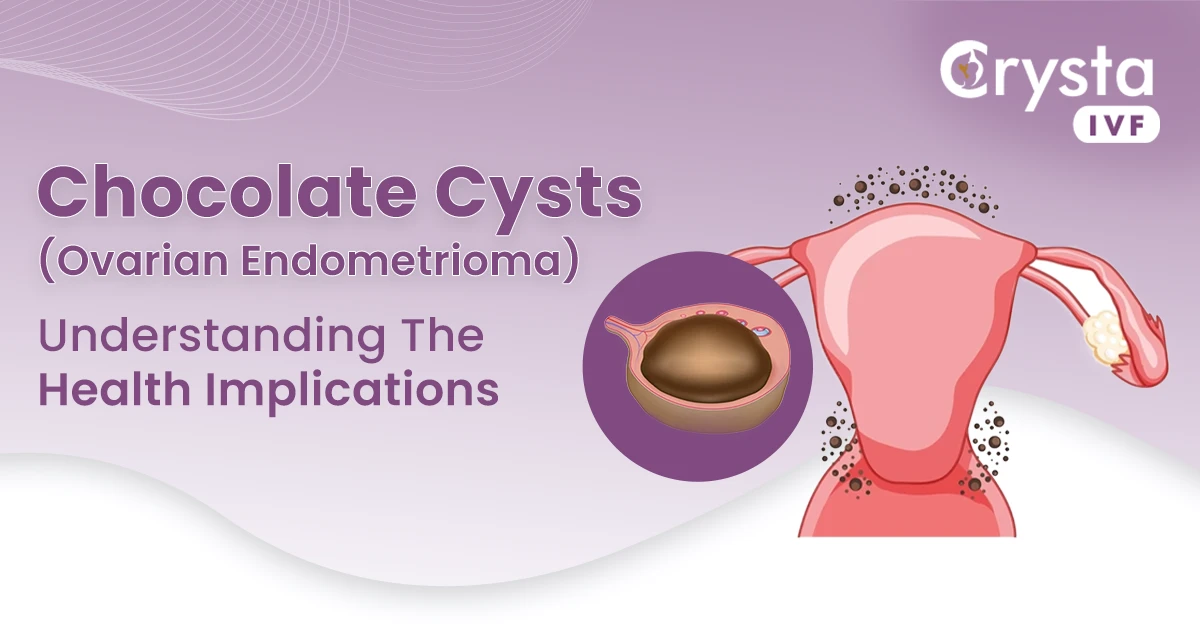
Ovarian Endometrioma gets its name, ‘chocolate cyst’, from the old, thick blood collected inside the sac, giving it a dark appearance. This fluid is actually old menstrual blood and tissue that has become trapped. Since this tissue acts like the lining of the uterus, it responds to monthly hormonal changes by bleeding
However, since the blood has no way to exit the body, it pools and thickens over time, creating a cyst with a “chocolatey” consistency.
Chocolate cysts are a sign of moderate to severe endometriosis that can affect your periods, pain levels, and fertility. They can cause chronic pelvic pain and painful periods. Recurrence is common, which is why long-term monitoring is important.
Some women may not notice it at first, while others may feel pain or face issues with periods or fertility.
Key Characteristics of Chocolate Cysts
Here are a few things that help you understand these cysts better:
- They are identified by their thick, dark-brown look. On an ultrasound, they often appear as “ground-glass” echoes due to the density of the old blood.
- These cysts can range significantly in size, from less than an inch to over several inches in diameter. They can grow slowly over time if not treated. Larger cysts are more likely to cause significant pelvic pain or pressure.
- They are associated with chronic inflammation, and often cause the ovary to stick to other pelvic structures, such as the fallopian tubes, the outer wall of the uterus, or the bowels.
- They are “active” cysts, meaning they grow and react to the estrogen produced during your menstrual cycle.
- Unlike simple functional cysts, chocolate cysts can damage healthy ovarian tissue and may impact a woman’s “egg bank” or ovarian reserve.
- They are most commonly found in one or both ovaries.
- Chocolate cysts are often linked with moderate to severe endometriosis.
- May cause pelvic pain, painful periods, or discomfort during intercourse.
- In some cases, they may not show any clear symptoms.
Who Can Get Chocolate Cysts?
Chocolate cysts primarily affect women in their reproductive years most commonly between the ages of 25 and 40. However, you may have a higher chance of getting chocolate cysts if:
- You have Endometriosis
Endometriosis can affect anyone who menstruates, especially those between 25 and 40 years old. The American Society for Reproductive Medicine (ASRM) classifies endometriosis into four stages based on the amount and depth of tissue outside the uterus.
Stage 1: Small amount of surface-level tissue.
Stage 2: More tissue, some embedded.
Stage 3: Lots of deeply embedded tissue, including small endometriomas.
Stage 4: Lots of deeply embedded tissue, including large endometriomas.
If you have ovarian endometrioma, you’re in Stage 3 or 4. Approximately 20% to 40% of women with endometriosis will develop endometriomas.
- You are of Reproductive Age
Since the growth of these cysts is fueled by the monthly menstrual cycle and estrogen production, they are rarely found in children before puberty or in women after menopause.
- You have a Family History
Genetic factors play a role as well; if your close relative (mother or sister) has endometriosis or a history of ovarian cysts, your chances of developing them increases.
- You are Struggling with Infertility
Often, a chocolate cyst is discovered during a fertility checkup. It is estimated that a majority of women seeking help for difficulty conceiving may have underlying ovarian endometriomas.
Some women discover these cysts during a routine scan, even when they don’t have strong symptoms.
What Causes Chocolate Cysts in the Ovaries?
The exact cause of the chocolate cyst is still unknown or under debate, but the ongoing research suggests that chocolate cysts usually develop because of endometriosis, which is a condition in which tissue similar to the uterus lining grows outside the uterus.
Here’s what causes chocolate cysts or Ovarian Endometrioma:
- Retrograde Menstruation: This is the most widely accepted cause. It says that during your period, some menstrual blood may flow backwards through the fallopian tubes and into the pelvic area instead of leaving the body, called the retrograde flow. These cells can attach to the surface of the ovaries, where they grow and eventually form blood-filled cysts.
- Coelomic Metaplasia: This theory suggests that specialised cells outside the uterus (in the lining of the abdomen or pelvis) can transform into endometrial-like cells, possibly due to hormonal or environmental triggers.
- Surgical Scars: Following surgeries such as a C-section or hysterectomy, endometrial cells may accidentally attach to an incision site or nearby organs like the ovaries, leading to cyst development.
- Lymphatic or Blood Stream Transport: In some cases, endometrial cells may travel through the blood or lymphatic system to reach the ovaries, similar to how cancer cells spread, though endometriomas are strictly noncancerous.
- Immune System Dysfunction: A weakened or malfunctioning immune system might fail to recognise and destroy endometrial tissue that is growing outside the uterus, allowing it to take root on the ovaries.
- Genetics: Research suggests that chocolate cysts can also have a genetic link, aiming at the possibility that a member or two from your family might also have this condition.
In short, if there is repeated bleeding along with trapped tissue, a chocolate cyst is formed.
What are the Common Symptoms of Chocolate Cysts?
Chocolate cysts don’t need to present themselves with symptoms, as the chocolate cyst symptoms can feel different for everyone. While some women do encounter certain symptoms, others do not. Also, because chocolate cysts are a form of endometriosis, many women confuse their symptoms with common menstrual issues, which can sometimes delay a diagnosis.
Another key point about Ovarian Endometrioma or “chocolate cysts” is that its size does not necessarily affect the severity or present symptoms. Women with small cysts may encounter heavy symptoms, while others with larger cysts may not. The length of cysts can range from 2 to 20 centimeters.
Here’s a list of common chocolate cysts symptoms that you may experience:
- Pelvic Pain and Menstrual Cramps
The most common symptom of a chocolate cyst is chronic pelvic pain that typically intensifies just before or during a period. This pain is often more severe than standard menstrual cramps and may not respond well to over-the-counter pain killers.
- Pain During Intercourse (Dyspareunia)
Many women with chocolate cysts experience deep pelvic pain during or after sexual activity. This occurs because the cyst and associated inflammation can make the reproductive organs and surrounding tissues extremely sensitive.
- Painful Bowel Movements or Urination
If the cyst is large or causing adhesions (organs sticking together), you may feel pressure or sharp pain when using the bathroom, especially during your menstrual cycle.
- Heavy or Irregular Periods
You might notice unusually heavy menstrual flow or spotting between your periods. The hormonal imbalance caused by the cyst can disrupt the regularity of your cycle.
- Infertility or Difficulty Conceiving
For many, a chocolate cyst is only discovered when they have trouble getting pregnant. The inflammation caused by the cyst can damage the egg quality, interfere with ovulation, or block the fallopian tubes.
- Acute Pain (Rupture or Torsion)
In rare cases, a chocolate cyst can rupture or cause the ovary to twist (ovarian torsion). This leads to sudden, excruciating abdominal pain, nausea, and vomiting, requiring immediate medical attention.
Symptoms that are often missed:
- Mild, ongoing pelvic discomfort
- Pain that comes and goes
- No symptoms at all (found during a scan)
Cysts can also cause severe abdominal pain on the side of the body if it bursts, while many symptoms like severe period pain are often dismissed as ‘normal,’ but they can be a significant indicator of an underlying chocolate cyst. At Crysta IVF, we encourage you to listen to your bodies. If your pain interferes with your daily life or your plans for a family, it is time to seek a specialised ultrasound.
People Also Ask
- Can I get pregnant with a chocolate cyst?
Yes, pregnancy is possible even if you have a chocolate cyst. A study found that around 43% of women with single-ovary chocolate cysts and regular menstrual cycles could conceive naturally. However, fertility may be affected depending on the cyst’s size and ovarian health. If natural conception becomes difficult, options like In Vitro Fertilisation can help improve your chances.
- Are chocolate cysts dangerous?
Chocolate cysts are usually not cancerous and may not cause major problems when small. Small and asymptomatic cysts usually go away independently and don’t hurt much. However, if the cysts grow larger and fill with menstrual blood and fluid, they can lead to problems like pain in the pelvic region, painful periods, affect fertility, and more. In rare cases, complications like rupture can occur. That’s why regular checkups are important to keep track of the cyst and manage any risks early.
- Can chocolate cysts go away on their own?
Unlike simple functional cysts that often resolve with the next menstrual cycle, chocolate cysts typically do not disappear without medical intervention. Small cysts may just be monitored. If needed, doctors may suggest medicines to manage symptoms. They often require hormonal therapy to manage symptoms or surgical removal (cystectomy) if they grow large or impact fertility.
- Is a chocolate cyst the same as endometriosis?
A chocolate cyst is not the same as endometriosis, but it is a type of it. It forms when endometrial-like tissue grows on the ovary and collects blood over time. So, you can think of it as a result or advanced form of endometriosis that specifically affects the ovaries and may impact fertility or cause pelvic pain.
What is the Diagnosis of Chocolate Cysts?
Accurate diagnosis of chcoalte cysts and timely treatment are essential for managing them and protecting your reproductive health. Since these cysts do not typically go away on their own, medical intervention, often as soon as possible, is necessary.
Doctors usually diagnose a chocolate cyst using simple tests and your symptoms.
- Pelvic Examination: A doctor may manually feel the pelvic area for large cysts, masses, or areas of tenderness. However, smaller cysts often require imaging to be detected.
- Pelvic Ultrasound: This is the primary tool for diagnosis that helps doctors see if there is a cyst on the ovary and what it looks like. Chocolate cysts have a specific appearance on an ultrasound, which helps distinguish them from other simple, fluid-filled cysts.
If needed, your doctor may further suggest:
- MRI (Magnetic Resonance Imaging): If ultrasound results are inconclusive, an MRI provides a more detailed view of the pelvic organs, helping to map out exactly where the endometrial tissue is located.
- Laparoscopy: This is the “gold standard” for chocolate cyst diagnosis. A surgeon performs a minimally invasive procedure using a small camera to look inside the pelvic cavity. They can take a tissue sample (biopsy) to confirm the diagnosis with 100% certainty.
- Needle Biopsy: To further confirm the presence of a chocolate cyst, doctors can perform a needle biopsy. This involves using ultrasound to guide a needle through the vagina into the cyst, extracting fluid and debris. The extracted material is then examined under a microscope to determine whether it’s an ovarian cyst.
Thus, getting a chocolate cyst diagnosed as early as possible is important for its confirmation, understanding its size, type, and impact on your ovaries.
What Happens If a Chocolate Cyst Ruptures?
In some rare cases, a chocolate cyst can rupture (burst), which is considered a medical emergency. When the cyst wall breaks, the old, irritating blood and inflammatory fluid spills into the pelvic cavity. If it happens, you may feel:
- Intense Pain: You will likely feel sudden, sharp pelvic pain that spreads to your lower abdomen.
- Internal Irritation: The “chocolate” fluid is highly inflammatory, which can cause an inflammation of the abdominal lining and lead to the formation of new scar tissue (adhesions).
- Symptoms of Rupture: Along with severe pain, you may experience discomfort, fever, nausea, vomiting, and a rapid heartbeat.
This happens because the cyst releases old blood into the pelvic area, which can irritate nearby tissues. Therefore, if you feel any symptoms of a ruptured chocolate cyst, you may need immediate medical attention, especially if the pain is severe.
When Should You See a Doctor?
You should not ignore symptoms that keep coming back or get worse over time. You should schedule a medical consultation if you experience persistent pelvic pain or if your periods are significantly interfering with your quality of life.
It’s a good idea to see a doctor if you notice:
- Severe or ongoing pelvic pain
- Painful periods that affect your daily routine
- Pain during intercourse
- Difficulty getting pregnant
- Sudden, sharp abdominal pain (possible rupture)
- Pain accompanied by fever or vomiting
- Fainting or severe dizziness
Seek immediate help as early diagnosis makes it easier to manage the condition and avoid complications later.
Crysta IVF Expert Guidance on Navigating Ovarian Health
“I often meet women who feel scared when they first hear the term ‘chocolate cyst,’ and honestly, that reaction is completely understandable. But here’s what I want you to know – you don’t need to panic.
Yes, these cysts are linked to endometriosis, and they can affect your ovaries. But with the right care at the right time, they can be managed well. In many cases, we’re able to protect your fertility and plan the next steps in a way that suits your body.
We view the management of ovarian cysts as a critical step in preserving your future fertility. Which is why the most important thing is not ignoring the symptoms or delaying treatment. The earlier you understand what’s happening, the better your chances of avoiding complications later.
We look at ovarian health as more than just treating a cyst; it’s about helping you protect your chances of getting pregnant in the future, in a way that feels right for you.”
Dr. Nidhi Sehrawet, Best IVF Doctor in Delhi
Crysta IVF
How to Treat Chocolate Cysts? Can They be Removed?
Yes, chocolate cysts can be treated, and in many cases, they can be removed. The treatment depends on your age, symptoms, cyst size, wether it has affected one or both ovaries, and whether you are planning a pregnancy. Therefore, chocolate cyst treatment can be very different for each woman.
Medical Management (Non-Surgical)
For smaller cysts that aren’t causing severe symptoms, doctors may suggest:
- Monitoring: If the cyst is small and not causing problems, your doctor may suggest regular checkups to track the cyst with regular ultrasounds every 3 to 6 months.
- Hormonal Therapy: Oral contraceptives, GnRH agonists, or progestin therapy can help shrink the endometrial tissue and stop the monthly bleeding into the cyst, though this will not make the cyst disappear entirely. Such medicnes will only help reduce pain and slow down the chocolate cyst growth.
Surgical Removal
If the chocolate cyst is large, painful, or affecting fertility, surgery may be recommende, as it is often the most effective way to manage large or painful ovarian endometriomas.
- Laparoscopic Surgery: This is the most common procedure. In this cyst removals are done via “keyhole” surgery, which allows for faster recovery and less scarring.
- Cystectomy: This procedure includes carefully removing the cyst while leaving the rest of the ovary intact. This is the preferred method for women who wish to preserve their fertility.
- Oophorectomy: It is used in severe cases where the ovary is extensively damaged and the entire ovary may need to be removed.
Things You Should Know About Surgery
- The goal is to remove the cyst while protecting your ovary
- In some cases, a small amount of healthy tissue may also be affected
- But leaving a large cyst untreated can sometimes create more problems, like inflammation or damage to the ovary
However, there is an issue with surgery. Likely, healthy tissues can also be removed when ovarian cysts are removed. However, surgery might not be as detrimental to fertility as the inflammation and poisonous environment that a chocolate cyst can create.
Can Chocolate Cysts Come Back After Treatment?
Yes, studies show that around 27% – 30% of women may get chocolate cysts again after surgery, especially over long-term follow-up.
Pro Tip: To avoid this, doctors often recommend getting long-term hormonal treatment until you get pregnant instead of surgery, especially for younger women.
Diet to Manage Chocolate Cysts at Home
While a chocolate cyst ( ovarian endometrioma) typically requires medical monitoring, what you eat can support your body while you manage a chocolate cyst. A balanced diet won’t remove the cyst on its own, but it can help reduce inflammation, support hormones, and improve overall ovarian health.
You can try adding these to your daily meals:
1. Omega-3 Healthy Fats
Healthy fats help reduce pelvic inflammation and may alleviate the intensity of menstrual cramps.
- Sources: Salmon, mackerel, tuna, walnuts, chia seeds, and flaxseeds.
- The Benefit: Omega-3 fatty acids support hormone balance and may help reduce inflammation.
2. Mineral-Rich Superfoods
Magnesium and iron are essential for women dealing with heavy periods or chronic pain.
- Sources: Small portions of dark chocolate (at least 70% cocoa), spinach, black beans, pumpkin seeds, and almonds.
- The Benefit: Magnesium acts as a natural muscle relaxant, helping to soothe the uterine and pelvic cramping associated with chocolate cysts.
3. Zinc-Rich Foods
Zinc is vital for immune function, supports reproductive health, and helps regulate the hormonal environment.
- Sources: Crabs, oysters, chicken, seeds, nuts, and chickpeas.
- The Benefit: Zinc aids in cell repair and may help the body manage the growth of endometrial tissue outside the uterus.
4. Healing Spices and Anti-Inflammatory Ingredients
Certain simple kitchen staples act as natural anti-inflammatories that can support your body’s natural healing response.
- Sources: Turmeric, garlic, olive oil, black pepper, and leafy greens like kale, broccoli, and cauliflower.
- The Benefit: Curcumin (in turmeric) is a powerful anti-inflammatory, and black pepper increases its absorption by 2,000%. While, leafy greens help the liver metabolise and clear excess estrogen from the body.
What to Limit?
- Packaged and processed food
- Excess sugar
- Fried or oily food
These can increase inflammation and may make symptoms worse over time.
What is the Effect of Chocolate Cysts on Fertility?
Studies reveal that up to 50% of women with endometriosis and endometriomas may face infertility issues. If left untreated, chocolate cysts can invade, damage, and take over healthy ovarian tissues, affecting your chances of conceiving negatively. Chocolate cyst impacts on women are:
- Fewer eggs
- Eggs that are less likely to mature
- Higher levels of follicle-stimulating hormone (FSH)
Although chocolate cysts impact fertility, the risk factors related to surgery, where even healthy ovarian tissues can end up being removed, many women with such cysts decide to conceive naturally.
As per a study done in 2015, 43% of women with regular menstrual cycles and chocolate cysts on only one ovary were able to conceive naturally. However, for women who are unable to conceive due to the cysts, In Vitro Fertilization is another option for them.
Key Takeaway
Thus, ovarian endometriomas, or chocolate cysts, can cause serious health risks in women who menstruate. Although they are not cancerous, they can cause bloating, pelvic pain, and problems with conception. Pelvic exams, symptom assessment, ultrasound scans, and needle biopsies can be used to diagnose them.
Depending on the chocolate cyst symptoms, desired level of fertility, and size of the cyst, treatment options can include medication, dietary modifications, and surgery. However, effective management of chocolate cysts requires timely diagnosis, appropriate treatment, and increased awareness of the condition.
If you’re dealing with symptoms like pelvic pain or difficulty getting pregnant, you can speak to specialists at Crysta IVF, Best IVF Centre in Delhi to understand the right treatment options for your condition.
FAQs about Chocolate Cysts
What is a chocolate cyst in simple words?
A chocolate cyst means you have a type of ovarian cyst linked to endometriosis, where tissue similar to the uterus lining grows on the ovary. Over time, this tissue bleeds during each cycle and forms a cyst filled with old, dark blood. It’s not cancer, but it can affect your comfort and fertility if it grows larger or causes symptoms.
What size chocolate cyst needs surgery?
Doctors may suggest surgery when a chocolate cyst is larger than 4 cm, causing pain, or affecting fertility. Smaller cysts are often monitored if they are not causing symptoms. Surgery is usually recommended to relieve discomfort and protect ovarian function, especially if you are planning pregnancy. The decision depends on your symptoms, age, and overall reproductive health.
What causes chocolate cysts?
Chocolate cysts mainly develop due to endometriosis. In this condition, endometrial-like tissue grows outside the uterus and attaches to the ovary. With each menstrual cycle, this tissue responds to hormones, bleeds, and traps blood inside the ovary. Over time, this leads to cyst formation. Hormonal imbalance and retrograde menstruation (backflow of blood) are also believed to play a role.
Do I need to worry about an ovarian endometrioma?
An ovarian endometrioma or chocolate cyst is usually not dangerous, but it should not be ignored. If it becomes large, it can cause pelvic pain, painful periods, or fertility issues. In some cases, it may also affect ovarian reserve. Regular monitoring helps track its size and impact, so you can take the right steps at the right time.
How to reduce chocolate cysts naturally?
Unfortunately, natural methods may not be able to remove the chocolate cyst completely, but they can help manage symptoms and slow its progression. It can be done by focusing on a balanced diet, regular exercise, and stress management. Some women also benefit from reducing inflammatory foods and maintaining a healthy weight. These steps support hormonal balance, but medical guidance is still important for proper treatment.
What is the best treatment for ovarian endometrioma?
The best treatment for ovarian endometrioma depends on your individual symptoms and fertility goals. If the cyst is small and not causing issues, doctors may suggest monitoring. For pain, hormonal medicines may help. If the cyst is large or affecting fertility, surgery is often recommended. In some cases, fertility treatments like In Vitro Fertilisation can also be considered.
Can a chocolate cyst turn into cancer?
While chocolate cysts are almost always noncancerous, they share some characteristics with certain types of ovarian cancer. Doctors usually monitor them through a dating scan or specialised ultrasound to ensure there are no suspicious changes in size or structure.
How does a chocolate cyst affect pregnancy?
Chocolate cysts can significantly affect conception by causing pelvic adhesions, obstructing the fallopian tubes, or reducing the ovarian reserve (the quality and quantity of eggs). If a woman becomes pregnant, these cysts generally do not harm pregnancy, but they require close monitoring by an obstetrician.
Other references: