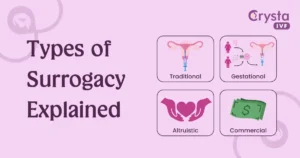


Altruistic surrogacy is a type of surrogacy where a woman agrees to carry a baby for intended parents without receiving financial compensation beyond approved medical and pregnancy-related expenses. In India, altruistic surrogacy is the only legally permitted form of surrogacy and is governed by specific rules and eligibility criteria.
If you are exploring surrogacy as a fertility option, understanding its meaning, process, legal requirements, costs, and responsibilities is essential before taking the next step.
Table of Contents
Table of Contents
What is Altruistic Surrogacy?
Altruistic surrogacy is a type of surrogacy arrangement in which a woman carries and delivers a baby for another person or couple without receiving any financial compensation for the pregnancy. The surrogate mother is only reimbursed for approved medical expenses, insurance coverage, and other pregnancy-related costs.
In this arrangement, the primary motivation is to help intended parents build their family rather than earn money. Altruistic surrogacy is chosen when a close relative or someone known to the family is willing to support a couple facing infertility, medical conditions, or other challenges that prevent them from carrying a pregnancy.
Example to Understand Altruistic Surrogacy
Suppose a woman is unable to carry a pregnancy due to a serious medical condition. Her sister volunteers to carry an embryo created through IVF using the intended parents’ egg and sperm. The sister receives coverage for medical and pregnancy-related expenses but no additional compensation. This is an example of altruistic surrogacy.
Today, altruistic surrogacy is the only legally permitted form of Surrogacy in India and is regulated by specific eligibility criteria, documentation requirements, and medical guidelines designed to protect the interests of the intended parents, the surrogate, and the child.
Why Do People Choose Altruistic Surrogacy?
People choose altruistic surrogacy for different reasons, but the goal is to help someone experience parenthood when carrying a pregnancy is not possible. While medical need is usually the starting point, the decision is often influenced by emotional, family, ethical, and legal considerations as well.
Reasons Intended Parents Choose Altruistic Surrogacy are:
- They Cannot Carry a Pregnancy Safely
Some women are born without a uterus, have had their uterus surgically removed, or have medical conditions that make pregnancy high-risk. In such cases, surrogacy may become the only way to have a biologically related child.
- Repeated IVF Failures or Pregnancy Loss
Many couples explore surrogacy after experiencing several unsuccessful IVF cycles or recurrent miscarriages. When embryo quality is good, but pregnancy is not progressing, fertility specialists may evaluate whether surrogacy could improve the chances of a successful birth.
- They Want a Biological Connection to Their Child
One aspect that many people overlook is that surrogacy and adoption are not interchangeable choices. Some intended parents choose altruistic surrogacy because it allows them to have a child who is genetically related to one or both parents through IVF.
- It Is the Legally Permitted Option in India
Under current Indian regulations, commercial surrogacy is prohibited. As a result, eligible intended parents who require surrogacy must pursue altruistic surrogacy through the legal framework established by the government.
Why Do Women Agree to Become Surrogates?
People assume that a surrogate becomes involved only because of financial reasons. In altruistic surrogacy, the motivation is usually very different. Here are some reasons why women agree to become surrogate mothers during altruistic surrogacy.
- Helping a Family Member or Loved One
Many surrogate mothers choose to help a sister, cousin, close friend, or relative who has struggled to conceive. For them, surrogacy is an opportunity to support someone they care about during a difficult chapter of life.
- Emotional Fulfilment
Some women who have experienced healthy pregnancies themselves feel a strong desire to help another family experience the joy of having a child. The satisfaction of helping someone become a parent can be a powerful motivation.
- Giving Hope After Years of Infertility
Infertility often affects more than physical health. It can impact relationships, confidence, and emotional well-being. Some surrogate mothers choose this path because they understand the emotional significance of helping another family move forward.
How Does Altruistic Surrogacy Work? Step-by-Step Process
Altruistic surrogacy is a carefully regulated process that includes medical evaluations, legal approvals, counselling, embryo transfer, and ongoing pregnancy care. Understanding each step can help intended parents know what to expect and prepare for the journey ahead.
Step 1: Medical Assessment of the Intended Parents
The altruistic surrogacy process usually begins with a consultation with an IVF specialist in India. The medical team reviews the couple’s fertility history, previous treatments, and overall health to determine whether surrogacy is a suitable option.
Step 2: Identification and Screening of the Surrogate
Once surrogacy is considered appropriate, the surrogate mother undergoes a detailed evaluation. This typically includes:
- Physical health assessment
- Reproductive health evaluation
- Medical history review
- Psychological counselling and screening
- Infectious disease testing
Step 3: Legal Documentation and Eligibility Verification
Before treatment begins, all altruistic surrogacy legal requirements must be completed according to applicable regulations. This stage may involve:
- Verification of eligibility criteria
- Required certificates and approvals
- Surrogacy-related documentation
- Legal counselling for all parties involved
Proper legal preparation helps prevent misunderstandings and ensures that the rights and responsibilities of everyone involved are clearly defined from the beginning.
Step 4: IVF Treatment and Embryo Creation
In most altruistic surrogacy arrangements, pregnancy is achieved through In Vitro Fertilisation (IVF). The process involves egg retrieval from the intended mother, fertilisation of the egg with the sperm in a lab, development of embryos under supervision and selection of the best embryos for transfer.
Step 5: Preparation of the Surrogate for Embryo Transfer
Before embryo transfer, the surrogate receives medications to prepare the uterus for implantation. The fertility team closely monitors hormone levels and endometrial thickness for embryo transfer. Once the uterus is ready, the selected embryo is transferred into the surrogate’s uterus through a simple medical procedure.
Step 6: Pregnancy Confirmation and Monitoring
Approximately two weeks after embryo transfer, a pregnancy test is performed to determine whether implantation has occurred. If the pregnancy is confirmed, regular monitoring begins, including Ultrasound scans, Blood tests, etc.
Step 7: Ongoing Pregnancy Care
For the next several months, the focus shifts to maintaining a healthy pregnancy. The surrogate mothers undergo routine care, nutritional guidance and regular checkups. Many families find this to be the longest and most emotional phase of the surrogacy journey.
Step 8: Delivery and Post-Birth Legal and Administrative Procedures
When the pregnancy reaches full term, the baby is delivered at the hospital under the care of obstetric specialists. After the baby’s birth, any remaining legal and administrative formalities are completed in accordance with local regulations, such as birth registration, documentation, and discharge procedures.
How Long Does the Altruistic Surrogacy Process Take?
The altruistic surrogacy process typically takes 12 to 18 months or longer from the initial consultation to the birth of the baby. However, the exact timeline can vary depending on factors such as surrogate availability, legal approvals, medical evaluations, IVF outcomes, and pregnancy progression.
| Stage | Estimated Timeline |
| Initial consultation and fertility evaluation | 1 – 2 weeks |
| Medical tests and eligibility screening | 2 – 4 weeks |
| Legal documentation and approvals | 2 – 6 weeks |
| Surrogate matching and screening | 1 – 3 months |
| IVF cycle and embryo creation | 2 – 4 weeks |
| Embryo transfer procedure | 1 day |
| Pregnancy confirmation test | Around 10 – 14 days after embryo transfer |
| Pregnancy monitoring and prenatal care | Approximately 9 months |
| Delivery and post-birth formalities | A few days to a few weeks |
Disclaimer: The exact timeline may vary depending on medical conditions, embryo success, legal clearances, and the overall treatment plan.
Who Can Become a Surrogate in Altruistic Surrogacy?
Not every woman can become a surrogate mother. Altruistic surrogacy involves significant physical, emotional, and medical responsibilities, which is why strict eligibility criteria are usually followed to protect the health of the surrogate, the baby, and the intended parents.
Here are the altruistic surrogacy eligibility criteria to become a surrogate mother:
- Medical Requirements for a Surrogate Mother: A surrogate should be physically healthy and capable of carrying a pregnancy safely.
- Age Requirements: Most surrogacy programs have a defined age range. As per Intending Couple {Section 2(1)(r)} and Intending Woman {Section 2(1)(s)}, here are the age requirements:
- Intendent Father: 26 – 55 years of age
- Intendent Mother: 23 – 50 years of age
- Intended Widow or Divorcee: 35 – 45 years of age
- Surrogate Married Woman: 25 – 35 years of age
- Family Status: The surrogate should be married and should have at least one biological child.
- Previous Successful Pregnancy: One of the most important qualifications is a history of at least one healthy pregnancy and childbirth.
- Lifestyle and Health Habits: Healthy lifestyle choices are important for both maternal and fetal well-being.
Crysta IVF Expert Explains Why Screening of Surrogate Mothers is Important During Altruistic Surrogacy
Many intended parents focus on finding a surrogate first. In reality, understanding legal eligibility and medical suitability should be the first step. A thorough screening process helps identify potential risks early and ensures that everyone involved enters the journey with realistic expectations.
Basic factors such as age, relationship, marital status, family status, fitness, prior health, lifestyle, and legal requirements decide whether a mother is eligible for carrying on surrogacy.
What most parents don’t realise after checking the eligibility is that:
- Surrogacy is more emotional than medical.
- Finding a suitable surrogate is often harder than IVF.
- Legal counselling matters as much as medical treatment.
- Family expectations can affect the journey.
- Proper psychological screening protects everyone involved.
Always consider and know the full eligibility as well as the difficulties before starting the surrogacy journey.
Dr. Sutapan Samanta (MBBS M.S. (Obs & Gynae) DNB Fellowship in ART)
Senior IVF Specialist at Crysta IVF – Kolkata
Who Can Opt for Altruistic Surrogacy?
Altruistic surrogacy is generally considered when a person or couple wants to have a child but cannot carry a pregnancy themselves. However, surrogacy is not available to everyone. Eligibility depends on medical necessity, legal requirements, and the regulations of the country where the treatment is being pursued.
Here are the women who may be considered for altruistic surrogacy:
- Who cannot carry a pregnancy
- With an absence of the uterus (congenital or surgical)
- Severe uterine abnormalities
- Serious health conditions that make pregnancy life-threatening
- Repeated pregnancy complications
- Recurrent implantation failure despite treatment
- Unsuccessful IVF treatment
- Recurrent miscarriages
- Women with certain medical conditions such as heart disease or kidney disorder
What is the Difference Between Altruistic Surrogacy vs Commercial Surrogacy?
Altruistic surrogacy allows the surrogate mother to receive only medical and pregnancy-related expenses, whereas commercial surrogacy involves additional monetary compensation for carrying the baby.
Here are the main differences between altruistic surrogacy vs commercial surrogacy:
| Factors | Altruistic Surrogacy | Commercial Surrogacy |
| Definition | A surrogacy arrangement where the surrogate mother does not receive financial compensation for carrying the baby, apart from approved medical and pregnancy-related expenses, is known as altruistic surrogacy. | A surrogacy arrangement where the surrogate receives financial compensation in addition to medical and pregnancy-related expenses is known as commercial surrogacy. |
| Primary Purpose | The primary purpose is helping intended parents achieve parenthood without financial gain. | The primary purpose is helping intended parents while receiving payment for the surrogacy journey. |
| Surrogate Compensation | No direct payment for carrying the pregnancy. | Financial compensation is provided to the surrogate. |
| Relationship Between Surrogate and Intended Parents | May involve a pre-existing relationship or a strong personal commitment to helping others. | It is structured through agencies or formal matching programs where allowed. |
| Legal Status in India | Permitted under specific legal conditions. | Prohibited and banned. |
| Overall Cost for Intended Parents | Lower because there is no surrogate compensation, although IVF, medical care, insurance, legal documentation, and delivery costs still apply. | Generally higher because intended parents cover both medical costs and surrogate compensation. |
Note: The difference between altruistic and commercial surrogacy goes beyond compensation. It affects legal eligibility, surrogate availability, ethical considerations, emotional dynamics, and the overall surrogacy experience. For intended parents in India, understanding these distinctions is especially important because altruistic surrogacy is the only legally permitted form of surrogacy.
Is Altruistic Surrogacy Legal in India?
Yes, altruistic surrogacy is legal in India. However, it is permitted only under specific conditions laid down under the Surrogacy (Regulation) Act, 2021. The law allows surrogacy only for eligible individuals with a genuine medical need and prohibits all forms of commercial surrogacy.
The surrogate mother can receive only approved medical expenses, insurance coverage, and other prescribed pregnancy-related costs.
Many intended parents focus only on what is permitted and overlook the restrictions. Understanding these limitations is equally important. The law prohibits:
- Commercial surrogacy arrangements
- Monetary payment to a surrogate beyond permitted expenses
- Exploitation of surrogate mothers
- Sale or purchase of embryos for surrogacy purposes
- Unregistered or unauthorised surrogacy procedures
- Advertising commercial surrogacy services
What Expenses Are Covered in Altruistic Surrogacy?
In altruistic surrogacy cost, intended parents typically cover expenses related to medical treatment, IVF procedures, pregnancy care, delivery, insurance, medications, and other approved pregnancy-related costs. However, the surrogate mother does not receive payment for carrying the pregnancy.
In simple terms, altruistic surrogacy eliminates surrogate compensation, not the costs associated with the surrogacy process itself. Here is what it covers in detail:
| Expense Covered | What It May Include |
| IVF Treatment | Fertility consultations, ovarian stimulation, egg retrieval, fertilisation, embryo culture, embryo transfer |
| Medical Screening | Health evaluations, blood tests, infectious disease screening, ultrasound examinations |
| Medications | Fertility medications, hormone support, pregnancy-related prescriptions |
| Surrogate Medical Care | Prenatal check-ups, specialist consultations, diagnostic tests |
| Pregnancy Monitoring | Ultrasounds, blood investigations, fetal monitoring, routine antenatal care |
| Delivery Expenses | Hospitalisation, labour and delivery charges, medical supervision |
| Insurance Coverage | Health insurance as required under applicable regulations |
| Emergency Medical Care | Treatment related to pregnancy complications if needed |
| Postpartum Care | Medical care immediately following childbirth |
| Legal Documentation | Surrogacy-related legal procedures and documentation where applicable |
Note: The expenses listed above are for informational purposes only and may vary based on individual medical needs, clinic protocols, applicable laws, insurance requirements, and treatment plans. The actual expenses covered in altruistic surrogacy can differ from case to case.
What Are the Benefits and Drawbacks of Altruistic Surrogacy?
Like any fertility treatment, altruistic surrogacy comes with both advantages and challenges. While it can provide a path to parenthood for people who cannot carry a pregnancy, it also involves medical, emotional, legal, and practical considerations that should not be overlooked.
Understanding both sides of the journey can help intended parents make informed decisions and set realistic expectations before moving forward.
| Benefits of Altruistic Surrogacy | Drawbacks of Altruistic Surrogacy |
| It provides a path to parenthood when pregnancy is not possible | Finding an eligible surrogate can be challenging |
| It may allow a biological connection with the child | Legal and regulatory requirements can be complex |
| Offers hope after failed fertility treatments | Emotional challenges may arise during the process |
| Operates within a regulated legal framework in India | Pregnancy-related risks still exist |
| Reduces concerns around financial exploitation | The overall process can be lengthy |
When Should You Consult a Fertility Specialist About Surrogacy?
If you are facing medical challenges that make pregnancy difficult, impossible, or unsafe, speaking with a fertility specialist can provide clarity on whether surrogacy may be an appropriate path to parenthood. Here are times when you must definitely consult an expert for surrogacy:
- You were born without a uterus
- You have had a hysterectomy process
- You have severe uterine abnormalities
- Pregnancy could pose serious health risks
- You have experienced multiple failed IVF cycles
- You have severe health conditions
If you are considering surrogacy or want to understand whether it may be the right option for your situation, the fertility specialists at Crysta IVF can guide you through every stage of the decision-making process.
From fertility assessments and IVF planning to understanding surrogacy eligibility and treatment pathways, the team focuses on providing evidence-based guidance tailored to your individual needs.
The Bottom Line
Altruistic surrogacy is a carefully regulated path to parenthood that combines medical science, legal safeguards, and human compassion. For individuals who cannot carry a pregnancy due to medical reasons, it can offer the opportunity to build a family while ensuring the well-being of the surrogate mother and the child.
The most important thing to remember is that altruistic surrogacy is not simply a medical procedure. It is a journey that involves legal planning, emotional preparation, and careful medical supervision. Understanding these factors early can help intended parents make informed decisions and avoid unexpected challenges later.
FAQs About Altruistic Surrogacy
Does a surrogate mother get paid in altruistic surrogacy?
No, a surrogate mother does not receive payment for carrying the pregnancy in altruistic surrogacy. However, intended parents are responsible for approved medical expenses, insurance coverage, and other pregnancy-related costs.
What expenses are covered in altruistic surrogacy?
Expenses may include IVF treatment, medical tests, medications, prenatal care, hospitalisation, delivery costs, insurance coverage, and other approved pregnancy-related expenses. The exact costs vary depending on individual circumstances and treatment requirements.
Can a family member become a surrogate?
Depending on applicable laws and eligibility requirements, a family member may be able to become a surrogate. However, she must still pass all necessary medical, psychological, and legal evaluations before being approved for surrogacy.
Is altruistic surrogacy safer than commercial surrogacy?
The safety of surrogacy depends more on medical care, screening, and pregnancy management than on whether it is altruistic or commercial.
Can the surrogate keep the baby?
No. In a legally compliant surrogacy arrangement, the surrogate mother does not have parental rights over the child after birth.
What happens if complications occur during pregnancy in surrogacy?
If complications arise, the surrogate receives appropriate medical care from her healthcare team. This may include additional monitoring, specialist consultations, hospitalisation, or other treatments required to protect the health of both the surrogate and the baby.
Is IVF always required in altruistic surrogacy?
Yes, IVF is typically required in altruistic surrogacy. The embryo is created in a laboratory and then transferred into the surrogate’s uterus, making IVF an essential part of the process.
Can foreigners opt for altruistic surrogacy in India?
No, India has specific regulations regarding surrogacy eligibility, and foreign nationals may face restrictions. It is advisable to consult a fertility specialist and legal expert to understand the latest requirements and eligibility criteria.