What is Oligospermia? Causes, Symptoms, Treatment and Remedies

Dr. Nidhi Sehrawet is a Senior IVF specialist in Delhi with over 19+ years of experience helping couples overcome infertility and realize their dream of parenthood. Her expertise lies in performing advanced reproductive treatments such as IVF , IUI , and ICSI , as well as diagnostic procedures. Currently, she is working as a Senior IVF specialist with the expert panel of the Crysta IVF Centre in Delhi . Dr. Nidhi completed her MBBS from Chaudhary Charan Singh University in 2007 and M.S. (Obstetrics and Gynaecology) from MUHS Nashik in 2012. She has also completed an ART Fellowship and FIAGE from Vasundhara Hospital & Fertility Research Centre, Jodhpur in 2016. She started her career as a senior resident in well-known medical colleges, including Baba Saheb Ambedkar Hospital, Rohini, and has since worked as an IVF consultant, handling complex cases of fertility-related problems with a high success rate. Furthermore, Dr. Nidhi has participated in multiple paper and case presentations and has attended several conferences and CME programs. These include the CME on Hypertensive Disorders in Pregnancy organized by AMOGS in 2013, a paper presented at FERTIVISION in 2017, and the CME on Menopause organized by the National Association of Reproductive and Child Health of India & IMS in 2011. She has also presented posters in Fertivision Delhi in 2017. If you're facing any fertility issues and seeking expert consultation, Dr. Nidhi, known as the IVF Doctor in Delhi is an excellent choice for you. Her professional approach toward infertility problems and her ability to handle them effectively makes her the best in the field. She has earned a reputation for providing exemplary fertility solutions to aspiring couples.
Read more
Oligospermia means having a low sperm count, which makes it harder for a man to make his partner pregnant. Normally, millions of sperm are released during ejaculation, but in oligospermia, the number is lower than normal. According to the World Health Organisation, a healthy sperm count is 15 million or more per millilitre of semen. If the count is below this, it is considered oligospermia.
In this article
- 1What Is Oligospermia?
- 2What are the Types of Oligospermia?
- 2.1Fertility Expert Advice for Oligospermia:
- 3What is the Impact of Oligospermia on Fertility?
- 4What are the Causes of Oligospermia?
- 5What are the Symptoms of Oligospermia?
- 6How is Oligospermia Diagnosed?
- 7Is Oligospermia Curable?
- 8What are the Treatment Options for Oligospermia?
- 9Top 5 Natural Remedies for Oligospermia
- 10What’s the Difference Between Oligospermia vs Azoospermia?
- 11When Should You See a Doctor for Oligospermia?
- 12Conclusion
- 13FAQs on Oligospermia
- 13.1Q1: Can oligospermia be cured naturally?
- 13.2Q2: Can a man with oligospermia father a child?
- 13.3Q3: How can I increase my sperm count fast?
- 13.4Q4: Is IVF successful with oligospermia?
- 13.5Q5: What foods increase sperm count?
- 13.6Q6: Can I get pregnant with oligospermia?
- 13.7Q7: Can I get pregnant if my husband has a low sperm count?
This doesn’t mean pregnancy is impossible; in fact, it just means the chances are reduced. The good news is that with the right lifestyle changes, medicines, or fertility treatments, many men with oligospermia can still become fathers. Read this blog to know about Oligospermia causes, symptoms, remedies and medical treatment.
What Is Oligospermia?
Oligospermia is a medical term that means low sperm count. A man with oligospermia has fewer sperm in his semen than the normal level. According to the World Health Organisation (WHO), a healthy sperm count should be 15 million or more per millilitre of semen. If the count is lower than this, it is called oligospermia.
For example, imagine a classroom where you need at least 15 students to play a football match. If only 5 or 6 students show up, the game becomes difficult to play. In the same way, when the sperm count is too low, it becomes harder for the sperm to reach and fertilise the egg, making pregnancy more difficult.
Also Read: How to Increase Low Sperm Count?
What are the Types of Oligospermia?
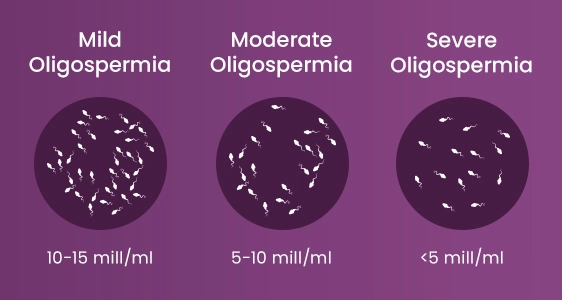
Oligospermia is not the same for every man. Doctors usually divide it into different types depending on the low sperm count. Even though the chances are lower, men with oligospermia can still father children with the right treatment and lifestyle changes.
Here are the different types of oligospermia:
| Type of Oligospermia | Sperm Count (per millilitre of semen) | Common Treatment Options |
|---|---|---|
| Mild Oligospermia | 10 – 15 million | Common treatment options are lifestyle changes, fertility medicines and IUI. |
| Moderate Oligospermia | 5 – 10 million | The treatment options are IUI, IVF and lifestyle changes. |
| Severe Oligospermia | Less than 5 million | The treatment includes IVF with ICSI. |
Fertility Expert Advice for Oligospermia:
“If you are diagnosed with oligospermia, don’t panic. A low sperm count does not mean you cannot become a father. In many cases, small lifestyle changes like eating a balanced diet, quitting smoking, reducing stress, and avoiding alcohol can improve sperm health. If the count is very low, modern fertility treatments like IUI, IVF, or ICSI can give excellent results.”
Senior IVF Specialist
Also Read: Best Diet Plan for Men with Oligospermia: What to Eat and Avoid
What is the Impact of Oligospermia on Fertility?
Men's fertility depends a lot on the number and health of sperm. In oligospermia, the sperm count is lower than normal, which makes it harder for enough sperm to reach and fertilise the egg.
When sperm count is very low, the chances of natural pregnancy drop because:
- Fewer sperm are available to swim toward the egg.
- Sometimes, sperm quality is also poor, which makes fertilisation difficult.
- Even if fertilisation happens, weak sperm may lower the chances of healthy embryo development.
What are the Causes of Oligospermia?
Oligospermia, or low sperm count, can happen due to many reasons. Some are related to health problems, while others are linked to lifestyle habits. Here are the main causes of Oligospermia:
- Medical & Physical Causes of Oligospermia Sometimes, oligospermia happens because of health problems in the body. Certain issues, like hormone imbalance or testicle conditions, can directly affect how sperm are made and released. Here are the medical & physical causes:
- Hormone Problems: The hormones made in the brain and testicles control sperm production. If they are not balanced, sperm count may drop.
- Varicocele: If there is swelling of the veins in the testicles (varicocele), it affects sperm quality and production.
- Infections: Certain infections, like mumps, sexually transmitted infections (STIs), or swelling in the testicles, can damage sperm-making cells.
- Injuries or Surgeries: Accidents or surgeries in the groin or testicles can block or reduce sperm production.
- Medical Conditions: Health issues like diabetes, thyroid problems, or genetic conditions may affect fertility.
- Lifestyle & Environmental Causes of Oligospermia Men's daily habits and surroundings play a big role in sperm health. Their daily lifestyle, like smoking, drinking alcohol, stress, etc, can impact the sperm count. Small lifestyle changes can often make a big difference.
- Smoking, Alcohol, and Drugs: These habits can lower sperm production and quality.
- Unhealthy Diet & Obesity: Being overweight and eating poorly can affect hormone levels and sperm health.
- Stress: High stress can disturb hormones needed for sperm production.
- Heat Exposure: Frequent hot tub use, saunas, or keeping laptops on the lap for long periods can overheat testicles and reduce sperm count.
- Exposure to Toxins: Chemicals, pesticides, and radiation at work or in the environment can harm sperm production.
- Other Causes of Oligospermia
- Medicines: Certain medicines, especially for cancer, depression, infections, or high blood pressure, can affect sperm count.
- Genetic Factors: Some men are born with genetic changes that naturally lower sperm production.
- Unknown Reasons: In some cases, doctors cannot find a clear reason for low sperm count (called idiopathic oligospermia).
In some cases, low sperm count is linked to medicines, genetic problems, or unknown reasons. Even if the exact cause is not found, treatments and lifestyle changes can still improve fertility in many men.
What are the Symptoms of Oligospermia?
Oligospermia, or low sperm count, usually does not show clear symptoms in daily life. Most men only find out about it when they face trouble having a baby and go for fertility tests. Still, some signs may point toward the problem:
- Difficulty in Conceiving: If you are trying for a year or more without success, it can be a sign of Oligospermia.
- Low sexual desire: Hormone imbalance linked to oligospermia may reduce sex drive.
- Erection problems: Trouble in getting or keeping an erection can sometimes be related to Oligospermia.
- Pain or swelling in the testicles: Certain medical issues, like varicocele or genetic problems, may result in Oligospermia.
- Hormonal symptoms: Less facial or body hair, or other signs of low testosterone, may appear.
Important Note: The main symptom of oligospermia is infertility, but other body changes may also be warning signs. Only a semen analysis test can confirm low sperm count.
Also Read - Is it Possible For Man to Recover From Low Sperm Count?
How is Oligospermia Diagnosed?
Most men don’t know they have oligospermia until they face trouble having a baby and visit a doctor. The only way to confirm a low sperm count is through medical tests. Here’s how doctors usually diagnose it:
- Semen Analysis Semen Analysis is the main test for Oligospermia. A semen sample is checked in the lab to measure sperm count, shape, and movement. If the count is less than 15 million sperm per millilitre, it is considered oligospermia.
- Physical Check-up The doctor may examine the testicles to look for swelling, lumps, or signs of conditions like varicocele.
- Hormone Tests: Blood tests may be done to check hormone levels (like testosterone, FSH, LH), since hormones control sperm production.
Is Oligospermia Curable?
Yes, in many cases, oligospermia can be improved or managed. Whether it is fully curable depends on the cause.
If low sperm count is due to lifestyle factors like smoking, drinking, being overweight, or stress, making healthy changes can increase sperm numbers.
If it is caused by medical issues like infections, hormone imbalance, or varicocele, proper treatment or surgery can help improve fertility.
In some cases, especially when sperm count is very low due to genetic reasons, it may not be completely curable. But modern fertility treatments like IUI, IVF, or ICSI still make fatherhood possible.
What are the Treatment Options for Oligospermia?
The treatment for oligospermia depends on what is causing the low sperm count. Doctors usually suggest a mix of lifestyle changes, medicines, or fertility treatments. Here are the common options:
- Lifestyle Changes No smoking, avoiding alcohol, maintaining a healthy weight, regular exercise and a balanced diet can have a high impact on oligospermia.
- Medicines & Supplements Hormone medicines can help if the problem is due to a hormone imbalance. Antibiotics may be used if an infection is affecting sperm health. If the case gets worse, a surgery might be suggested. However, the surgery is only suggested in case of a varicocele or blockage that prevents sperm release.
- Fertility Treatments
- IUI Intrauterine Insemination: In this case, healthy sperm are placed directly in the uterus to increase the chances of pregnancy.
- IVF In Vitro Fertilisation: During IVF, eggs and sperm are combined in a lab, and the embryo is placed in the uterus.
- ICSI Intracytoplasmic Sperm Injection: In this case, a single healthy sperm is directly injected into the egg, useful for very low sperm counts.
Certain fertility treatments like ART technologies, help couples get pregnant despite oligospermia. The treatment includes:
Top 5 Natural Remedies for Oligospermia
Along with medical treatments, some natural remedies can also support sperm health and improve fertility. These remedies are simple lifestyle changes and home-based practices that many men find helpful:
- Eat a Fertility-Friendly Diet: It includes foods rich in zinc, vitamin C, vitamin E, and folic acid, like nuts, seeds, eggs, green leafy vegetables, and fruits. Antioxidants in these foods protect sperm from damage and improve their quality.
- Stay Active but Don’t Overdo Exercise: Regular exercise helps maintain a healthy weight and boosts testosterone levels. However, avoid over-exercising, as it may reduce sperm production.
- Reduce Stress: High stress affects hormone balance and sperm health. Practices like yoga, meditation, or even simple deep-breathing exercises can help.
- Avoid Heat Exposure: Keep testicles cool by avoiding tight underwear, hot tubs, and prolonged use of laptops on your lap. A cooler environment supports better sperm production.
- Quit Smoking, Alcohol, and Drugs: These habits directly harm sperm count and quality. Quitting them can make a noticeable difference in fertility within a few months.
What’s the Difference Between Oligospermia vs Azoospermia?
The main difference between oligospermia and azoospermia is that oligospermia still has sperm available (though in low numbers), while azoospermia has none. Treatments also differ depending on the condition and its cause.
Here is the comparison of oligospermia vs azoospermia:
| Feature | Oligospermia (Low Sperm Count) | Azoospermia (No Sperm) |
|---|---|---|
| Sperm Presence | Yes, sperm are present, but in low numbers. | No sperm present in semen. |
| Chances of Natural Pregnancy | Low chances of pregnancy, but it is still possible. | Pregnancy is not possible without medical help. |
| Main Causes | Hormone imbalance, varicocele, lifestyle issues, infections, or heat exposure. | Blockages, failed sperm production in testicles, genetic issues, or hormone problems. |
| Diagnosis | Confirmed with semen analysis showing low sperm count. | Confirmed with semen analysis showing zero sperm count. |
| Treatment Options | Treatment includes lifestyle changes, medicines, surgery, or fertility treatments (IUI, IVF, ICSI). | Treatment includes surgery to remove blockages, sperm retrieval from testicles, or advanced treatments like IVF with ICSI. |
When Should You See a Doctor for Oligospermia?
Most men don’t realise they have oligospermia until they face problems having a baby. But it’s always better to get checked early. You should see a doctor if:
- You and your partner have been trying to conceive for 12 months or more without success.
- You notice erection problems or a low sex drive.
- You have pain, swelling, or lumps in the testicles.
- You had a past injury, surgery, or infection in the groin area.
- There’s a family history of fertility issues or genetic problems.
At Crysta IVF, we provide advanced semen analysis and personalised treatment options for men with oligospermia. Our fertility experts help identify the cause and guide you with the best solutions, whether it’s lifestyle changes, medicines, or advanced treatments like IUI, IVF, or ICSI.
Conclusion
Oligospermia, or low sperm count, can feel worrying, but it’s not the end of the road. Many men with this condition are still able to become fathers with the right care and treatment. From simple lifestyle changes to advanced fertility treatments like IUI, IVF, or ICSI, there are many ways to improve the chances of pregnancy.
The key is early diagnosis and the right medical guidance. At Crysta IVF, our fertility experts use modern tests and treatments to find the cause of low sperm count and create a personalised plan for you.
Remember, low sperm count is treatable, and with the right support, starting a family is possible.
FAQs on Oligospermia
Q1: Can oligospermia be cured naturally?
Yes, in some cases, oligospermia can be cured naturally. If low sperm count is due to lifestyle factors like smoking, alcohol, obesity, or stress, making healthy changes can improve sperm numbers naturally.
Q2: Can a man with oligospermia father a child?
Yes, a man with oligospermia can become father of a child with medical help. Fertility treatments like IUI, IVF, or ICSI can increase the chances of pregnancy.
Q3: How can I increase my sperm count fast?
You can improve sperm count by eating a healthy diet, exercising regularly, quitting smoking and alcohol, managing stress, and avoiding heat exposure. Supplements with zinc, vitamin C, and folic acid may also help.
Q4: Is IVF successful with oligospermia?
Yes. IVF is often successful for men with oligospermia because eggs are fertilized in a lab. In cases of very low sperm count, ICSI (where one healthy sperm is injected directly into the egg) gives even better results.
Q5: What foods increase sperm count?
Foods rich in vitamins, minerals, and antioxidants support sperm health. These include nuts, seeds, eggs, spinach, broccoli, citrus fruits, berries, and fish.
Q6: Can I get pregnant with oligospermia?
Yes, you can get pregnant with oligospermia. While it may take longer naturally, treatments like IUI, IVF, or ICSI make pregnancy possible even with low sperm count.
Q7: Can I get pregnant if my husband has a low sperm count?
Yes. Many couples achieve pregnancy even when the male partner has low sperm count. Lifestyle changes, medicines, and fertility treatments can improve the chances greatly.
Disclaimer
As per the "PCPNDT" (Regulation and Prevention of Misuse) Act, 1994, Gender Selection and Determination is strictly prohibited and is a criminal offense. Our centers strictly do not determine the sex of the fetus. The content is for informational and educational purposes only. Treatment of patients varies based on his/her medical condition. Always consult with your doctor for any treatment.
Have questions about your fertility?
Talk to our fertility specialists. Your first consultation is free.
Explore Crysta IVF
Treatments, centres and costs, all in one place.
