Step-by-Step Procedure of IVF with Donor Embryos Explained

Dr. Mugdha Rustagi is a compassionate fertility consultant known for her calm, supportive, and patient-first approach. With over five years of experience across Obstetrics, Gynaecology, and Assisted Reproductive Medicine, she has managed a wide range of infertility cases with precision. She completed her MBBS from Lady Hardinge Medical College, Delhi, followed by an MS in Obstetrics & Gynaecology from Bharati Vidyapeeth Medical College, Pune. To further refine her expertise, she earned a DNB in OBGYN, completed MRCOG Part 1 & 2, and pursued two advanced fellowships, one in Reproductive Medicine (IVF) from CIMAR Kochi and another in Minimally Invasive Gynaecology & Robotics. Dr. Mugdha is skilled in performing IVF procedures independently, including ovum pick-ups, embryo transfers, advanced fertility scans, and male infertility procedures like TESA/PESA. She also has surgical experience in hysteroscopy, laparoscopy, and managing complex obstetric emergencies on . Throughout her career, she has presented scientific papers at national conferences and published research on hysteroscopic evaluation methods. Her dedication, strong clinical skills, and genuine empathy make patients feel supported throughout their fertility journey.
Read more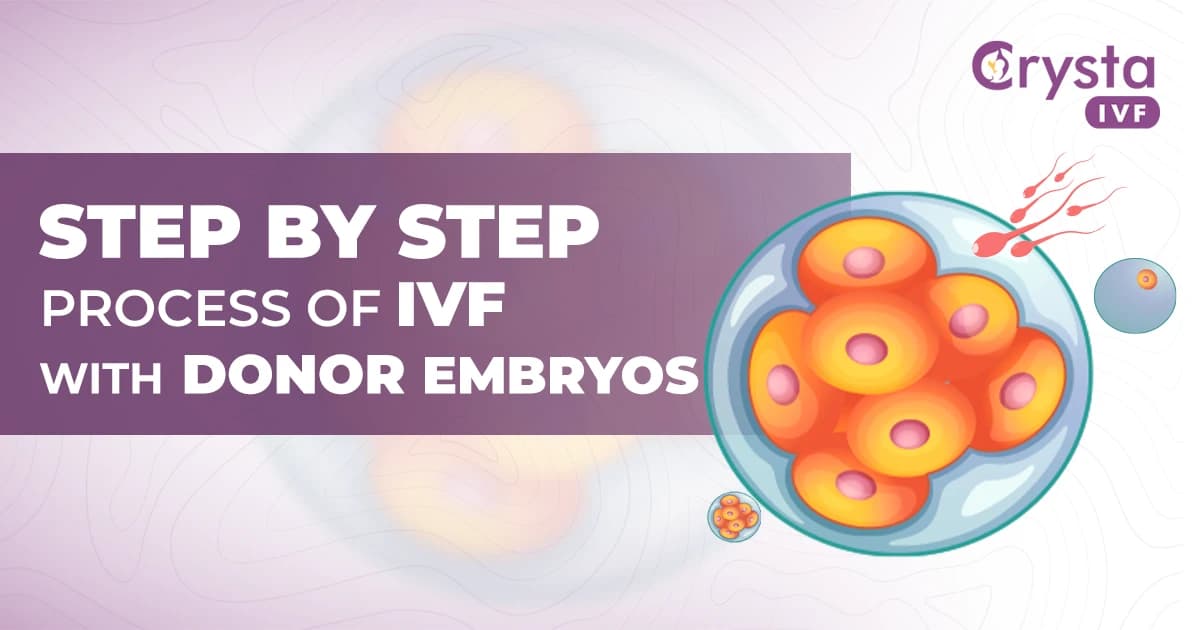
Fertility rates around the world have dropped sharply over the past few decades, from an average of 5 children per woman in 1960 to just 2.4 in 2021. This decline is often linked to lifestyle habits, rising stress, medical conditions, and environmental changes. As a result, more couples today face challenges in conceiving naturally and turn to Assisted Reproductive Technology (ART) for help.
In this article
- 1How Embryo Donation Works in IVF Treatment?
- 2Who Needs IVF with Donor Embryos?
- 3Step-by-Step Process of IVF with Donor Embryos
- 4IVF Success Rates with Donor Embryo
- 5What is the Cost of IVF with Donor Embryos in India?
- 6What are the Benefits of IVF with Donor Embryos?
- 7IVF with Donor Egg vs IVF with Donor Embryo: Which is Better?
- 8Few Legal and Ethical Aspects of Embryo Donation
- 9Choosing the Right Fertility Centre
- 10FAQs
- 10.1Can IVF treatment with donor embryos fail?
- 10.2What is the cycle of a donor embryo?
- 10.3What is the IVF cost of using donor embryos?
One such advanced option is IVF with donor embryos, a procedure that offers hope to couples struggling with infertility.
When looking for IVF treatment and its possibilities, it is also important to learn about embryo donation. Are you aware of the use of donor embryos in IVF procedures? If not, this blog is just for you. It covers all the necessary information on donor embryos, the procedural steps, success rates, legal aspects, and more. So, stick with us until the end and learn more about this topic!
How Embryo Donation Works in IVF Treatment?
Embryo donation in IVF treatment refers to a process where the recipients use the embryos developed from donors’ gametes (eggs and sperm), for conception. The female donor egg is mixed with the male donor’s sperm and kept under laboratory conditions for development. After around 5 days, the embryo is transferred into the female recipient’s uterus for implantation.
This procedure is used when both the recipients suffer from fertility problems like low-quality eggs or diminishing ovarian reserve in the females, and low testosterone levels, sperm mobility and quality in the males, or some genetic conditions that the couple doesn’t want to pass on to the child.
The procedure is also helpful for males over 40 and females over 35 years of age, when their fertility starts to decline.
Who Needs IVF with Donor Embryos?
IVF with donor embryos is usually suggested for couples who cannot use their own eggs or sperm to have a baby. It gives them a chance to experience pregnancy and childbirth even when natural conception or traditional IVF is not possible.
You may need IVF with donor embryos if:
- Both eggs and sperm are unhealthy or unavailable: For example, in cases of poor egg quality, very low sperm count, or no sperm production.
- Repeated IVF failures: When using your own eggs and sperm have not worked after several attempts.
- Genetic disorders: If one or both partners carry serious genetic diseases that may be passed on to the baby.
- Older age: Women with very low egg reserves or post-menopause can still become mothers through donor embryos.
- Single parents or same-sex couples: Parents who need both egg and sperm donation to build their families.
Step-by-Step Process of IVF with Donor Embryos
Using eggs and sperm from donors during IVF treatment is a complex process involving various steps like finding a suitable donor, medical screenings, emotional and conscientious consent, and then the further process of IVF treatment, which is similar to the normal procedure.
Here is a step-by-step process of the whole donor embryo IVF procedure:
- Medical Screening of the Recipient The process starts with a complete medical screening, including various fertility tests for both recipients. If the healthcare provider identifies a need for donor embryos, they may proceed further with consultation about the same, and if not, regular IVF treatment may be considered.
- Selection of embryo donor If the need for donor embryos is identified, and the couple agrees to go with the embryo donation process, selection of the right donor begins. This task involves finding genetically compatible donors and may also include selecting donors according to the recipients’ preferences.
- Counselling of the Donor and the Recipient After finding the donors, the next step is to counsel both the recipients and donors about the upcoming procedure. This also involves legal and general consent from both parties and some basic bonding activities to ensure a smooth procedure. Complete anonymity and confidentiality are maintained throughout the procedure, where neither party has any personal information about the other party.
- Donor Ovarian Stimulation This is where the actual process of IVF treatment begins. The female donor is administered a set of fertility drugs to hasten ovulation and boost hormone production for egg retrieval. The medications generally include the Follicle Stimulating Hormone(FSH) and the Luteinizing Hormone(LH). This process takes about 8-14 days.
- Egg & Sperm Collection and Fertilisation After the ovarian stimulation is over and the eggs are mature and ready for retrieval, the next step of egg collection and fertilisation starts. In this step, the female donor undergoes a transvaginal ultrasound, and then a needle is inserted to retrieve one or multiple mature eggs from the ovaries. Then, the male donor’s sperm is mixed with the female donor’s eggs under laboratory conditions and kept there for fertilisation for about 6-8 days until it is transferred to the female recipient’s uterus.
- Recipient PGT Screening and Medication Along with the egg fertilisation process, the female recipient simultaneously goes through a pre-implantation genetic screening to ensure suitable conditions for implantation. The recipient is also administered some medications to prepare her body for the procedure.
- Embryo Transfer After embryo development in the laboratory and the female recipient’s preparation for the procedure, the next step is embryo transfer. It is a simple and painless procedure where the selected healthy embryos are inserted into the recipient’s uterus through the cervix using a flexible catheter. The whole process is done under an ultrasound screening to ensure accurate placement of the embryos and avoid complications.
- Pregnancy Testing The embryo takes 3-5 days to implant itself on the surface of the recipient’s uterus. About 2 weeks after the embryo transfer procedure, healthcare providers proceed with a pregnancy test to determine the success of an IVF cycle. If the cycle is successful, then the facility may carry out some other care and support routine and demand active monitoring of the pregnancy, at least in the early stages.
In case of a failed cycle, the couple may be advised to seek counselling and another IVF cycle based on their circumstances.
Also Read: 7 Essential Tips on How to Choose an Egg Donor in IVF Treatment
IVF Success Rates with Donor Embryo
IVF using donor embryos can significantly increase the chances of a successful conception. A traditional IVF treatment involving the recipient’s gametes (both egg and sperm) has an average success rate of 35-40%, as opposed to IVF using donor embryos, where the average success rate hikes up to 70-80%.
However, success rates also vary due to other factors, including the recipient’s uterine receptivity, age, lifestyle habits, and medical history. According to the IVF Authority, even in females over 45, the average success rate of IVF using donor embryos is 63%, which is quite impressive. The chances of success also improve with subsequent cycles of IVF with donor embryos, just like in traditional IVF procedures.
LEARN MORE: Success Rate Of IVF With Donor Eggs In India
What is the Cost of IVF with Donor Embryos in India?
If you're considering IVF using donor embryos in India, here's a straightforward breakdown of what to expect cost-wise:
On average, the cost for IVF with donor embryos ranges between ₹3.5 lakh to ₹5.5 lakh per cycle. This covers the IVF procedure using embryos from another couple.
But why do the costs vary?
There are several factors that can cause costs to differ across clinics:
- Location & Clinic Type: Costs change between metro and smaller cities, and depending on the clinics’ facilities.
- Included Services: Packages may or may not include consultation, lab work, medications, or follow-up visits.
- Additional Procedures: Costs rise if you also opt for genetic testing, advanced diagnostics, medication, or embryo storage.
What are the Benefits of IVF with Donor Embryos?
IVF with donor embryos gives hope to couples who cannot use their own eggs or sperm. It is one of the most successful and affordable fertility treatments compared to other advanced options.
Here are some key benefits:
- Higher success rates: Donor embryos are usually created from young and healthy eggs and sperm, which increases the chances of pregnancy.
- Option for older women: Even women in their 40s or after menopause can experience pregnancy through donor embryos.
- Helps overcome infertility issues: Works well when both egg and sperm quality are poor, or when repeated IVF cycles with own embryos have failed.
- Avoids genetic risks: If there are hereditary diseases in the family, using donor embryos reduces the chance of passing them on to the child.
- Gives emotional satisfaction: It allows couples to experience pregnancy, childbirth, and bonding with the baby right from the start.
IVF with Donor Egg vs IVF with Donor Embryo: Which is Better?
Both donor egg IVF and donor embryo IVF are helpful fertility options, but they work differently. Here’s a quick comparison to help you understand:
| Aspect | IVF with Donor Egg | IVF with Donor Embryo |
|---|---|---|
| What does it mean? | In IVF with a Donor egg, the doctors use the donor’s egg + partner’s sperm (or donor sperm if needed). | In IVF with a donor embryo, the doctors use both donor egg + donor sperm (ready embryo). |
| Who needs it? | Women with poor egg quality, low ovarian reserve, and advanced age may need IVF with donor egg. | Couples with both egg and sperm issues, repeated IVF failures, or genetic risks may need IVF with a donor embryo. |
| Genetic link | The baby may carry the father’s genes (if his sperm is used). | No genetic link to either parent in this. |
| Cost | Usually higher (egg donor + IVF process). | More affordable, as the embryo is already created. |
In short, Donor Egg IVF is better if the female partner’s eggs are weak but the male partner’s sperm is healthy and Donor Embryo IVF is better if both egg and sperm have problems or if there’s a high risk of passing genetic disorders.
Few Legal and Ethical Aspects of Embryo Donation
India’s constitution has a complex set of laws and regulations for IVF procedures, donor gametes, and traditional and gestational surrogacy. While commercial surrogacy is banned altogether, IVF procedures are completely legal, and so are donor gametes.
- Legal Eligibility Criteria Here are the legal eligibility criteria for embryo donors:
- Donors must be between the ages of 23 and 35.
- They must be free from genetic conditions and disorders.
- They must be physically and mentally sound.
- They are required to go through full body checkups and fertility tests before egg and sperm donation.
- About Consent The law emphasises the importance of consent from both parties, i.e., the recipients and the donors. Both donors and recipients need to provide written consent and understand the terms of the procedures, their legal implications and risks, etc.
- About Confidentiality and Anonymity The law emphasizes the importance of anonymity and confidentiality for both the donor and the recipient. This provision protects the privacy of both parties and prevents any potential conflicts, be they social, legal, or personal, that may arise from the disclosure of identity or personal information.
- About Financial compensation The law prohibits the commercialization or exploitation of the embryo donation process. However, the donation process requires donors to undergo many medical tests and other necessary procedures for oocyte donation. Transportation expenses, accommodation expenses, and other miscellaneous expenses may also occur. The law understands these financial aspects and demands fair compensation to be provided to the donors, with an intent to cover the medical and other aspects of the procedure, not with a commercial intent.
Choosing the Right Fertility Centre
Now that you have read the article, you should be well informed about donor embryos and the whole procedure, including the success rates and legal aspects.
Along with these things, choosing the right fertility center is crucial when looking for the best infertility treatment services. A good fertility center can greatly increase your chances of success while giving you the best possible experience.
If you are looking for such a fertility center, Crysta IVF might be the best choice for you. We are one of India's leading and most trusted fertility center in Pune, with the trust of countless satisfied couples who we have helped achieve parenthood. We are equipped with state-of-the-art technology and a team of the best fertility specialists across India. So, don’t let your parenthood dreams wait anymore. Book a free consultation with our fertility experts today!
FAQs
Can IVF treatment with donor embryos fail?
Yes. Although IVF using donor embryos has a significantly higher chance of success, it might still fail. Various other factors may contribute to IVF failure other than the embryo, including implantation problems, hormonal imbalances, genetic abnormalities, etc.
What is the cycle of a donor embryo?
A cycle refers to the whole IVF procedure using donor embryos. This procedure is similar to regular IVF treatment and may take 6-8 weeks to complete.
What is the IVF cost of using donor embryos?
Donor embryos are usually sourced from young donors with good genetics & egg and sperm quality. Finding healthy and compatible donors is quite tough, and the whole process of IVF using donor embryos is complex, which makes it more expensive. On average, a cycle of IVF using donor embryos can cost anywhere from 2.5 lakh to 4 lakh rupees.
Disclaimer
As per the "PCPNDT" (Regulation and Prevention of Misuse) Act, 1994, Gender Selection and Determination is strictly prohibited and is a criminal offense. Our centers strictly do not determine the sex of the fetus. The content is for informational and educational purposes only. Treatment of patients varies based on his/her medical condition. Always consult with your doctor for any treatment.
Have questions about your fertility?
Talk to our fertility specialists. Your first consultation is free.
Explore Crysta IVF
Treatments, centres and costs, all in one place.
