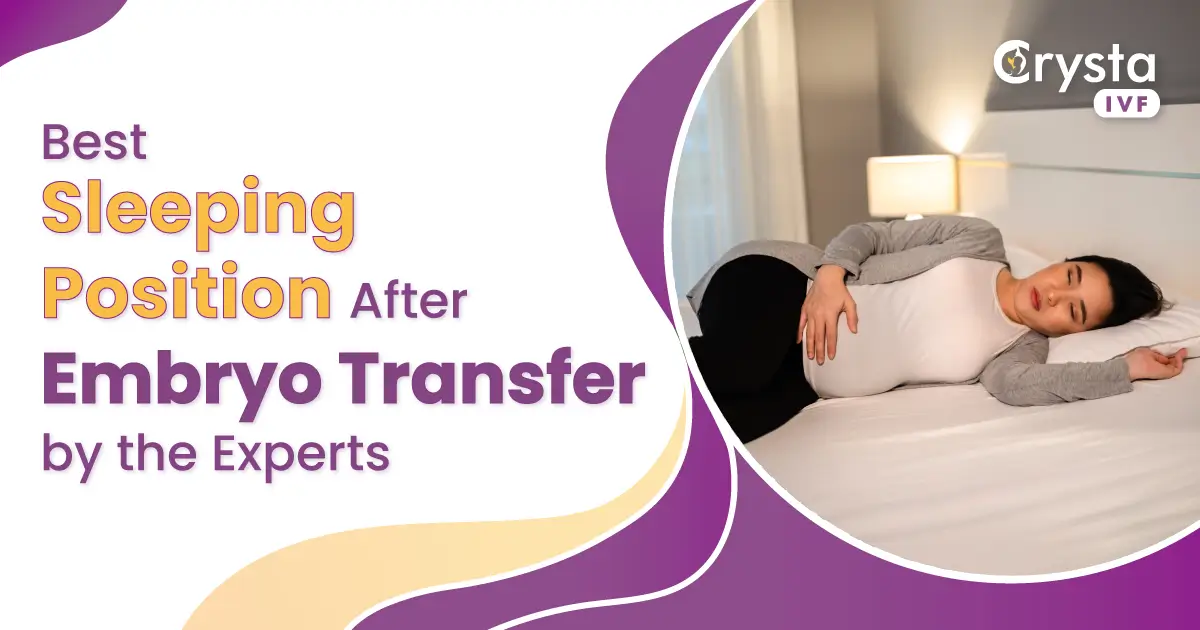
Sleeping on the back and sleeping on the left side are often considered the best sleeping positions after an embryo transfer. But the truth is that there is no single fixed sleeping position required for implantation to happen.
The embryo is placed safely inside the uterus and is not affected by normal movements or sleeping posture. What matters more than position is comfort, proper rest, and staying relaxed.
However, sleeping in a certain way can provide you with relaxation and is considered the best IVF sleeping position. Read ahead to know which sleeping positions are safe after embryo transfer, which ones you may avoid, and clear common IVF myths.
Why Sleeping Position is Important After Embryo Transfer?
Doctors advise having rest in the best sleeping position possible after an embryo transfer, as sleeping in a comfortable position helps the body relax, improves blood circulation, and supports better sleep quality.
It might seem sensible to take a few days off if you are working to be in bed and let implantation take place. Sleeping is also important to help you tackle the rise in your hormone levels.
You can ask your family member or husband to help you handle the daily chores during such a period. Putting faith in your partner during such a crucial phase to handle the cooking and housework is a wise decision.
Best Sleeping Position After Embryo Transfer by Doctor’s Recommendation
Getting enough sleep is essential for the body to relax and create the ideal environment for stress management and hormonal balance. However, the way you sleep also impacts your quality of sleep.
The following are some of the best positions to sleep after embryo transfer:
Sleep on Your Back: (Supine Position)
This is among the safest sleeping positions. Most people can also find it very comfortable, and it helps them have a good night’s sleep. Sleep on your back and place a small soft pillow below your waist. You can also sleep in this position during the first trimester of your pregnancy.
Doctor’s Recommendation: This position is safe but not compulsory. If you naturally sleep on your side and feel comfortable, you can continue doing so without worry.
Sleep on the Left Side:
Lying down on your left side allows for incredibly comfortable sleep. You can use specialized pillows like the C- or U-shaped to improve your sleep quality. Use a good-quality pillow and rest your leg & Stomach on the pillow after embryo transplant.
Doctor’s Recommendations: Left side sleeping after embryo transfer may improve blood circulation and can feel more comfortable if you experience bloating, acidity, or back discomfort.
Can You Change Sleeping Positions During the Night?
Yes, you can. Changing positions while sleeping is completely normal and happens naturally. You do not need to stay in one position all night. The embryo remains protected inside the uterus, even if you move or turn in bed.
Trying to force yourself into one position can disturb your sleep and increase stress, which is not helpful during this phase.
What are the Sleeping Positions to Avoid After Embryo Transfer?
After an embryo transfer, no sleeping position can harm the embryo. However, some positions may cause discomfort, disturbed sleep, or unnecessary strain on the body. These positions are usually advised to be avoided for comfort reasons, not because they affect implantation.
Below are the sleeping positions you may want to avoid and why:
Sleeping on the Right Side
Sleeping on the right side is safe, but some women may feel acidity, bloating, or discomfort. If it affects sleep, it’s better to switch to a more comfortable position.
Sleeping on Your Stomach (Prone Position)
Sleeping on your stomach is generally not recommended after embryo transfer. This position puts pressure on the abdomen and pelvic area, which can feel uncomfortable, especially if you have bloating, tenderness, or mild cramps after the procedure.
Sleeping in a Very Curled or Tight Position
Sleeping in a tightly curled position, with knees pulled close to the chest, may restrict blood circulation and cause muscle stiffness. This position can also increase pressure around the abdomen, leading to discomfort.
Sleeping With Too Many Pillows Under the Hips
Some women believe that keeping pillows under the hips can help implantation. This is a common IVF myth. Elevating the hips for long hours while sleeping is not medically required and can cause lower back pain or body stiffness.
Sleeping in Positions That Disturb Your Sleep
Any position that causes repeated waking, body pain, or restlessness should be avoided. Poor sleep can increase stress and fatigue, which is not ideal during the implantation phase.
How Many Hours Should You Sleep After Embryo Transfer?
After an embryo transfer, many women wonder if they need to sleep more than usual or take long naps to help with implantation. The simple answer is no extra sleep is required, but good-quality sleep is very important during this phase.
Doctors generally recommend 7 to 9 hours of sleep at night after embryo transfer. This amount of sleep helps your body recover, keeps hormones balanced, and supports overall well-being. Proper rest also helps reduce stress, which plays an important role during the implantation period.
Short daytime naps are allowed if you feel tired, especially due to hormonal medicines. However, long or frequent naps during the day should be avoided as they can disturb your nighttime sleep cycle.
Crysta IVF Doctor Explains How Many Hours You Should Sleep After Embryo Transfer
“Sleeping hours doesnt directly affect the implantation happening in your body during embryo transfer. What matters most is deep, uninterrupted sleep, not staying in bed all day.
There is no medical need for strict bed rest after embryo transfer unless you face any problem and consult with your doctor. You can follow your normal sleep routine, listen to your body, and focus on staying relaxed.”
Fertility Specialist at Crysta IVF, Patna
IVF Myths About Sleeping After Embryo Transfer
After an embryo transfer, many women hear different rules about how they should sleep. Most of these are myths that create unnecessary fear and stress. Let’s clear some of the most common IVF sleeping position myths:
Myth 1: Sleeping position can displace the embryo
Fact: The embryo is safely placed inside the uterus and cannot fall out or move because of the sleeping position. Normal movements during sleep do not affect implantation.
Myth 2: You must sleep only on your back after embryo transfer
Fact: Sleeping on your back is safe, but it is not mandatory. You can sleep on your side or change positions during the night without harming the embryo.
Myth 3: You should not turn or move while sleeping
Fact: Turning in bed is natural and unavoidable. The embryo remains protected even if you change positions during sleep.
Myth 4: Keeping pillows under the hips helps implantation
Fact: Elevating the hips for long hours is not required after embryo transfer. This practice has no medical benefit and may cause back pain.
Myth 5: Strict bed rest and long sleep improve IVF success
Fact: There is no evidence that strict bed rest improves IVF success. Light movement and normal sleep routines are usually recommended unless your doctor advises otherwise.
Key Note: Sleeping after embryo transfer should be about comfort and rest, not fear. Avoid believing myths that add stress during this sensitive time. Trust your body, follow your doctor’s advice, and focus on getting good-quality sleep.
Precautions After Embryo Transfer to Boost the Chance of Pregnancy
A few safety measures can improve the outcome of in vitro fertilisation.
1. Steer Clear of Physically Demanding Activities
After embryo transplant, it’s crucial to avoid heavy lifting, intense physical activity, and excessive exercise. All these activities could result in unsuccessful implantation. However, light exercise, like yoga or walking, is recommended to improve general health without putting undue strain on the reproductive system.
2. Steer Clear of Lengthy Trips
Fertility experts suggest avoiding taking long-haul flights and travelling to isolated locations. Discussing your situation with a good fertility doctor before making any trip plans is important.
3. Maintain a Nutritious Diet
It’s also critical to maintain a healthy diet and way of life during this period. Eating a nutritious, well-balanced diet is advised. Experts suggest consuming nutrients that promote reproductive health. Consuming whole grains, fruits, vegetables, lean meats, and whole grains can supply the vitamins and minerals required for maximum fertility.
Some doctors suggest that certain fruits must be avoided after embryo transfer to increase the chances of successful IVF. These fruits include papaya, pineapple, banana, kiwi, mango, and many more.
4. Refrain From Drinking and Smoking
Avoiding smoking and drinking is crucial because these behaviours can harm fertility and the effectiveness of embryo implantation. Experts advise abstaining from all forms of alcohol and tobacco during the IVF procedure.
Trouble Sleeping After Embryo Transfer? Try These!
Sleep in a Comfortable Position
The expert suggests sleeping on either your back or left side, but you must understand which position is comfortable. Try resting your stomach on an elevated pillow or sleep like a womb baby. Remember that sleeping on your stomach is dangerous, and re; resting can work.
Use a Comfortable Pillow
Using a pillow to support your body as you sleep is important. Keep an additional pillow to place under your knees while you are resting on your back. This increases the blood flow and relieves pressure on the lower back. Placing a cushion between your legs might also help correct your spine posture and offer extra support if you prefer to sleep on your side.
Follow a Regular Sleeping Schedule
Keep a regular sleep routine after embryo transfer. The more you rest, the more relaxed you will be. Sleeping at the same time will also help you manage the other household work while you get pregnant.
Also Read: Is Exercise Recommended During and After Embryo Transfer?
When to Call Your Doctor About Discomfort During Sleep?
Mild discomfort or disturbed sleep after an embryo transfer is common and usually not a problem. This can happen due to medicines, hormonal changes, or anxiety during the waiting period. However, some symptoms should not be ignored.
Connect with the best fertility centre in Patna if you notice any of the following:
- Severe or constant abdominal pain that does not improve with rest
- Pain that wakes you up repeatedly during sleep
- Heavy vaginal bleeding or passing blood clots
- Extreme bloating or sudden swelling of the abdomen
- Difficulty breathing while lying down
- Fever, chills, or signs of infection
- Dizziness, fainting, or feeling unusually weak
- Sudden weight gain along with discomfort
Closing Thought
IVF can be a journey full of hurdles, hope, and expectation. You can improve your chances of success after embryo transfer by following the suggested precautions after IVF, such as sleeping in the right position and changing your lifestyle as needed.
Setting aside time for self-care, lowering stress levels, and keeping an optimistic outlook are all equally crucial components of the process. You can increase your chances of having a successful IVF procedure by being well-prepared, persistent, and taking the appropriate safety measures.
Crysta IVF, India’s best fertility center, provides a thorough examination, treatment, and post-care precautions that help you conceive easily. Contact 8938935353 to book your appointment and discuss all sorts of problems with expert doctors.
FAQs About Sleeping Position After Embryo Transfer
Can sleeping on the left side help implantation?
Sleeping on the left side does not directly help implantation. Implantation depends on factors like embryo quality, uterine lining, and hormones, not sleeping position. However, sleeping on the left side can feel more comfortable for some women.
Can I sleep normally after embryo transfer?
Yes, you can sleep normally after embryo transfer. There is no need to change your natural sleeping habits.
Is it okay to sleep immediately after embryo transfer?
Yes, it is completely okay to sleep immediately after embryo transfer. In fact, resting for a short while after the procedure is usually recommended to help you relax.
Can turning in bed affect implantation?
No, turning in bed does not affect implantation. The embryo does not move or fall out when you change positions during sleep. The uterus is a closed and protective organ.
Do doctors recommend bed rest after embryo transfer?
Most doctors do not recommend strict bed rest after embryo transfer. Studies show that complete bed rest does not improve IVF success rates. Light activity and normal movement are usually advised.
Can sleeping position affect IVF success rate?
No, sleeping position does not affect the IVF success rate. IVF success depends on embryo quality, uterine health, age, and hormone levels—not how you sleep.
Can I sleep on my stomach after an embryo transfer?
No, sleeping on the stomach is not recommended, mainly because it can cause discomfort or pressure on the abdomen.
How many hours should I sleep after embryo transfer?
You should aim for 7 to 9 hours of sleep at night. Good-quality sleep helps reduce stress and supports hormonal balance during the implantation period.
Can poor sleep affect implantation?
Poor sleep does not directly stop implantation, but lack of sleep can increase stress and fatigue.
Is it safe to take sleeping pills after an embryo transfer?
You should not take sleeping pills without consulting your fertility doctor. Some medications may not be safe during IVF treatment or early pregnancy.
Can anxiety disturb sleep after embryo transfer?
Yes, anxiety is very common after embryo transfer and can disturb sleep. Simple relaxation techniques, deep breathing, or calming routines before bedtime can help.
Can I nap during the day after embryo transfer?
Yes, short daytime naps are allowed if you feel tired. Avoid long or frequent naps, as they may disturb your nighttime sleep.
Does lying flat help embryo implantation?
No, lying flat for long hours does not improve implantation. Comfort and relaxation are more important than posture.
Should I follow different sleeping rules during the two-week wait?
No special sleeping rules are required during the two-week wait. Follow a normal routine, sleep comfortably, and focus on staying calm and stress-free.
How to Get Up From Bed After Embryo Transfer?
After embryo transfer, you can get out of bed normally and gently. There is no special technique required to protect the embryo.
Can I Fold My Legs While Sleeping After Embryo Transfer?
Yes, you can fold your legs while sleeping after embryo transfer. Folding or bending your legs does not affect implantation and does not harm the embryo in any way.
Verified by Crysta IVF Doctor