
For men who are suffering from Azoospermia (the absence of sperm in the semen), the possibility of becoming a father can seem like a distant dream. However, advancement in Assisted Reproductive Technologies (ART), particularly sperm retrieval procedures like Testicular Sperm Aspiration (TESA), offers a golden opportunity for men who wish to become parents. This minimally invasive technique empowers men with azoospermia to unlock the door to fertility, paving the way to In Vitro Fertilisation (IVF) and family dreams.
In this article, we delve deeper into the intricacies of TESA, unraveling its success rates, potential side effects, and its place within the broader spectrum of sperm retrieval options. Let’s navigate the informative journey illuminating the possibilities TESA holds for your fatherhood aspirations.
Also Read: Which Doctor Should You Consult For Male Infertility?
What is Tesa?
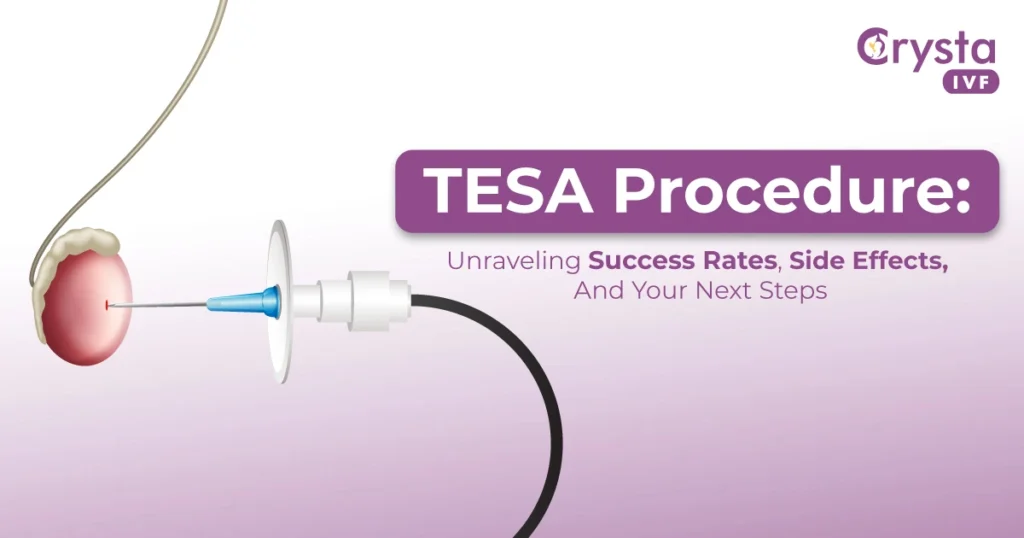
TESA stands for Testicular Sperm Aspiration. It is a surgical procedure where a fine needle is inserted into the testicles to directly extract sperm from tiny tubes called seminiferous tubules. This outpatient procedure, usually performed under local anaesthesia, eliminates the need for incisions, minimizing discomfort and recovery time.
TESA Procedure
Under local anaesthesia, the doctor will use a thin needle to aspirate fluid and tiny tissue samples from the seminiferous tubules. Multiple aspirations might be necessary, depending on the sperm availability, ensuring thorough exploration of the testicular tissue.
Also Read: What is Sperm Cramps
TESA Procedure Prepration
As with any medical procedure, meticulous preparation paves the way for a smooth and successful experience. The crucial stage involves a thorough discussion with your doctor about the TESA procedure, its potential risks, benefits, and post-operative care. Pre-operative medications and blood tests might also be required to ensure optimal readiness.
TESA Procedure Recovery Time
TESA boasts a remarkably quick recovery time. Most patients experience mild discomfort for a few days, easily managed with pain medication. Stitches, if used, are usually removed within a week, and you can quickly resume your regular life.
Success Rate of TESA Procedure: A Brighter Outlook
While success rates depend on individual factors like the cause of azoospermia, TESA successfully paints a hopeful picture. Studies reveal that sperm retrieval success rates between 50% – 80% for TESA, offering a significant chance for successful fertilization through IVF with Intracytoplasmic Sperm Injection (ICSI). This means there is a high probability to overcome the problem of azoospermia and achieve fatherhood.
Learn More: How Long Does It Take For Sperm To Regenerate?
TESA Procedure Side Effects
TESA carries a low risk of potential side effects like any other procedure. While the advantages far outweigh the risks, knowing the potential side effects is important.
Mild Pain and Bruising in the Scrotum: This is a temporary side effect of TESA. It can be managed with some pain medicines.
Infection at the Puncture Site: Proper hygiene and post-operative care minimize the risk of infection.
Bleeding: Minor bleeding can occur following the procedure, usually subsiding within a few days after the procedure.
Testicular Inflammation: In some rare cases, temporary inflammation of the testes can occur, but prompt medical attention can resolve this issue quickly and smoothly.
While keeping these side effects in mind may help you make the right decision, you must also remember that the potential benefits of TESA far outweigh the side effects.
Also Read: Tracking Male Sperm Count in Different Ages: Detailed Chart
TESA Compared to Other Sperm Retrieval Options
TESA is not the only sperm retrieval technique in the world. It often stands with its other variant – TESE (Testicular Sperm Extraction). It’s a procedure involving a smaller testicular tissue incision. While both techniques aim to retrieve sperm, TESA offers several advantages:
- Minimally Invasive: TESA avoids surgical incisions. This minimizes discomfort and recovery time, making it a gentler option for many men.
- Lower Risk of Complications: TESA carries a lower risk of bleeding and infection compared to TESE.
- Multiple Punctures: TESA allows for sampling from different areas of the testicles, potentially increasing the chances of sperm retrieval.
Ultimately, the choice between TESA and TESE depends on individual factors like the cause of azoospermia, the availability of specialized equipment, and your physician’s recommendations. Open communication with your fertility specialist will ensure you select the best-suited approach for your treatment.
Crysta IVF: Your Lighthouse on the Path to Fatherhood
At Crysta IVF, we understand the situation men go through while suffering from azoospermia. Our team of 10+ years of experienced doctors, equipped with cutting-edge technology and empathy for you, stand by you every step of the way. From comprehensive assessments to personalized treatment plans, we provide compassionate and dedicated support, focusing on maximizing your chances of successful sperm retrieval and achieving your dreams of fatherhood.
Don’t let azoospermia dim your chances of experiencing fatherhood. We offer:
- State-of-the-art facilities: Our IVF Centres all across India boast advanced technology and equipment specially designed for minimally invasive procedures like TESA, ensuring optimal outcomes and patient comfort.
- Experienced Team: Our fertility specialists possess extensive experience and expertise in TESA and related procedures. Our doctors reassure you of skilled hands and experienced minds.
- Patient-Centric Approach: We don’t just treat your condition, we understand your condition and offer personalized support throughout the journey – from pre-operative consultations to post-operative care.
- Commitment to Transparency: We believe in open communication. We keep you informed about every aspect of the procedure, empowering you to make informed decisions.
- Compassionate Environment: We understand your vulnerability and our compassionate staff creates a supportive environment, making your journey smooth and comfortable.
Beyond TESA, Crysta IVF offers a comprehensive spectrum of treatment options to cater to your needs. Our fertility counsellors provide invaluable guidance as you navigate the emotional complexities of infertility. Our dedicated support team ensures you have a reliable shoulder to lean on throughout your journey with us. Visit our website or contact us at – 8938935353. We are readily available to serve you in the best interest of yours.