


If you are trying to get pregnant and nothing is working for you, it can feel confusing and stressful. You may notice irregular periods, missed menstrual cycles, or bleeding that does not happen at a regular time. In many cases, this can be possible because of Anovulation.
Anovulation means your ovary does not release an egg during your menstrual cycle. And, without an egg, natural pregnancy cannot happen, even if everything else looks normal from the outside. Hence, knowing about anovulation is the first step towards taking control of your fertility journey.
What is Anovulation?
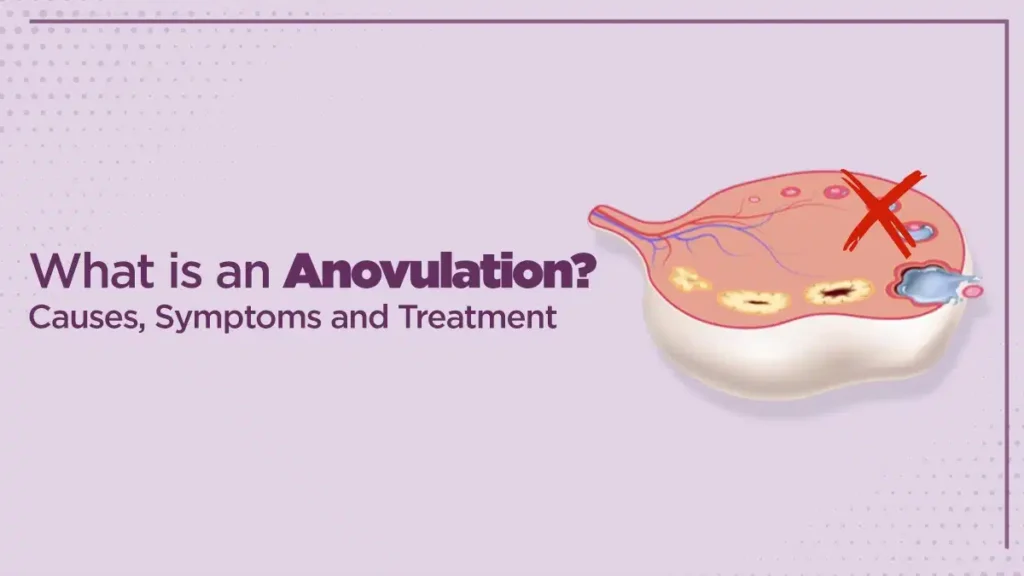
Anovulation is a condition where your ovary does not release an egg during a menstrual cycle. Release of an egg (ovulation) is important for females because pregnancy can only happen when an egg is released and meets sperm. When ovulation does not occur, it becomes difficult to conceive naturally.
Many women think that if their periods are coming, ovulation must be happening. But that is not always true. You may still get bleeding every month even without ovulation. This bleeding usually happens due to hormonal changes in your body and not because an egg was released.
How Common is Anovulation?
Anovulation is more common than many people think. Many women experience anovulatory cycles at some point in their reproductive years, even if they usually have regular periods. According to research on the management of PCOS in India [1], one of the major causes of Anovulation is due to PCOS, which accounts for about 3.7% up to 22.5% of women.
However, sometimes anovulation can happen due to stress, illness, travel, or sudden lifestyle changes, and it may correct itself naturally. Hormonal problems, thyroid disorders, and being underweight or overweight can also increase the chances of anovulation.
Young girls soon after puberty and women nearing menopause may also experience anovulation more frequently because hormone levels are still adjusting or slowly changing.
Who is More Likely to Have Anovulation?
Anovulation can affect any woman, but some age groups are more likely to experience it than others. The age group between 18 and 52 are highly affected. If any of these conditions below match you, there is a chance that you might be having Anovulation.
- Women with irregular periods
- Women with PCOS or PCOD
- Women who have thyroid or hormone disorders
- Women who have high stress levels
- Females who are underweight or overweight
- Females who exercise excessively
- Teenagers or women who are near menopause
What are the Common Causes of Anovulation?
Anovulation usually happens when your hormones do not work in proper balance. This is caused by many everyday health and lifestyle factors. Here are some common causes you should know about:
-
- Hormonal Imbalance – Hormones control ovulation. When hormones like estrogen, progesterone, LH, or FSH are not balanced, the ovary may not release an egg.
- PCOS (Polycystic Ovary Syndrome) – PCOS is one of the most common reasons for anovulation in India. Many women with PCOS have irregular periods or long gaps between cycles. It can also cause irregular periods, weight gain, acne, and excess hair growth.
- Stress and Emotional Pressure – If you are under a lot of stress, it can directly affect the brain signals that control ovulation. It can delay your egg release or completely stop it.
- Sudden Weight Gain or Weight Loss – Being overweight or underweight affects hormone levels. Being overweight or underweight can make it harder for the body to release an egg regularly.
- Thyroid Problems – The thyroid gland plays a role in menstrual health. When thyroid levels are too high or too low, ovulation can become irregular or stop.
- Age-Related Hormonal Changes – Ovulation may not be regular soon after you hit puberty or as your menopause approaches. During these phases, hormones naturally change and affect egg release.
How to Know If You Are Not Ovulating – Explained By Crysta IVF Experts
“Sometimes, I meet women who feel confused because their periods are coming, but pregnancy is not happening. I want you to know that ovulation does not always happen just because you bleed every month.
If you are not ovulating, your body usually gives small signs of Anovulation. When your cycle length keeps changing or you skip periods, it often means ovulation is not regular. Some signs you can notice if you are not ovulating are:
-
-
- Irregular periods
- Non- stretchy cervical mucus
- And, no pain in the lower abdomen.
-
However, these signs cannot confirm if you are not ovulating. The only sure way to know is through blood tests and ultrasound monitoring. These tests help us see if an egg is growing and being released.
Dr. Sutapan Samanta
Senior IVF Specialist, Crysta IVF, Kolkata
What are the Signs and Symptoms of Anovulation?
Anovulation does not always show clear symptoms, which is why many women do not realise it early. Still, your body gives small signals that something is not right during ovulation. Here are some common signs by which you can know when you are not ovulating:
-
-
- If your periods come late, too early, or skip between months, anovulation is possible.
- Bleeding that feels unusual for you. It can happen when hormones are not balanced.
- If you are trying for pregnancy for many months without success, anovulation could be one of the reasons.
- You may not notice mid-cycle pain, egg-white cervical mucus, or a rise in basal body temperature.
- Unexplained weight gain or loss can affect ovulation and menstrual regularity, which can also lead to anovulation.
-
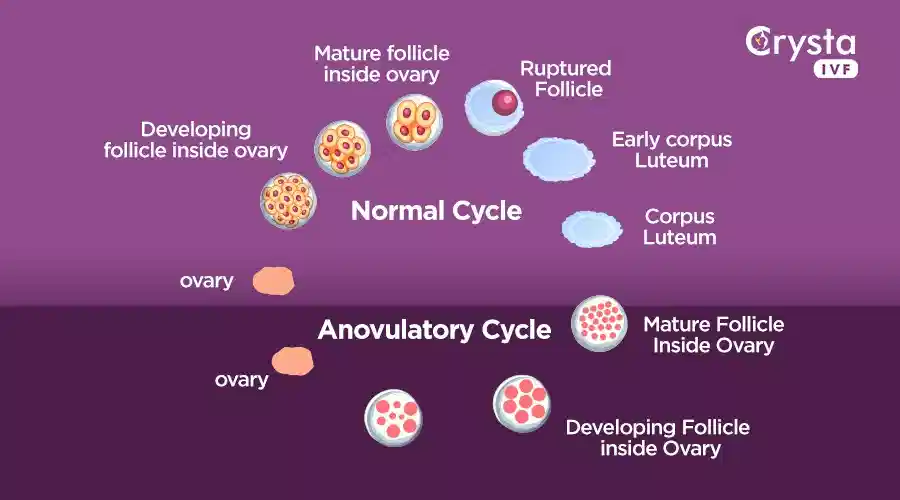
What is the Difference Between Ovulation and Anovulation?
Many women confuse ovulation with anovulation as they might get a period in both cases. But, they are completely opposite of each other. Here is a comparison that will help you clearly understand what changes when ovulation does not happen.
| Ovulation | Anovulation |
|---|---|
| Ovulation happens when the ovary releases an egg during the menstrual cycle. | Anovulation happens when the ovary does not release an egg in a cycle. |
| Pregnancy is possible because an egg is available for fertilisation with the sperm. | Pregnancy is not possible during anovulation because no egg is released. |
| Periods usually come in a regular pattern and at a regular interval. | Periods may be irregular, delayed, or unpredictable. |
| Hormones like estrogen and progesterone work in balance. | Women face hormonal imbalance during anovulation which affects the cycle. |
| Progesterone rises after ovulation. | Progesterone usually stays low. |
| Monthly bleeding happens after a complete cycle. | Bleeding may still happen, but without true ovulation. |
Can You Have Periods with Anovulation?
Yes, you can have periods even when ovulation does not happen. This may surprise many of you, but yes, bleeding still happens even without ovulation.
Bleeding during a cycle does not always mean that an egg was released from the ovary. In anovulation, the body still goes through hormonal changes that can cause the uterus lining to shed.
Here is why bleeding might still occur:
-
-
- Hormonal changes can still trigger the uterus lining to shed even without ovulation.
- Estrogen may continue to build the uterine lining, leading to bleeding in the later stages.
- Lack of progesterone causes an unstable lining that sheds irregularly.
- The body may mimic a period despite no egg being released.
-
How Does Anovulation Affect Fertility?
Anovulation directly affects fertility because you can only get pregnant when an egg is released from the ovary. If your ovary does not release an egg, there will be nothing for the sperm to fertilise. This makes natural conception difficult, even after having intercourse at a regular time.
When you start experiencing anovulation on a regular basis, it reduces the number of chances you get to conceive in a year. But the positive part is that once you identify anovulation, doctors can help to solve this problem with certain treatments.
This is where you can connect to the Best Fertility Centre in Pune at Crysta IVF. Our doctors focus on finding the exact cause behind anovulation rather than just treating symptoms. With proper diagnosis and personalised care, you can concieve with a beautiful child.

How is Anovulation Diagnosed?
Diagnosing anovulation can be done at home or at any fertility clinic. However, it is highly recommended to visit a clinic and get yourself diagnosed to confirm if you are having anovulation. Here are some ways you can diagnose anovulation.
-
-
-
- Menstrual cycle history: Your doctor will review your cycle length, missed periods, and bleeding patterns to know how regularly ovulation may be happening.
- Hormone blood tests: Blood tests check levels of hormones like LH, FSH, progesterone, thyroid, and prolactin to see if ovulation is occurring.
- Progesterone level check: If your body detects low progesterone in the second half of the cycle, it indicates that ovulation has not happened.
- Pelvic ultrasound: An ultrasound helps track follicle growth and confirms whether an egg is developing and being released.
- Ovulation tracking over time: Tracking cycles for a few months helps confirm if anovulation is occasional or regular.
-
-
When Should You See a Doctor for Anovulation?
Consulting a doctor before it gets too late is a wiser step. You can always book your appointment with Crysta IVF if you face any of these issues:
-
-
-
-
- If your periods are irregular, delayed, or stop for several months.
- If you have been trying to get pregnant for over a year without success, or for six months if you are above 35, it is a good idea to get checked.
- If you notice symptoms like excessive acne, unusual hair growth, sudden weight changes, or ongoing fatigue.
-
-
-
What are the Treatment Options for Anovulation?
The treatment for anovulation depends on why ovulation is not happening during the diagnosis. There is no one-size-fits-all solution. Every women having Anovulation are treated differently based on their symptoms.
Here are some of the treatment options for Anovulation that are suggested by the expert doctors:
Lifestyle Changes and Daily Habits
For many women, small changes in daily life can help restart ovulation. Managing stress, improving sleep, eating balanced meals, and maintaining a healthy weight play a big role in hormone balance.
#If weight or stress is affecting your cycle, these lifestyle improvements can alone improve ovulation over time.
Medicines to Support Ovulation
If lifestyle changes are not enough, fertility experts may also suggest medicines to help the ovary release an egg. These medicines work by correcting hormone signals in the body. The dose and timing depend on your cycle pattern and reports.
#Regular monitoring helps ensure safe and effective results. Always consult your doctor before taking any medications.
Treating Underlying Health Conditions
Anovulation is linked to conditions like PCOS, thyroid problems, or high prolactin levels. Treating these conditions directly helps restore natural ovulation. Once hormones come back into balance, cycles become more regular.
#This method of treatment is only suggested after through diagnosis by the doctor. If you are facing such issues, you must immediately reach out to your nearest doctor.
Fertility Treatments When Needed
If ovulation does not resume with basic treatment, assisted fertility options may be considered. These treatments focus on controlled ovulation and improving the chances of pregnancy under medical guidance.
#Treatments like IVF, IUI and ICSI can help you get pregnant even when you are not ovulating.
What Can Help Prevent Anovulation Naturally?
While anovulation is not always preventable, healthy daily habits can support regular ovulation and hormonal balance. Here are five simple tips that can help:
-
-
-
-
- Sudden weight gain or weight loss can disturb hormones. Try to keep your weight stable with balanced meals and regular activity.
- Long-term stress affects the hormones that control ovulation. Simple practices like walking, yoga, or deep breathing can help.
- Include fruits, vegetables, whole grains, and protein in your meals. Good nutrition supports hormone health and regular cycles.
- Exercise is good, but too much can strain the body. Choose a moderate-level activity that keeps you active without exhausting you.
- Keep track of your periods and cycle length through the Ovulation tracker. Early changes can help you seek timely medical advice if needed.
-
-
-
Conclusion
Anovulation is more common than many people realise, and it does not mean something is wrong with you. It simply means your body is asking for a little attention and care. By understanding your menstrual cycle and noticing small changes, you can take better control of your reproductive health.
The important thing is not to panic or ignore the signs. With the right guidance, most causes of anovulation can be managed. If you feel unsure about what your cycle is telling you, connecting with experienced fertility specialists can help bring clarity.
At Crysta IVF, doctors focus on understanding your body, your history, and the reason behind ovulation issues. With the right guidance and a personalised approach, you can make a decision for treatment without feeling rushed or overwhelmed.